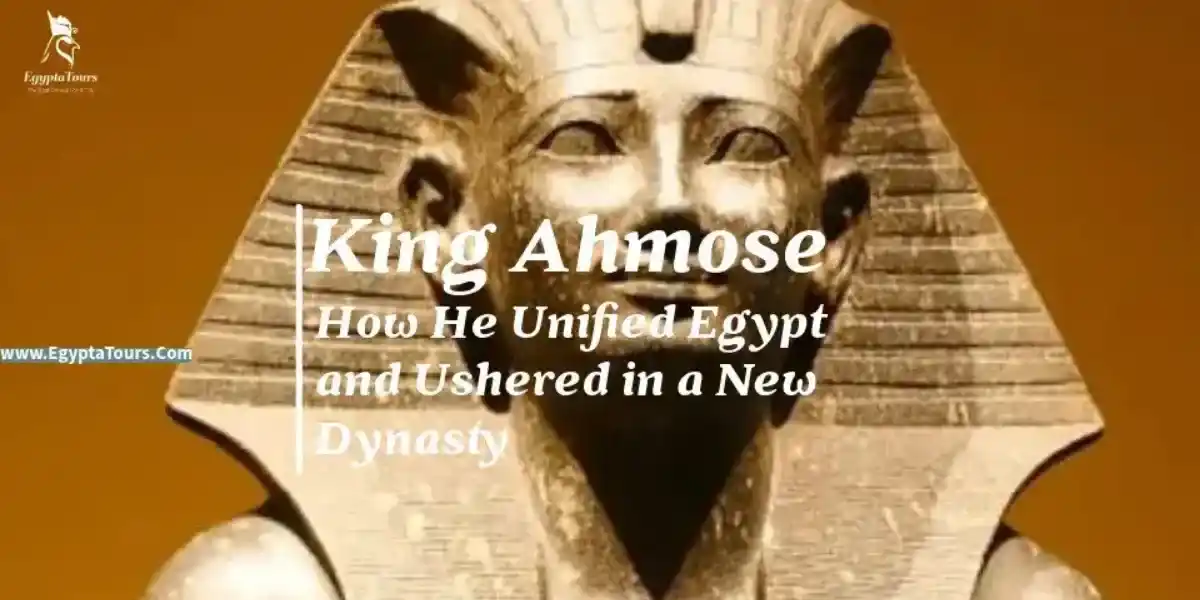
The Victorious Rise of King Ahmose: How He Unified Egypt and Ushered in a New Dynasty
📋 Summary & Quick Facts
King Ahmose I was the visionary pharaoh who founded Egypt’s illustrious 18th Dynasty, officially ushering in the golden age known as the New Kingdom. Ascending the throne at a very young age after the tragic battlefield deaths of his father and brother, the young king successfully completed their mission to expel the foreign Hyksos rulers from northern Egypt.
His brilliant military campaigns reunified the nation, restored Theban control across the Nile Delta, and reclaimed lost territories in Nubia and Canaan. Beyond his military triumphs, he revitalized the Egyptian economy by reopening vital trade routes and mines, and he launched monumental building projects that laid a robust foundation for centuries of unmatched prosperity.
Key Takeaways
-
-
Founder of the New Kingdom: By establishing the 18th Dynasty, he transitioned Egypt out of the fractured Second Intermediate Period and into an era of unprecedented wealth and global power.
-
Expulsion of the Hyksos: He successfully besieged the foreign capital of Avaris and drove the Hyksos out of the country, permanently reuniting Egypt under native rule.
-
Military Innovation and Expansion: Utilizing advanced weaponry like horse-drawn chariots, he secured the nation’s borders and reclaimed lucrative, resource-rich territories in Nubia and the Levant.
-
Economic and Cultural Revival: His reign saw the reopening of critical limestone quarries, the restoration of international trade, and the initiation of grand architectural projects in Thebes and Abydos.
-
Powerful Female Allies: The stability of his early reign was heavily supported by the formidable women in his royal family, most notably his mother, Queen Ahhotep, who acted as a fiercely protective regent while he was a child.
-
Ahmose was a pharaoh and the founder of Egypt’s Eighteenth Dynasty during the New Kingdom, the period when Egypt was at the peak of its power. He usually ruled in the middle of the 16th century BC, at the start of the Late Bronze Age.
During his reign, Ahmose finished defeating and driving out the Hyksos, restored Theban control over both Lower and Upper Egypt and successfully brought Egypt back to power in its former territories, including Nubia and Canaan. He then reorganized the government, reopened quarries, mines and trade routes and started large building projects that had not been done since the Middle Kingdom.
King Ahmose I (sometimes known as Amosis or Aahmes, meaning “Iah (the Moon) is born” was a pharaoh and promoter of the Eighteenth Dynasty of Egypt, assorted as the first dynasty of the New Kingdom of Egypt, the period in which ancient Egypt achieved the top of its strength.
He was a member of the Theban legal house, the son of pharaoh Seqenenre Tao and brother of the latest pharaoh of the Seventeenth Dynasty, Kamose.
During the reign of his father or grandpa, Thebes’ revolt against the Hyksos, the governor of Lower Egypt. When he was seven years old, his father was killed, and he was about ten when his brother died of unnamed causes after dominate only three years. He assumed the throne after the death of his brother, and upon crowning became famous as Nebpehtyre, nb-pḥtj-rꜥ “The Lord of Strength is Ra”.
It Is best known as the period when the Hyksos people of West Asia decided the 15th Dynasty and ruled from Avaris, which, according to Manetho’s Aegyptiaca, was established by a king by the name of Salitis.
The settling of these people may have happened peacefully, although later recounts of Manetho portray the Hyksos “as violent conquerors and oppressors of Egypt”.
The Turin King List from the time of Ramses II still the essential source for understanding the chronology and political history of the Second middle Period, along with studying the typology of scarabs, beetle-shaped amulets mass-produced in Ancient Egypt and often engraved with the names of governor.
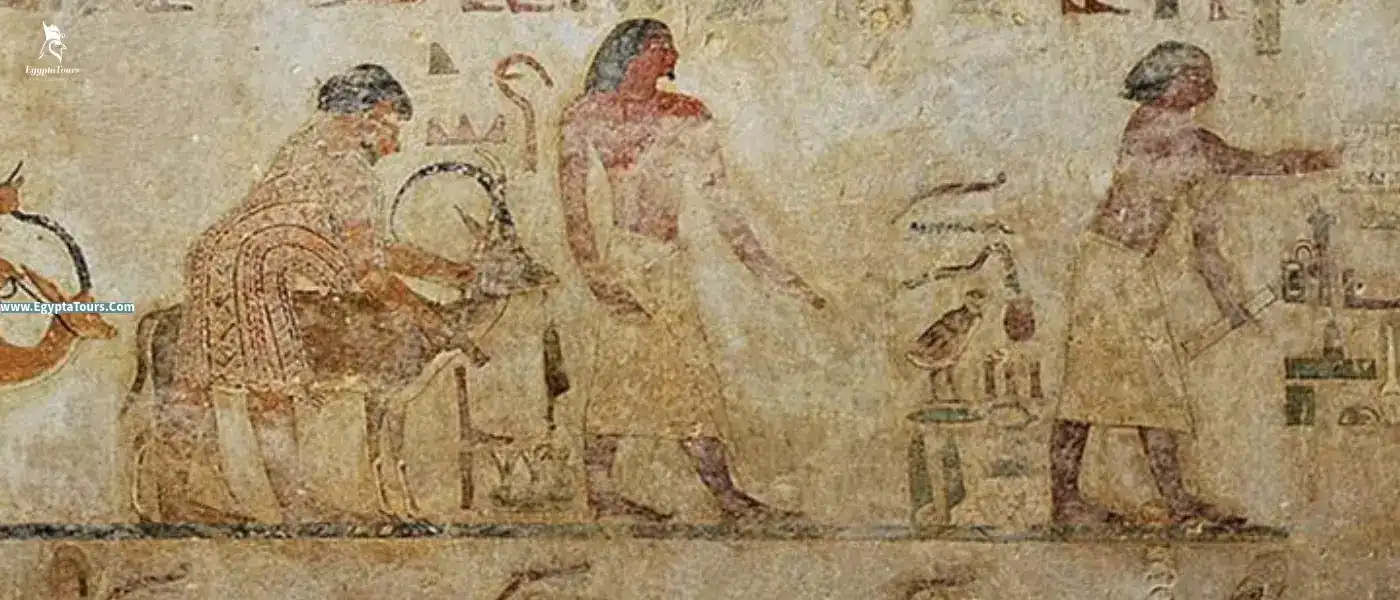
Hyksos-Rule-King-Ahmose
The period is specially distinguished by the rule of the Hyksos in northern Egypt and, to a lower but significant degree, the power of the Nubians in the south. The only reason the Nubians do not factor more in realized the time is because the Egyptian archives show a continuity in relations with southern lands while the Hyksos were unmatched and were said to have introduced new concepts and ways of life.
The identity of the Hyksos still anonymous. Many theories have been in progress including that they were refugees get away from the Aryan Invasion in Asia.
The Aryan Invasion Theory itself has been discredited and so has this appeal. They were point out to by the Egyptians as ‘Asiatics,’ but this was a term used for anyone beyond the eastern outlines of the country from the Levant to Mesopotamia.
The name most usually used translates as ‘Rulers of Foreign Lands,’ not ‘people of foreign lands,’ and so several scholars have forwarded the claim they were invaders who landed at Avaris, determined a powerful center of power, and then conquered the land as far south as Abydos.
This demand is almost completely based on the writings of the 3rd-century BCE Egyptian historian Manetho. Manetho’s work has been missed, but he was quoted extensively by later historians inclusive the Jewish-Roman writer Josephus.
Manetho’s version of the Hyksos’ arrival characterizes them as devastating invaders who damage the country:
Manetho’s report, as given in Josephus, was taken as historical truth by scholars and laymen alike for centuries till the archaeological evidence proved it inaccurate.
Excavations at Avaris have revealed a once-flourishing port city whose design is forien and closely parallels architecture and design from the region of Syria and Palestine. No Hyksos stronghold has been existed at Memphis and no list of widespread destruction of the country during the time of the Hyksos.
The theory most vastly agreeable by scholars and Egyptologists today is that the Hyksos arrived at Avaris via overland trade roads from Syria and Palestine, grew successful there in the course of the 12th and early 13th dynasties, and established a seat of power once they had the fortune and capacity to do so.
There is no proof at all that the Hyksos suppressed Egyptian religion and culture; in effect, they admired and adopted both.
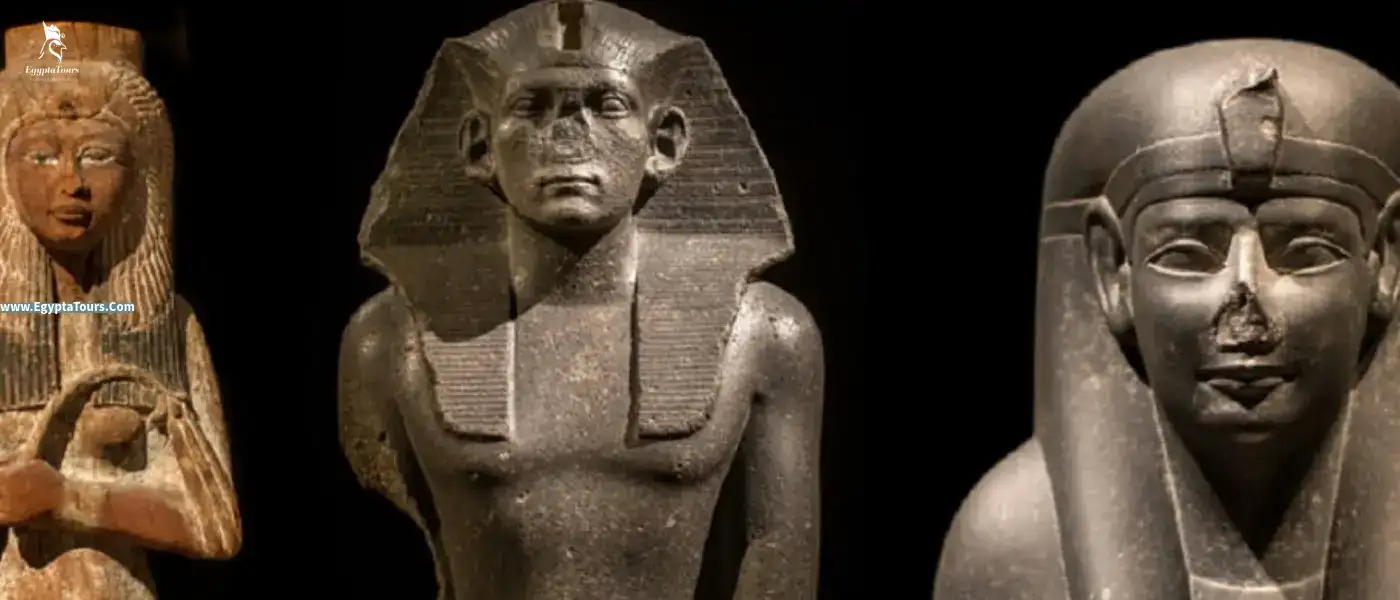
The Ascension of King Ahmose: Restoring Order and Unifying Egypt
The-Ascension-of-King-Ahmose
The Second Intermediate Period (SIP) dates from 1700 to 1550 BC. It signs a period when old Egypt was divided into smaller dynasties for a second time, between the end of the Middle Kingdom and the beginning of the New Kingdom.
The notion of a Second Intermediate Period in general includes the 13th over to the 17th dynasties, however there is no international compact in Egyptology about how to know the period.
During his reign, the young pharaoh completed the conquest and expulsion of the Hyksos from the Nile Delta, repaired Theban base over the whole of Egypt and successfully reasserted Egyptian power in its previously topic territories of Nubia and Canaan.
Then he knows the administration of the country, reopened quarries, mines and trade roads and began large construction projects of a type that had not been enter since the time of the Middle Kingdom.
This building program culminated in the structure of the last pyramid built by local Egyptian rulers. His rule set the foundations for the New Kingdom, under which Egyptian power compass its top. His ruler is usually dated to the mid-16th century BC.
Conquest of the Hyksos
Hyksos, dynasty of Palestinian origin that judge northern Egypt as the 15th dynasty. The name Hyksos was applied by the Egyptian historian Manetho, who, according to the Jewish historian Flavius Josephus (flourished 1st century CE), interrupted the word as “king-shepherds” or “captive shepherds.”
Josephus himself desire to demonstrate the large antiquity of the Jews and thus specific the Hyksos with the Hebrews of the Bible.
Hyksos was in truth probably an Egyptian term for “rulers of foreign lands” (heqa-khase), and it almost surely designated the nonnative dynasts rather than a racial group. Modern scholarship has identified most of the Hyksos kings’ names as supreme.
The rise of the Hyksos kings in Egypt was made possible by a flowing of emigrant from Palestine into Egypt first about the 18th century BCE.
The emigrant brings with them new technologies, inclusive the horse and chariot, the compound bow, and improved metal weapons. Most of them settled in the eastern part of the Nile Delta, where they achieved controlling role in trade with western Asia.
Archaeological excavations in that site have detect a Canaanite-style temple, Palestinian-style burials (including horse burials), Palestinian sort of pottery, quantities of their outstanding weapons, and a series of Minoan frescoes that explain stylistic parallels to those of Knossos and Thera. The most-prominent dominion was Avaris (modern Tall al-Dabʿa), a fortified camp over the remnant of a Middle Kingdom town in the northeastern delta.
Their chief idol was the Egyptian storm and desert god, Seth, whom they identified with a Syrian storm god, Hadad.
The serious of events that brought the Hyksos kings to power in Lower Egypt is not completely clear. The 13th and 14th dynasties, which had remained concurrently in Lower Egypt, weaken and disappeared about the middle of the 17th century.
Some evidences have suggested that a dearth in the Delta region participate to their reject and opened the way for the development of the Hyksos dynasty. From Avaris the Hyksos 15th dynasty judgement most of Lower Egypt and the Nile valley as a way south as Cusae (near present-day Asyūṭ). The contemporaneous 16th-dynasty rulers minor Hyksos kings who judge in Upper Egypt simultaneously with those of the 15th dynasty were maybe vassals of the last group.
When, under Seqenenre and Kamose, the Thebans start to rebel, the Hyksos pharaoh Apopis tried unsuccessfully to make an alliance with the Kush rulers, who had overrun Lower Nubia in the later years of the 13th dynasty (c. 1650 BC).
Under Kamose judge The Theban revolt spread northward, and about 1521 Avaris fell to his successor, King Ahmose, founder of the 18th dynasty, just like that ending 108 years of Hyksos rule overhead Egypt.
Though noxious in some Egyptian texts, the Hyksos had ruled as pharaohs and were listed as legal kings in the Turin Papyrus. At least ostensiblre they were Egyptianized, and they did not interfere with Egyptian culture beyond the political sphere.
The Pharaoh’s Victory
King-Ahmose-Victory-EgyptaTours
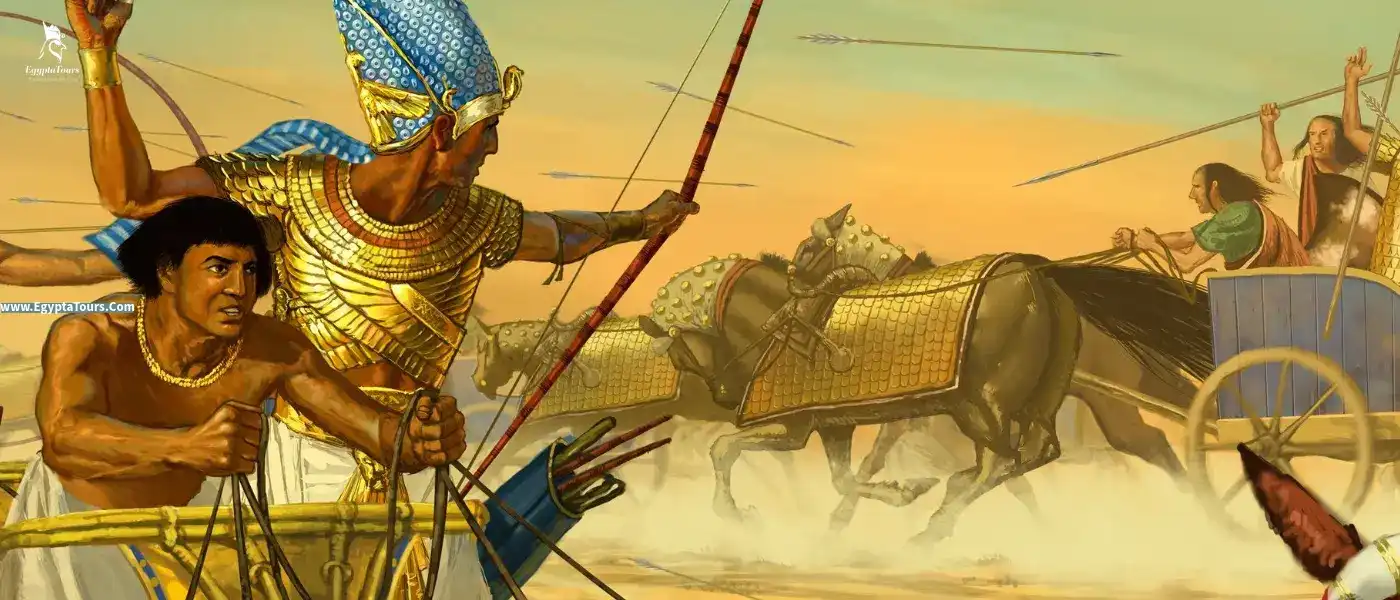
Ahmose I (1550-1525 B.C.). He was the first king of the 15th Dynasty. As a Son of Seqenenre Tao II and younger brother of Kamose, his ancestor on the throne. These two was died in a fight against the Hyksos. He joints to the throne at a very small age. His mother Imhotep I trustee of the throne a few years. He begins a fight against the Hyksos in the 11th year of his reign and conquered Ávaris, the Hyksos capital city.
The Hyksos’ control was destroyed when the monarch chased his enemies into Palestine and there knocked down the Hyksos’ fort of Sharuhen.
After the fall of the fort, he decided to support the borders of Egypt, reconquering Nubia and sealing the Syrian border. He procures several military work against the Cushitic peoples, former supporter of the Hyksos. He decided control until the second waterfall. After this, there was a time of salaam and growth for Egypt.
During his reign, temple construction and reconstruction projects were begun in Thebes and Memphis. He also reopened the limestone quarries in Tura. In Abydos, he requests to build two brick cenotaphs, for his grandma Tetisheri and for himself.
He knows the administration of the country and afford back to the governors their responsibilities in the district. The start of Egypt to the Near East selects the continuity in the import of raw materials and in technical production.
Early Life and Rise to Power
Ahmose I was born into a royal family during a difficult time in Egypt. His father, Seqenenre Tao, died fighting the Hyksos, foreign rulers who controlled the Nile Delta. His older brother, Kamose, continued the fight but also died, leaving the throne to the young Ahmose. At only ten years old, Ahmose became king of a kingdom split between local Egyptian leaders in Thebes and the Hyksos in the north.
While he was a child, his mother, Queen Ahhotep, ruled as regent. She was not only a symbol; she was known for being a strong leader and a smart politician. Inscriptions praise her for looking after Egypt and bringing peace to Upper Egypt, showing how she kept the kingdom stable until her son was old enough to rule.
Founding the 18th Dynasty and the New Kingdom
After Egypt was freed, Ahmose I began the 18th Dynasty, one of the strongest times in Egyptian history. His reign laid the foundation for many years of growth, wealth and cultural achievements.
Political control: He made the central government stronger and reduced the power of local leaders
Economic recovery: He reopened quarries and mines, restarted trade routes and brought farming back to full strength.
Military growth: His campaigns expanded Egypt’s influence in Nubia and the Levant, protecting borders and gaining resources.
The New Kingdom that followed became the most famous period in Egypt’s history, with well known pharaohs like Hatshepsut, Thutmose III and Ramses II.
Ahmose’s Family
Queen Ahhotep: His mother, honored for her military role, was a warrior queen who protected Egypt while he was a child.
Ahmose/Nefertari: She was his sister and wife and one of the most respected queens in Egypt. As God’s Wife of Amun, she had a lot of religious power and was later honored as a goddess.
Tetisheri: She was his grandmother. She received a pyramid and a stela at Abydos, showing the strength of the royal family.
These women were important in keeping Egypt stable and helping Ahmose rule.
Key Achievements
The new ruler improved the Egyptian army. He was the first to use war chariots and new military weapons, including arrows with iron tips. He marched to the Hyksos capital near Zagazig and fought them until they fled to the northern Nile Delta. After the Hyksos left, the king went with his army to Phoenicia and attacked Nubia to bring it back under Egyptian control, reaching as far south as the second cataract.
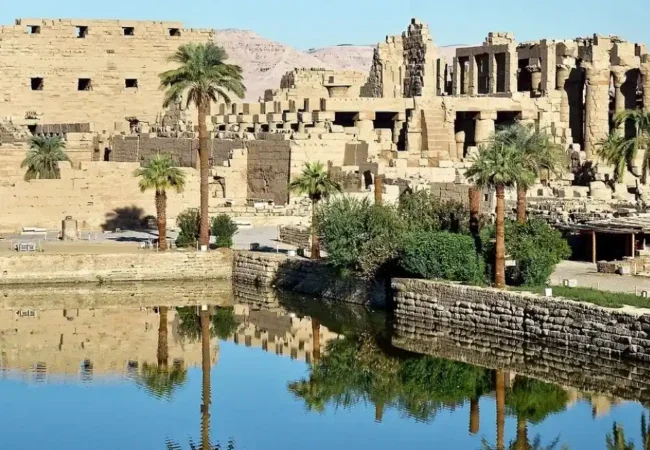
After defeating the Hyksos and securing Egypt’s borders, Ahmose focused on the country’s internal matters. The Hyksos had caused damage during their rule. He made Amun the official god and chose Thebes as his capital. He also built a memorial at Karnak Temple to honor himself and the efforts of his mother.
Ahmose’s Military Campaigns
King Seqenenre Tao II was the first to fight the Hyksos, but he died in battle. His son Ahmose continued the war when he was about 19 years old. His army cleared Upper Egypt of the Hyksos and then drove them out of the whole country. The soldiers marched to Avaris, the Hyksos’ capital and defeated them there. They then chased the Hyksos to Palestine and laid siege to the fortress of Sharuhen until they captured it. After that, the Hyksos disappeared from history. This battle happened around 1580 BC.
Monuments and Building Projects
While he focused on military campaigns, he also worked on building and religious projects that showed Egypt’s renewed power.
Temples and shrines: He built structures at Abydos and Thebes to honor the gods and his ancestors.
Quarries and mines: He reopened these to help with building projects and to boost the economy.
Art revival: Statues and inscriptions show Ahmose as a young and strong leader, symbolizing renewal.
One important monument is the pyramid built for his grandmother, Tetisheri, which honored her and showed the importance of family heritage.
Ahmose I’s Mummy and Tomb
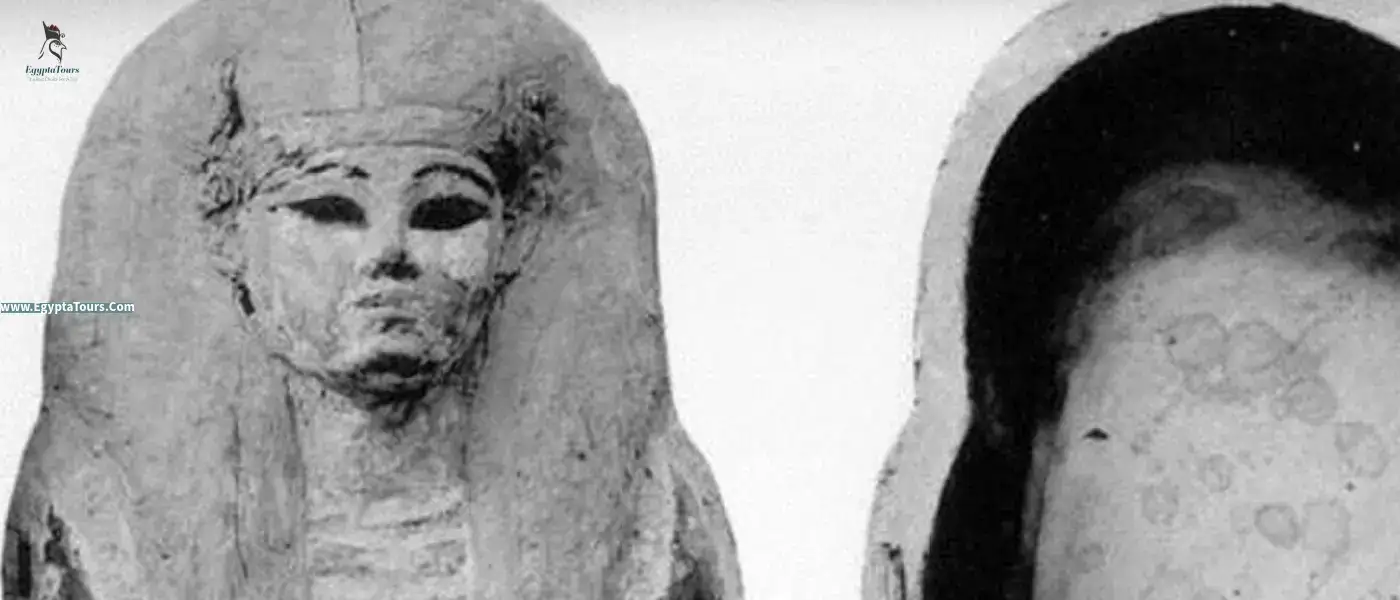
King Ahmose died in 1525 BC. He had a tomb at Abydos, which included a ramped temple and a burial chamber. Remains of a pyramid were found there in 1899. In 1902, it was discovered that he also had a pyramid in Thebes, a temple for it, and another cemetery, but robbers had stolen from them. Gaston Maspero found his mummy on June 9, 1886. The mummy was 1.63 meters tall and had a small face compared to the size of his chest.
The Pharaoh’s Legacy
Ahmose I had a big impact on Egyptian history. His rule changed a divided land into a strong, united empire.
Military legacy: His victories set an example for future pharaohs who were warriors.
Cultural impact: His uniting of Egypt led to a period of great art and building.
Historical memory: His Horus name, He who knots together the Two Lands, shows his role as a unifier.
Egyptians remember him, along with Narmer, the legendary founder of the Old Kingdom, as one of the great unifiers of their country.
Why His Story Still Inspires
Ahmose I’s story, from a young king in a troubled country to the founder of Egypt’s strongest dynasty, shows courage, vision and leadership. By driving out the Hyksos, he brought back Egyptian pride. His strong rule created the foundation for many years of success. His family also showed how important women were in keeping the dynasty strong.
For historians, his reign marks the beginning of the New Kingdom. For travelers, his monuments give a view of Egypt’s revival. For readers, his story is a lasting example of how determination and unity can change a nation.
Death and Mummy of King Ahmose
Death-and-Mummy-of-King-Ahmose
King Ahmose I, who reigned around 1525 BC, is celebrated for his pivotal role in expelling the Hyksos from Egypt and restoring Theban rule over the Nile Delta. After the death of his brother, Seqenenre Tao, who had also fought the Hyksos, Ahmose continued the struggle and eventually captured Avaris, the Hyksos capital.
His military campaigns not only drove out the Hyksos but also reasserted Egypt’s dominance over subject territories, including Nubia. Ahmose’s victories unified Egypt once more, consolidating power in Thebes and marking the beginning of the New Kingdom, a period of remarkable strength and prosperity.
King Ahmose mummy discovered in 1881, the cause of death evidence to be natural in origin. No deadly wounds or signs of terrible trauma were discovered on the protected corpse.
However, there is little written proof which could be used to supply a more inclusive picture of Ahmose’s final days. His remains, along with that of his familial successors, were found immediately over the tomb of Hatshepsut, one of the little females to judge as pharaoh of Egypt.
In 1881Ahmose I’s mummy was discovered in the Deir el-Bahri hiding, situated in the hills directly above the Mortuary Temple of Hatshepsut.
The mummy is now in the Luxor Museum beside the purported one of Ramesses I, as part of a continual exhibition called “The Golden Age of the Egyptian Military”
Conclusion
King Ahmose I, the founder of Egypt’s 18th Dynasty, played a critical role in reasserting Egyptian power. As a young prince, he led brilliant military campaigns that drove out the foreign Hyksos invaders after a year-long siege at Avaris, restoring Egypt’s sovereignty and reuniting the nation.
His reign—marked by military success, economic revival, and monument building—laid the absolute foundation for the future greatness of the New Kingdom. Later illustrious rulers, including Thutmose III, Seti I, and Ramesses II, all belonged to a powerful royal lineage that built upon his magnificent legacy, expanding Egypt’s influence and prestige across the ancient world.
FAQs
Who was the founder of the 18th Dynasty?
He was a visionary pharaoh credited with expelling the foreign Hyksos rulers from northern Egypt and reuniting the country under Theban rule, officially launching the New Kingdom.
When did he reign?
He ruled around 1550–1525 BC, though exact dates can vary slightly among modern scholars.
What were his most significant accomplishments?
He is best known for reclaiming the Nile Delta and restoring Theban rule. He also initiated brilliant military campaigns that secured the nation’s borders and regained resource-rich territories in Nubia.
What role did he play in the Hyksos expulsion?
He personally led military campaigns to oust the invaders, capturing their capital at Avaris and finally defeating them at Sharuhen in southern Palestine.
What was his relationship with his brother?
He succeeded his older brother, Kamose, who had died fighting the Hyksos. His brother’s death inspired the young king to finish the campaign and permanently drive the invaders out.
How did the pharaoh restore Egypt’s power?
By expelling the Hyksos and reuniting Egypt, Ahmose I reestablished Theban control over the Nile Delta and subject territories like Nubia. He also strengthened Egypt’s economy and military, paving the way for the prosperity of the New Kingdom.
What were the lasting impacts of his reign?
His rule marked the definitive start of the New Kingdom—a golden age of immense wealth, territorial expansion, and breathtaking architectural achievements.
Where was he buried?
He was originally buried in a tomb at Abydos, a sacred ancient city associated with Osiris. His mummy was later moved and discovered in the famous Deir el-Bahari royal cache.
What is his ultimate legacy?
He is remembered as a fiercely powerful military leader and the ultimate unifier of ancient Egypt. His successes restored native sovereignty and ushered in one of the most celebrated eras in human history.
How did this ruler influence Egyptian culture and religion?
He revived traditional religious practices, funded massive new temple construction, and restored the priesthoods that had been heavily disrupted during foreign rule.
Similar Posts
About EgyptaTours

EgyptaTours is a name synonymous with trust, excellence, and unforgettable travel experiences, proudly standing as one of the leading travel agencies in Egypt. Renowned for its deep expertise, personalized service, and carefully crafted itineraries, EgyptaTours serves as the ultimate gateway to discovering Egypt in its most authentic and inspiring form.