Study Finds Vast Underground Complex Under Giza Pyramids
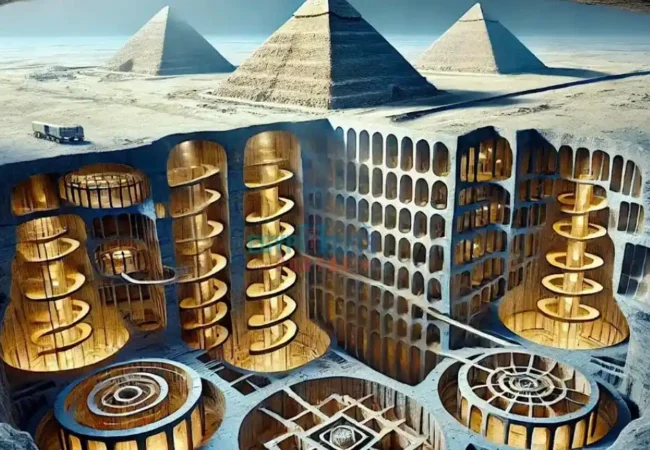
A recent study by a group of Italian researchers claims the discovery...



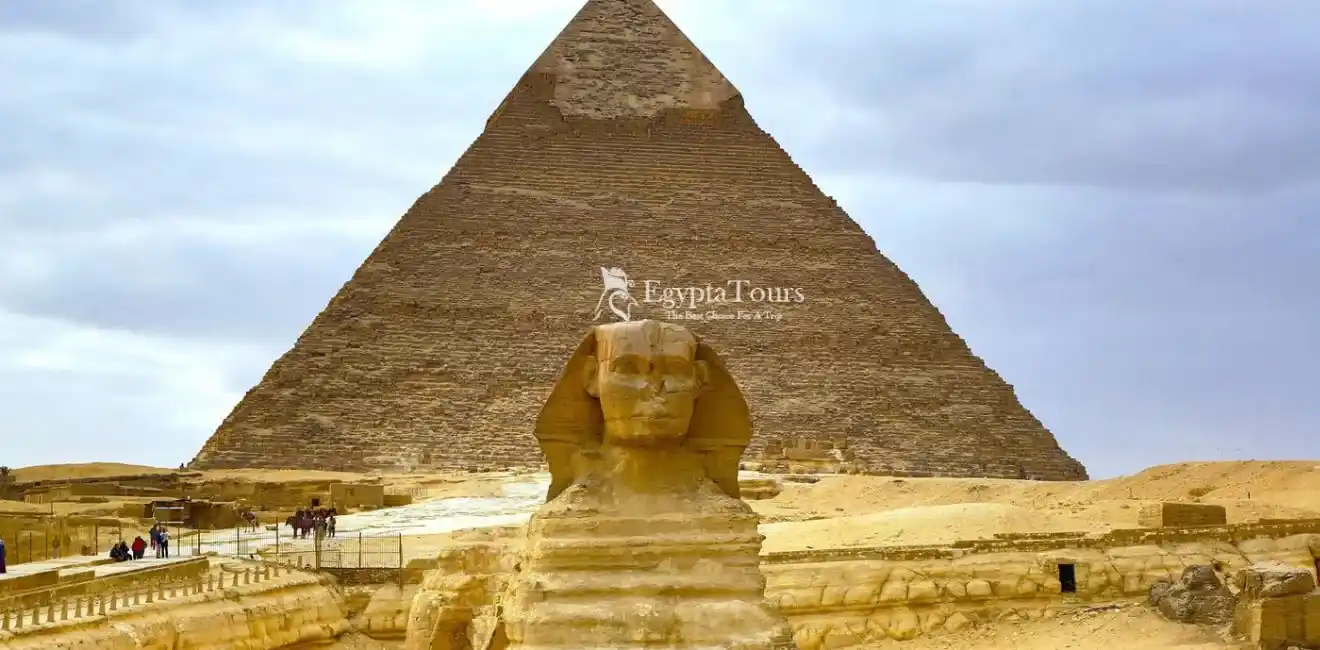
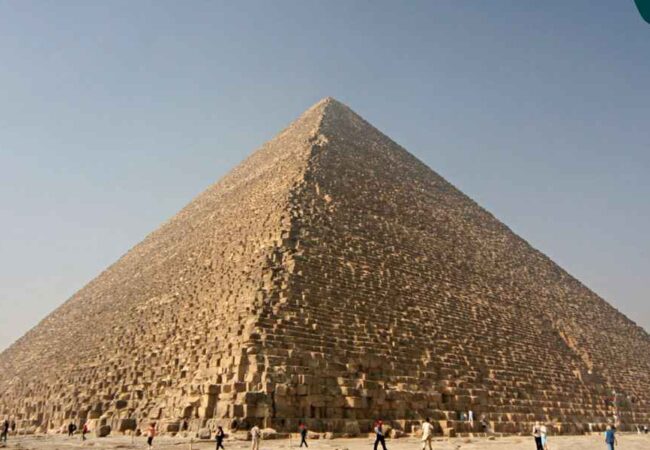
The Pyramid of Khafre stands as the second-largest and second-tallest monument of the Giza Necropolis, built during the Fourth Dynasty around 2558–2532 BC by Pharaoh Khafre, son of Khufu. Although slightly smaller in total volume than the Great Pyramid of Khufu, Khafre’s pyramid often appears taller due to its elevated placement on a natural bedrock hill on the Giza plateau.
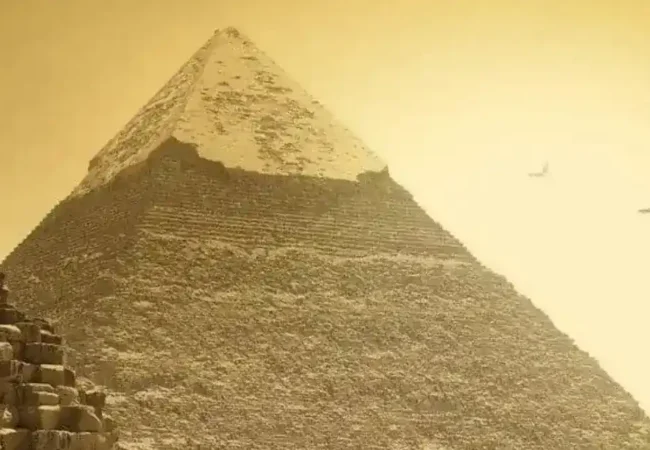
It is uniquely distinguished by the preserved polished Tura limestone casing stones remaining at its apex. As the centerpiece of an elaborate funerary complex that includes a monumental Valley Temple, a 500-meter causeway, and the iconic Great Sphinx, Khafre’s monument reflects the pinnacle of Old Kingdom architectural ingenuity and royal authority.
Key Takeaways
Visual Height Illusion: Standing at a current height of 136.5 meters (originally 143.9 meters), the pyramid appears taller than neighboring structures because it was constructed on a higher section of natural terrain on the Giza plateau.
Preserved Casing Stones: It is uniquely identifiable by the remaining smooth, polished Tura white limestone casing at its summit, offering modern visitors a rare visual glimpse of how all the Giza pyramids originally gleamed in the sun.
Internal Layout: The interior features two northern entrances leading through descending and ascending corridors to a rock-cut subterranean burial chamber containing an empty red granite sarcophagus, which Italian explorer Giovanni Belzoni first explored in modern times in 1818.
The Sprawling Complex: The architectural layout comprises a grand Valley Temple built with massive L-shaped limestone blocks and red granite columns, a mortuary temple, a 500-meter stone causeway, and subsidiary pyramid structures.
Association with the Great Sphinx: Positioned directly to the east, the Great Sphinx is an integral component of Khafre’s complex, combining a lion’s body with a human head carved in the likeness of the pharaoh to symbolize his divine legitimacy and protection over the necropolis.
Ancient Plundering: Like most Old Kingdom royal tombs, Khafre’s pyramid was looted during the political turmoil of the First Intermediate Period roughly 4,000 years ago, leaving behind an empty sarcophagus and minor remnants of animal bones rather than royal treasures.
Standing as one of the most iconic structures of Ancient Egypt, the Khafre Pyramid is a sight to behold. Built over 4,500 years ago, it is the second largest of the three pyramids of the Giza Necropolis or as it’s called Giza plateau and is an awe-inspiring testament to the architectural brilliance of the Ancient Egyptians.
The Pyramid of Khafre is the second-largest pyramid on the Giza Plateau and is known for its impressive architecture and historical significance. Surrounding the pyramid are the Temples of Khafre, which once served as important ceremonial sites connected to ancient religious practices.
These temples featured life-size statues of the pharaoh, crafted to honor his divine status and ensure his presence in the afterlife. The combination of towering stonework and detailed sculptures reflects the grandeur and spiritual importance of Khafre’s reign.
Located just 8 miles from the center of Cairo, it is an easy day trip for anyone wishing to explore the wonders of Ancient Egypt. Here, you will find an in-depth guide to visiting the Khafre Pyramid, from what to expect when you arrive to the best ways to explore the area and uncover its secrets.
If you have visited the Giza Pyramids, you will have noticed that the Khafre Pyramid is a different structure to visit. It is, however, very easy to visit the Khafre Pyramid, as it is located just 8 miles from the center of Cairo. There are two main approaches to visiting the Khafre Pyramid, depending on how long you have in Cairo and your budget.
The first approach is to stay overnight in Cairo, and the second is to visit the Khafre Pyramid in a day trip from Cairo. Both options offer the best way to visit the Khafre Pyramid, as well as the other major sights of Giza, but it is based on how you want to spend your time in Cairo.
The-History-of-Khafre-Pyramid-EgyptaTours
The pyramid was most likely robbed as early as the First Intermediate Period. According to authors Bob Brier and Hoyt Hobbs, “all the pyramids were robbed” by the time of the New Kingdom, especially after royal burials began to take place in the Valley of the Kings. This shift meant that pyramids were no longer protected as royal tombs.
The Arab historian Ibn Abd al-Salam mentioned that the pyramid was opened in 1372. Inside the burial chamber, an Arabic graffito can still be seen on the wall, and it most likely dates back to that same period.
It remains unclear when the remaining casing stones were taken. However, they were probably still largely intact by 1646. In his work Pyramidographia, John Greaves, a professor of Astronomy at the University of Oxford, noted that although the stones were not as large or as carefully arranged as those of Khufu’s pyramid, the surface appeared smooth and even. He also mentioned that there were no major breaks or irregularities, except on the southern side.
The first modern exploration of the pyramid was carried out by Giovanni Belzoni on March 2, 1818. During this exploration, the original entrance on the north side was discovered. Belzoni hoped to find an untouched burial chamber but instead he found it empty, containing only an open sarcophagus with its broken lid lying on the floor.
The first full and systematic exploration was later completed by John Perring in 1837. In 1853, Auguste Mariette partially excavated Khafre’s valley temple. A few years later, in 1858, while continuing the clearance work, he succeeded in discovering a diorite statue of Khafre.
In 1932, a tragic incident occurred when the American mountaineer Elbridge Rand Herron fell while climbing the outer surface of the pyramid. He died instantly as a result of the fall.
Exploring-the-Pyramid-Complex-EgyptaTours
Visiting the Khafre Pyramid does not just mean climbing the pyramid itself. As the second largest of the pyramids in the Giza Complex, it is also home to a vast complex of temples, pyramids, and tombs. The major temples of the complex are the Great Hypostyle Hall and the North Temple.
The Great Hypostyle Hall is the largest and oldest of the temples of the Giza Complex, constructed around 2630 BC. The North Temple, meanwhile, was constructed around 2550 BC, and is the place where archaeologists believe the Great Sphinx of giza to be buried. Other temples of the complex are the Khan, the Queen, and the King’s. The Khan Temple was built next to the Great Pyramid and was dedicated to the king’s funerary cult.
The Queen’s Temple was built next to the King’s Pyramid and was dedicated to the queen’s funerary cult. The King’s Pyramid and the associated temples are the final resting place of Pharaoh Khufu.
There are also a number of tombs and burial structures within the complex. Perhaps the most important of these is the Mortuary Temple of the Great Khufu, an enormous structure built for Khufu’s burial and dedicated to the god Anubis.
The pharaoh chose to build the pyramid to function as his tomb and to ensure that his essence would remain forever. It also stood as a clear symbol of power and permanence after death. This belief was closely connected to the ancient Egyptians’ strong conviction that life continued after death.
The first European to enter Khafre’s pyramid was the famous Italian explorer and Egyptologist Giovanni Belzoni, renowned for discovering the Abu Simbel temples. In 1818, he found the pyramid empty: the treasures, sarcophagus, and mummy had long been removed, leaving only the outer granite sarcophagus in place.
Before Belzoni, the pyramid had already been opened in 1372 by Arabs, as recorded by the historian Ibn Abd al-Salam. They too found nothing of value.
Like the other pyramids of Giza, Khafre’s pyramid was plundered some 4,000 years ago during the First Intermediate Period, a time of crisis and disorder in Egyptian history. Even the mummies of the pharaohs of the Old Kingdom have not survived to this day.
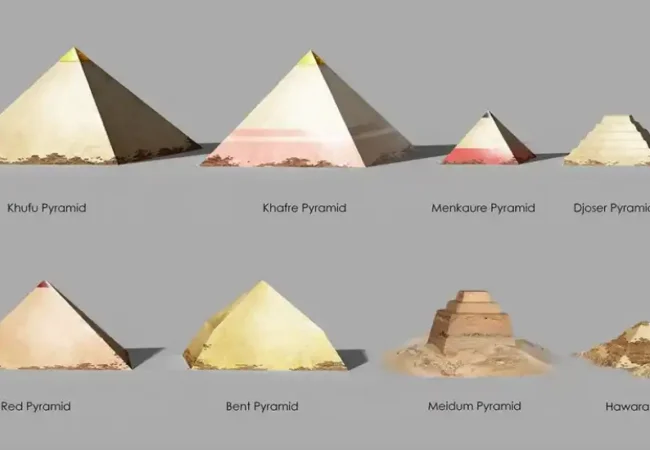
All of Egypt’s pyramids are fascinating, but the tomb of Pharaoh Khafre immediately draws attention because of its central location, situated between the tombs of Menkaure and Cheops. Moreover, it appears taller than the others because it stands on a natural hill. In terms of height, it surpasses Cheops’ pyramid, while Menkaure’s tomb is smaller. A clear pattern emerges: Khafre was Cheops’ son and Menkaure’s father, which shows that each successive ruler built a smaller tomb for himself.
Khafre’s tomb takes the form of a regular quadrangular pyramid. Its base is a square, with sides now measuring 210.5 meters (originally 215.3 meters, equal to 410 royal cubits). Remarkably, the deviation from a perfect square does not exceed 8 cm.
Originally, the pyramid stood 143.9 meters tall. Over more than 4,500 years, it has decreased in height by only 7 meters, reaching 136.5 meters today. Interestingly, during the same period, Cheops’ pyramid lost 10 meters in height.
Historians believe that Pharaoh Khafre may have been in poor health, as the design of the tomb indicates two stages of construction. Initially, a smaller pyramid core was built, complete with a small burial chamber, prepared in case the pharaoh died suddenly. Later, when the small tomb proved unnecessary, the pyramid was expanded to its current size. The main tomb was built on the south side and placed at a higher level, while the old tomb was repurposed as a storage space for funerary items.
The pyramid earned the title “Khafra the Great” not only because of its size but also due to the grandeur of the adjacent structures. The mortuary temple next to the pyramid, though now mostly in ruins, can still be reconstructed from the remains. The temple included five prayer halls, corridors, and a courtyard containing twelve statues of the pharaoh. Southeast of the Great Sphinx, the lower temple rose, connected to the pyramid by a wide 500-meter-long stone causeway.
500-meter-long stone causeway.
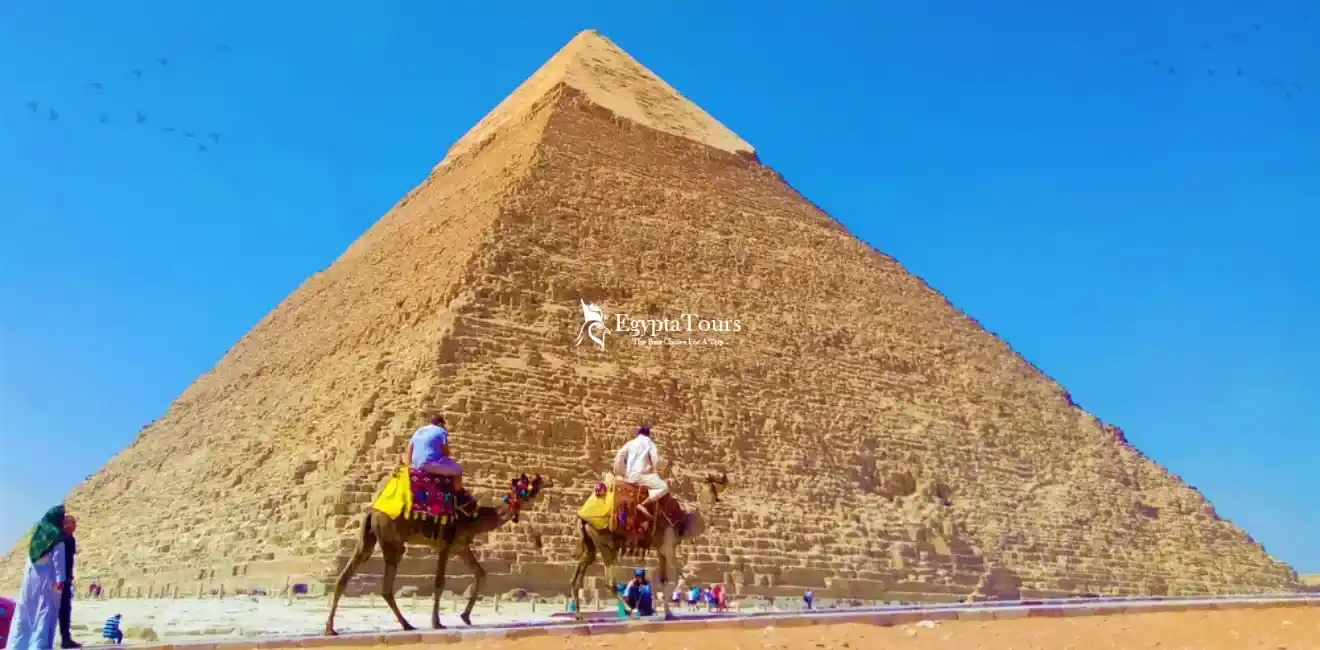
The pyramid remains attractive to visitors because it is possible to enter it, although climbing the outer surface is prohibited to protect the original cladding, which has survived at the summit since Ancient Egyptian times. Externally, the pyramid is similar to other Egyptian tombs, with the notable exception of the preserved limestone facing, which is of great value to historians and archaeologists.
At the top, a square platform contains a central square depression. This likely once held a stone “pyramid” or “benben,” an element present on all pyramids. The original stone is now missing but Khafre’s pyramid serves as evidence of the existence of such structures.
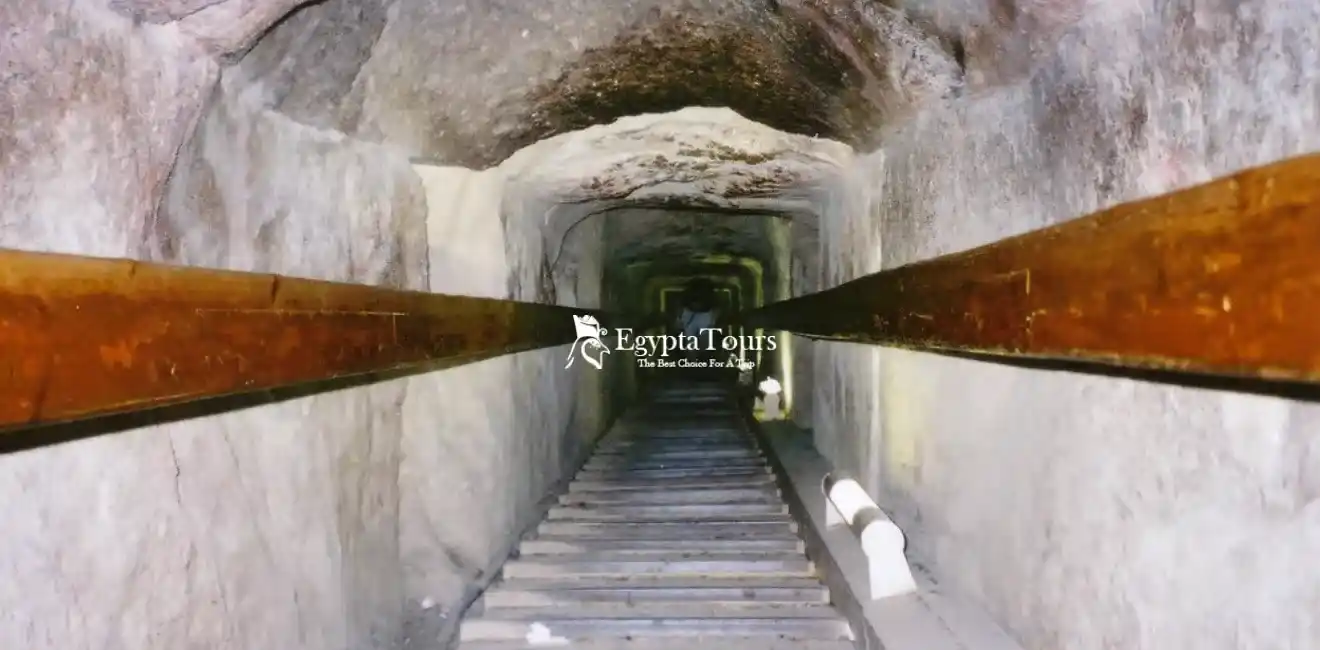
Inside the pyramid of Khafre, two entrances lead to the burial chamber. The first entrance is located 11.54 m (37.9 ft) up on the northern face of the pyramid, while the second entrance is found at the base of the pyramid on the same axis. These passageways are not aligned with the pyramid’s centerline, as they are shifted about 12 m (39 ft) to the east. The lower descending passageway is entirely carved from the bedrock. It first descends, then continues horizontally, and finally ascends again to connect with the horizontal passage that leads directly to the burial chamber.
One explanation for the presence of two entrances suggests that the northern base of the pyramid was originally planned to be moved about 30 m (98 ft) further north. If this plan had been completed, Khafre’s pyramid would have been larger than that of his father.
In that case, the entrance to the lower descending passage would have been located within the pyramid’s masonry. Although the bedrock on the north side is cut farther away from the pyramid than on the west side, it remains uncertain whether there was enough space on the plateau for both the enclosure wall and the pyramid terrace. Another interpretation proposes that, similar to many earlier pyramids, the design plans were modified during construction and the entrance was relocated halfway through the building process.
A subsidiary chamber, equal in length to the King’s Chamber in Khufu’s pyramid, opens to the west of the lower passage. The function of this chamber is not clearly known. It may have been intended for storing offerings, burial equipment or it may have served as a serdab chamber. The upper descending passage is lined with granite and slopes downward until it meets the horizontal passage that leads to the burial chamber.
The burial chamber itself was carved from a pit cut directly into the bedrock. Its roof is formed by gabled limestone beams. The chamber has a rectangular shape, measuring 14.15 by 5 m (46.4 by 16.4 ft), and it is oriented along an east–west axis. Khafre’s sarcophagus was carved from a single solid block of granite and set partially into the floor. Inside it, Belzoni discovered animal bones, possibly belonging to a bull. Another pit in the floor most likely held the canopic chest and its lid may have been one of the pavement slabs.
On the walls of the burial chamber, there are two small rectangular holes facing each other. These openings closely resemble the so-called “air shafts” found in the burial chambers of the Great Pyramid.
Inside-Khafre -Pyramid-EgyptaTours
While climbing the pyramid will not take you inside the pyramid, it will give you a chance to explore the interior of the Khafre Pyramid. The interior of the pyramid is not as impressive as the exterior, but it does give you a chance to explore the Great Pyramid of Giza and its ancient function. Inside the pyramid, you will find the burial chamber of Khufu, which does not reveal much about its original function.
The interior of the pyramid, however, is intricately carved, and it is possible to explore the walls and ceiling. The interior of the pyramid is not accessible to the public, but you can go on a guided tour of the interior of the pyramid with your group or on your own by booking a private tour.
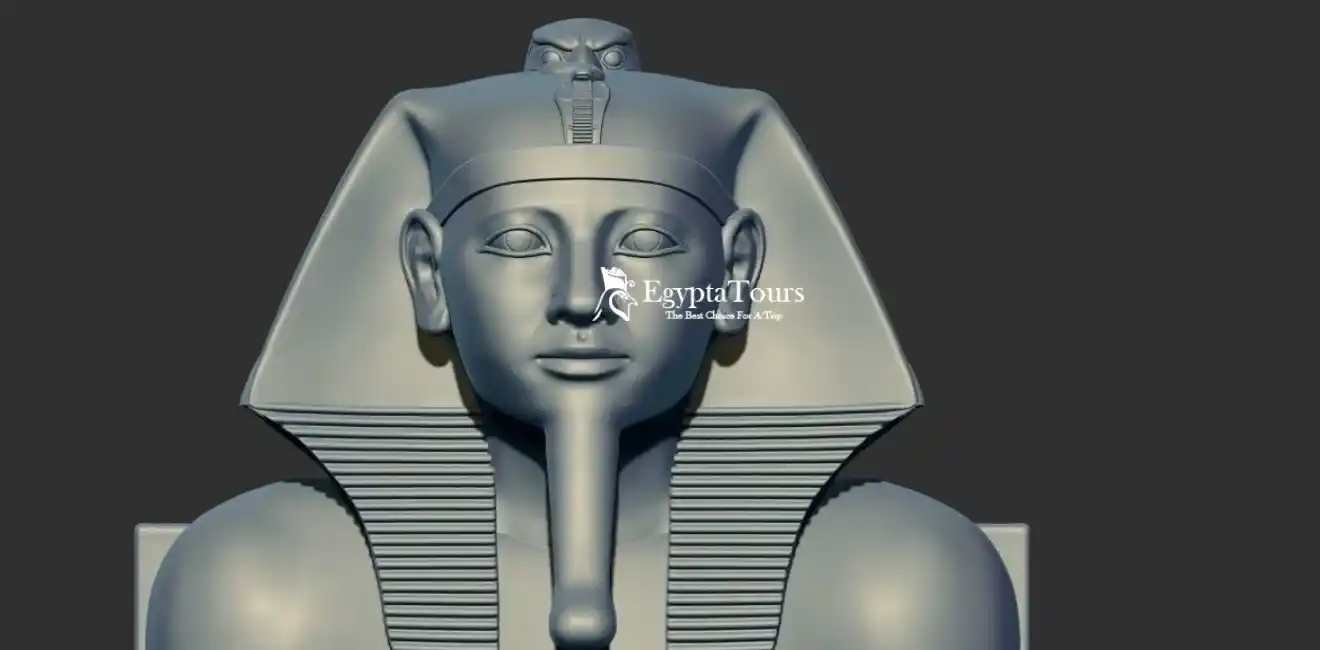
Who-was-Khafre-EgyptaTours
King Khafre was one of the rulers of the Fourth Dynasty, the son of King Khufu by an unknown mother. He ruled Egypt after his half-brother, King Djedefre, for a period often cited as around 24 to 26 years, between approximately 2558 and 2532 BC.
The king married more than one woman, the most famous of whom was Queen Khamerernebty I, and fathered more than 12 children. His reign was characterized by prosperity and development in all fields.
Khafre provided Egypt with numerous achievements during his reign in the political, economic, and religious fields, such as the construction of the Pyramid of Khafre, which demonstrates the innovations of architectural art in ancient Egypt.
He also built the Great Sphinx statue next to the pyramid, a statue with the body of a lion and the head of King Khafre. In addition, he improved the economic situation through trade, agriculture, and the construction of engineering projects.
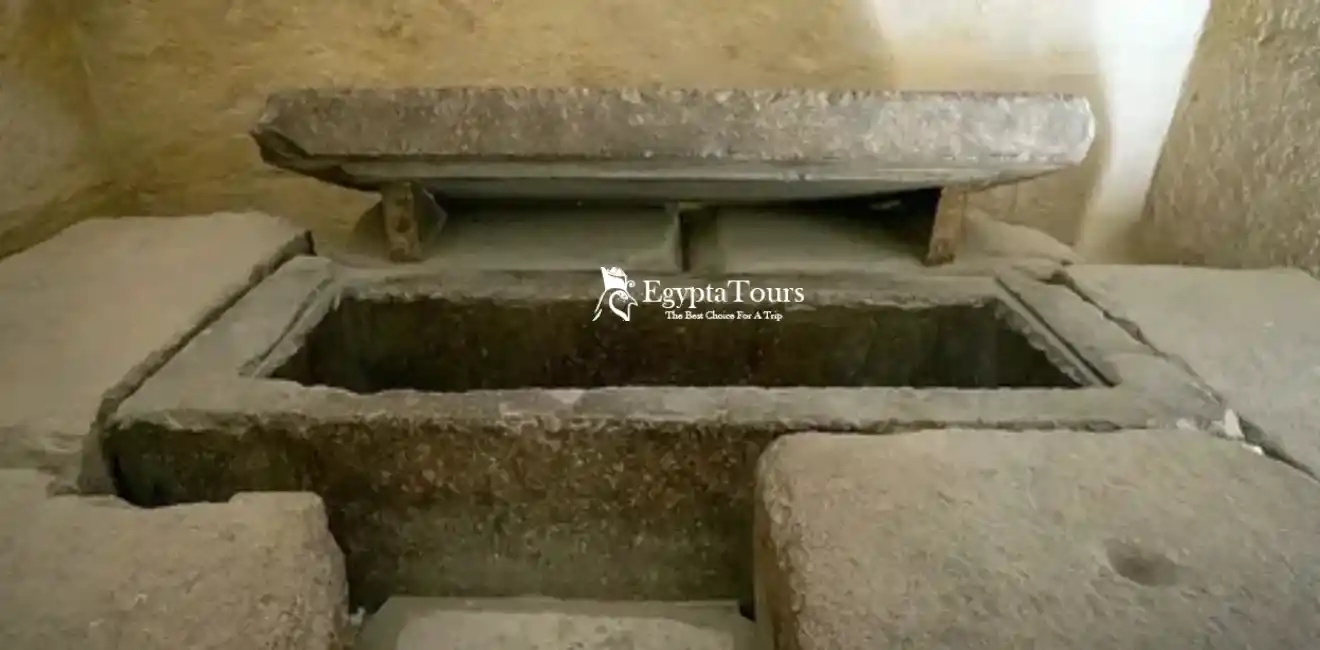
The-Pyramid-Khafre-Interior-Design-Entrances-and-Burial-Chamber-EgyptaTours
The Pyramid of Khafre has two entrances located on the north side of the pyramid. The first was built at a height of about 12 meters above the pyramid’s base, while the second was built at the base level. The entrances include numerous corridors adorned with inscriptions and drawings, which end in the burial chamber.
The burial chamber is the largest room in the pyramid, rectangular in shape with dimensions of 14.15 x 5 meters. It was carved into the pyramid’s rock, and its ceiling was built of limestone. It contains a sarcophagus made of massive black granite. Inside, only the bones of a bull were found, as one of the symbols of religious beliefs in funerary rituals. However, the pharaoh’s mummy has not been found to date.
There was a dedicated chamber for storing all of the king’s belongings, such as offerings, burial tools, accessories, and food and drink for use in the afterlife. It was equal in size to the burial chamber. As for the pyramid’s ceiling, it was constructed by carving gabled limestone rocks.
The Valley Temple is part of the pyramid complex of Khafre. The temple is located on the eastern side next to the Pyramid of Khafre. The king built it as a temple dedicated to the funerary rituals for his and his family’s burial. Its purpose was to perform purification rituals on the bodies of the deceased and then the mummification process in preparation for transferring them to the Mortuary Temple for the final religious burial rituals before moving to the sarcophagus inside the pyramid.
The temple has two entrances, one to the north and the other to the south, because the king’s burial rituals were performed as king of the North and also as king of the South. Deep inside the temple, there are a large number of statues of King Khafre.
The temple is distinguished by its architectural construction; the corners of its walls were built in an L-shape, and the temple floor was adorned with alabaster covered with red granite. The ceiling and columns were made of large stones that helped preserve it over the past years.
Some believe that the pyramids were only the tombs of kings, dedicated to burying the king’s body, his treasures, and his needs for the afterlife according to ancient Egyptian beliefs. But in reality, the pyramids were one element among up to 14 elements of a pyramid complex, which was considered the king’s tomb. Some elements might be added or omitted between one pyramid complex and another, depending on the economic resources and the time taken to build the complex.
Khafre’s pyramid complex consists of several important elements, the most important of which are:
If you observe the pyramids of Cheops and Khafre from the Great Sphinx, during sunset, the Sun sets exactly between the two pyramids, forming the ancient Egyptian hieroglyph “Ahet,” which means “Horizon.” This hieroglyph symbolizes the Primordial Mountain that supports the firmament.
The slope of Khafre’s pyramid sides is 53 degrees. This angle varies among the pyramids; for example, Menkaure’s pyramid has a slope of 51 degrees.
The lower temple of Khafre’s pyramid is considered one of the most magnificent structures of the Old Kingdom. Its main hall was shaped like the letter T, and sunlight entered through openings in the ceiling, illuminating individually each of the twenty-three statues of the pharaoh.
The walls of the pyramid are not perfectly flat, they appear slightly “depressed.” This may be due to erosion, the loss of the limestone cladding, or the massive weight of the stone blocks. It is also possible that this effect was intentional. Since its discovery in the 18th century, this phenomenon has not been fully explained.
Khafre’s pyramid was called the Great Pyramid because, although it was originally smaller than Cheops’ pyramid, it appeared taller due to its elevated position on the Giza plateau. Today, it is indeed the tallest pyramid in the complex, partly because Cheops’ pyramid has lost some of its upper structure over time. The pyramid reaches a height of 143.5 meters, and each of its sides measures 215.5 meters.
The upper portion still retains its original limestone casing that once covered the entire pyramid. Its interior is simpler than Cheops’ pyramid and features two entrances on the north façade: one located 12 meters above ground and the other at ground level, about 30 meters away from the pyramid’s base.
The burial chamber is carved directly into the rock with a ceiling constructed of gabled granite slabs. The walls are also lined with stone. Inside the chamber rests a red granite sarcophagus, set almost at ground level, which has been empty for centuries. The first Western explorer to enter the burial chamber, Giovanni Battista Belzoni in 1818, found only cow bones and Arabic inscriptions left by earlier visitors.
About 500 meters from the pyramid and its complex, archaeologists discovered the remains of a workers’ city. This settlement was separated from the general population and provided all necessary facilities, including bakeries, workshops and medical services. Recent discoveries confirm that the pyramid builders were well-cared-for workers, properly fed and housed.
The greatest damage to the pyramid occurred in the 14th century. For example, an earthquake during this period caused widespread destruction including the permanent collapse of the Lighthouse of Alexandria, one of the Seven Wonders of the World.
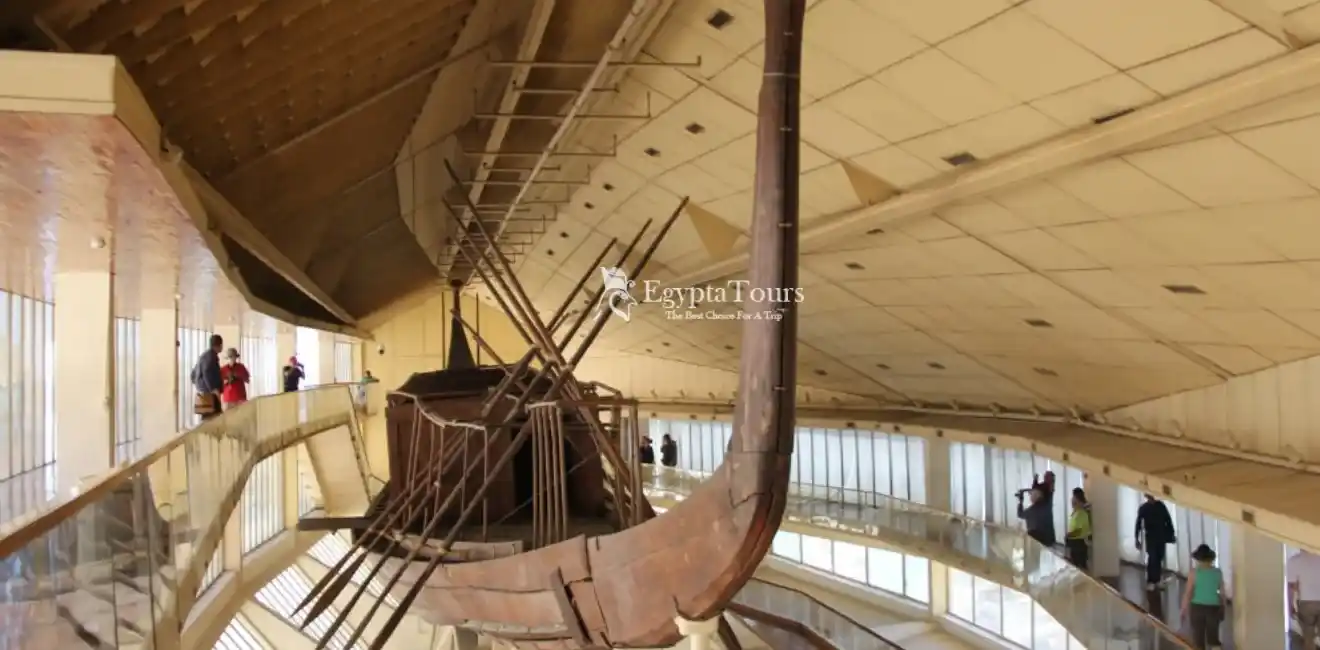
Solar-Boat-Pits-EgyptaTours
The solar boat pits are among the most recent discoveries within the pyramid complexes. They were discovered by Egyptian archaeologists in 1954 next to the southern base of the Pyramid of Khufu, where there were two pits containing the main parts of disassembled boats carved from cedar wood. The boats were reassembled over a period of 10 years and became known as the solar boats.
From the inscriptions and images on the boat’s wood, it became clear that the boats were used for rebirth and were called funerary boats, according to ancient Egyptian beliefs. There were hieroglyphic writings on parts of the boat with the names of the Egyptian workers, in addition to 10 cartouches bearing the name of King Djedefre (Khufu’s successor), not Khafre.
The Pyramid of Khafre is distinguished from the Pyramid of Khufu by the presence of remnants of its polished outer casing. The finest type of limestone, smooth white limestone that reflects sunlight, was used to coat the pyramid’s exterior, which has helped preserve its outer casing.
The Pyramid of Khafre still holds many unknown secrets. Since archaeologists discovered the pyramid in modern times and saw the burial chamber, they have confirmed that it had been robbed in the past. The stolen items included the pharaoh’s mummy and the offerings and archaeological treasures in the burial chamber.
The pyramid was robbed in ancient transitional periods, a few hundred years after the king’s death, specifically during the First Intermediate Period about 4,000 years ago. This period was known for its chaos, during which many pharaohs’ mummies were stolen.
Giovanni Belzoni was the first to explore the Pyramid of Khafre in the early 19th century. He discovered its northern entrance and explored the rest of the chambers up to the burial chamber, where he found only a broken sarcophagus and the remains of bull bones. The Arab historian Ibn Abd al-Salam had confirmed that Arabs had explored the tomb in ancient times and found nothing in it.
Belzoni later made several other discoveries at Egypt’s archaeological sites, including the temple of Abu Simbel, Karnak Temple, and the tomb of Seti I. Many other discoveries followed in the Giza pyramid area by William Howard Vyse and John Shae Perring at the Pyramid of Menkaure.
The Great Sphinx was discovered in the early 19th century and is one of Egypt’s most famous statues located within Khafre’s pyramid complex. It is located to the east of the pyramid, stands 20 meters high, and is 73 meters long. It is believed that 100 workers participated in its construction, completing it after 3 years.
The Sphinx statue is made of limestone with the body of a lion and a head believed to be that of King Khafre, embodying the king in the form of the god Horus presenting offerings to the sun.
The Sphinx and the Pyramid of Khafre are linked by a religious and political bond, as it acts as a guardian at the entrance of the pyramid. It also religiously symbolizes the divine role of King Khafre as a divine and political ruler, connecting him to the other world. It is a religious symbol of the ruler’s legitimacy according to the ancient Egyptian creed.
There are numerous theories as to what happened to the ancient Egyptians who built the Khafre Pyramid. As such, it is not surprising that the pyramid contains numerous secrets. The Khafre Pyramid is home to an array of secrets which was built by king chephren.
Visitors to the Khafre Pyramid can explore these secrets by exploring the pyramid’s interior. The interior of the pyramid is not as impressive as the exterior, but it does give you a chance to explore the Great Pyramid of Giza and its ancient function.
Inside the pyramid, you will find the burial chamber of Khufu, which does not reveal much about its original function. The interior of the pyramid, however, is intricately carved, and it is possible to explore the walls and ceiling. The pyramid is also home to the Sphinx.
The Sphinx is a massive statue of khafre that was carved out of limestone and is believed to have been erected during the dynasty of Old Kingdom, around 3,600 years ago. While the Sphinx does not have a roof, the Khafre Pyramid does. This roof was originally made of wood, but it has since been replaced by a metal roof. The metal roof has amazing inscriptions on it, which you can explore.
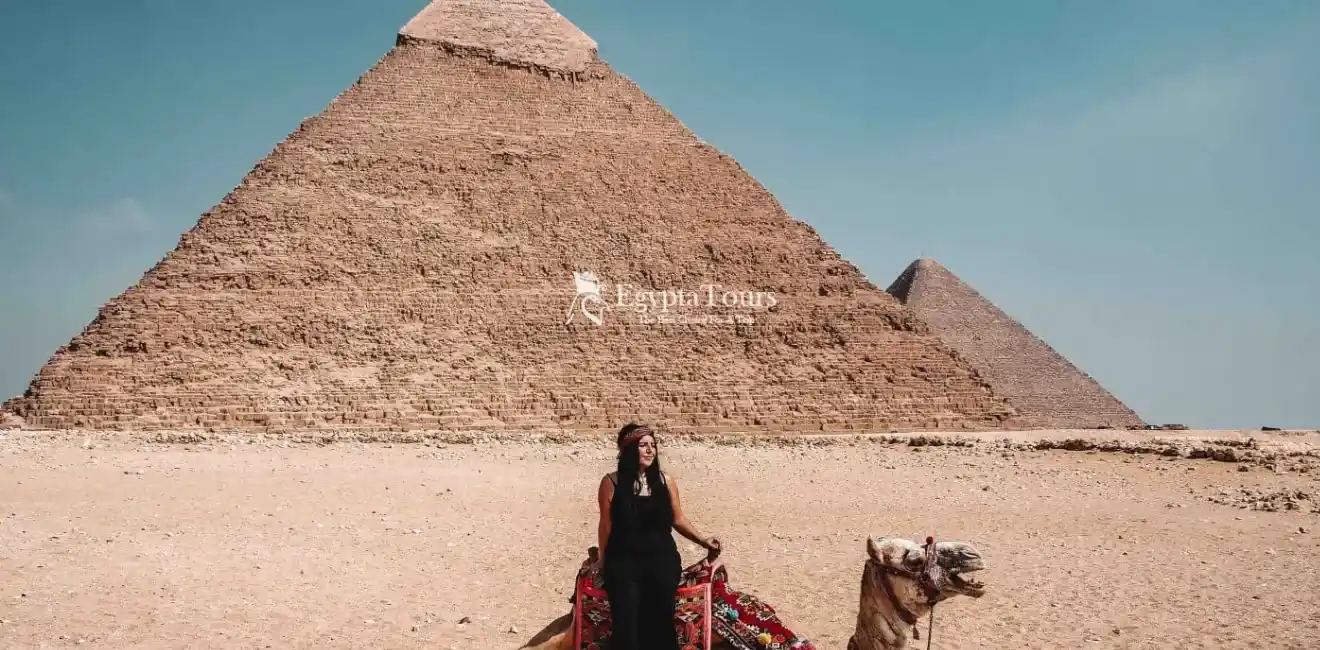
Practical-Tips-for-Visiting-the-Pyramid-khafre-EgyptaTours
– Visit the Giza Pyramids – The Giza Pyramids are perhaps the most famous of the Ancient Egyptian structures and the Khafre Pyramid is no exception. Located to the east of the Great Pyramids in the Giza Pyramids, the Khafre Pyramid is located just 8 miles from the center of Cairo.
The Giza Pyramids are also a major tourist draw and offer visitors an excellent opportunity to explore many of the same attractions as the Khafre Pyramid, as well as visit the Great Pyramid of Khufu, the Great Sphinx, and the Great Pyramids of Khafre. – Visit the Great Pyramids of Giza – Located to the west of the Giza Pyramids, the Great Pyramids of Giza are the oldest and grandest of the Seven Ancient Wonders of the World.
Constructed sometime during the Old Kingdom, around 2500 BC, the Great Pyramids of Giza are amongst the oldest and largest examples of human architectural achievement.
The Museum of Egyptian Antiquities is perhaps the most famous of the museums in Cairo.
Located in the Cairo Citadel, the museum is home to a wealth of archaeological artifacts and artefacts from ancient Egypt. The Egyptian museum is an excellent opportunity to explore the culture and history of Ancient Egypt, as well as to learn more about the archaeological discoveries made by the Egyptians.
It is also worth noting that the museum is often a major tourist draw, so you may wish to visit as soon as you arrive in Cairo.
The Old City is home to numerous architectural wonders and offers visitors an opportunity to explore the ancient history of the city. The main attractions of the Old City are the Islamic Cairo Castles, the Citadel, the Khan el-Khalili Bazaar, and the Sufi Misk Ali Shrine.
Attend a Show – The Giza Pyramids are perhaps the most famous of the Ancient Egyptian structures and the Khafre Pyramid is no exception.
Attractions-Near-khafre-Pyramid-EgyptaTours
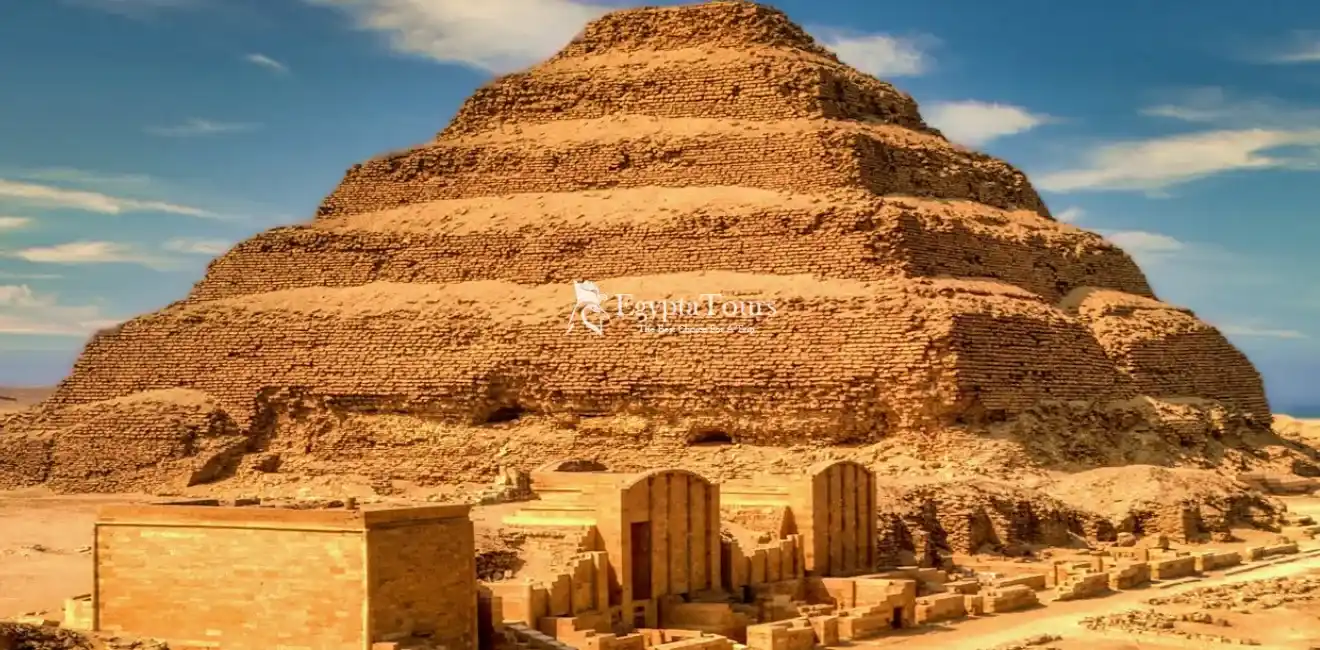
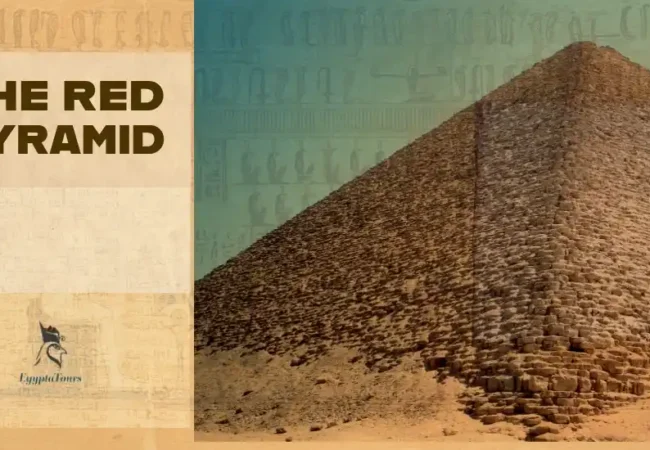
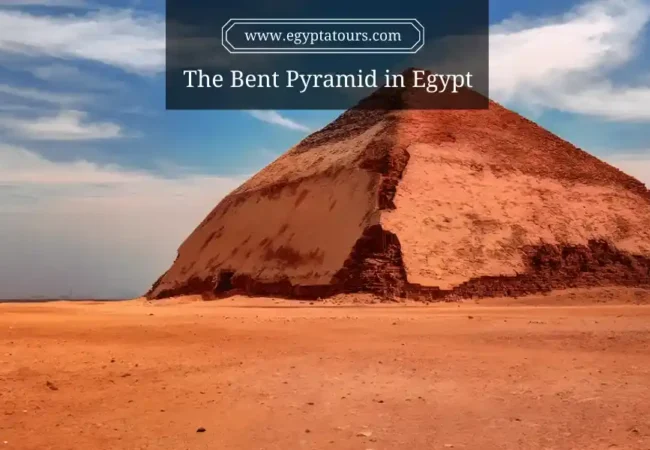
The Khafre Pyramid is located just 8 miles from the center of Cairo, and so it is easy to visit other attractions in the city while you are there. The Giza Pyramids are perhaps the most famous of the Ancient Egyptian structures, and are a major tourist draw. In addition to these, the Great Pyramids of Giza are also worth visiting, and the Pyramids of Saqqara, the Sphinx, and the Bent Pyramid are also worth a look.
| Tour Name | Duration |
|---|---|
| The Best Egypt 14 Days Tour Itinerary | 14 Days – 13 Nights |
| Full Day Tour to Giza Pyramids Memphis and Sakkara | 1 Day |
| Giza Pyramids Day Tour | 1 Day |
| 6 Days Cairo and Hurghada Tour Package | 6 Days – 5 Nights |
The Khafre Pyramid is one of the most iconic structures of Ancient Egypt and is a sight to behold. The pyramid is located just 8 miles from the center of Cairo, and so it is easy to visit other attractions in the city while you are there. The pyramid is also home to numerous secrets and features an interesting interior, making it a worthwhile visit.
The Khafre Pyramid is one of the three major pyramids in the Giza pyramid complex in Egypt. It’s the second tallest and second largest of the trio, built for Pharaoh Khafre, who ruled during the Fourth Dynasty.
Originally, the pyramid stood at 143.5 meters (471 feet). Over time, due to erosion and the loss of the outer casing stones, it’s now approximately 136 meters (446 feet).
Though slightly shorter, Khafre’s Pyramid appears taller because it sits on higher ground. Unlike the Great Pyramid, Khafre’s has a portion of its outer casing still intact at the top, offering a glimpse of what all the pyramids once looked like.
The pyramid was constructed as the tomb for Pharaoh Khafre. Despite tomb robbers looting most of its treasures over the centuries, Khafre’s granite sarcophagus remains inside.
One distinctive feature is the temple complex connected to it, which includes a valley temple, a causeway, and a mortuary temple. The Great Sphinx, often associated with Khafre, stands nearby and is thought to be a part of the complex.
Yes, visitors can enter the pyramid. The experience involves narrow passages and steep climbs, providing an insight into ancient architectural methods. However, access may be limited due to preservation efforts.
It’s a testament to ancient Egyptian engineering and architectural prowess. Studying it helps us understand the societal and religious values of ancient Egypt, especially during Khafre’s reign.
Like many Egyptian pyramids, Khafre’s is aligned with precision to the cardinal points. This alignment reflects the Egyptians’ advanced understanding of astronomy.
The core is made of limestone blocks, while the visible casing was originally highly polished Tura limestone, which gleamed brightly under the sun. Some granite was used in the inner chambers and temple complex.
The pyramid’s survival is due to the sheer size of the blocks and the meticulous construction techniques. The arid climate of Egypt has also played a significant role in its preservation.


Confidently choose your perfect Egyptian adventure from our selection of trusted, expert-curated tours.



Unlock the true wonders of Egypt with confidence. We combine expert local knowledge, seamless logistics, and round-the-clock support to deliver flawless, responsible, and unforgettable travel experiences.