You will be Picked Up from Ain Sokhna Port to be transferred to the home of history and civilization in the famous and artifact-rich Giza Pyramids area.
The journey begins from Sokhna Port to the Pyramids using various air-conditioned means of transport, whether a private car or a comfortable and modern tourist bus.
The journey takes approximately one and a half to two hours depending on traffic conditions.
When you arrive at the Giza Pyramids, you can start learning about
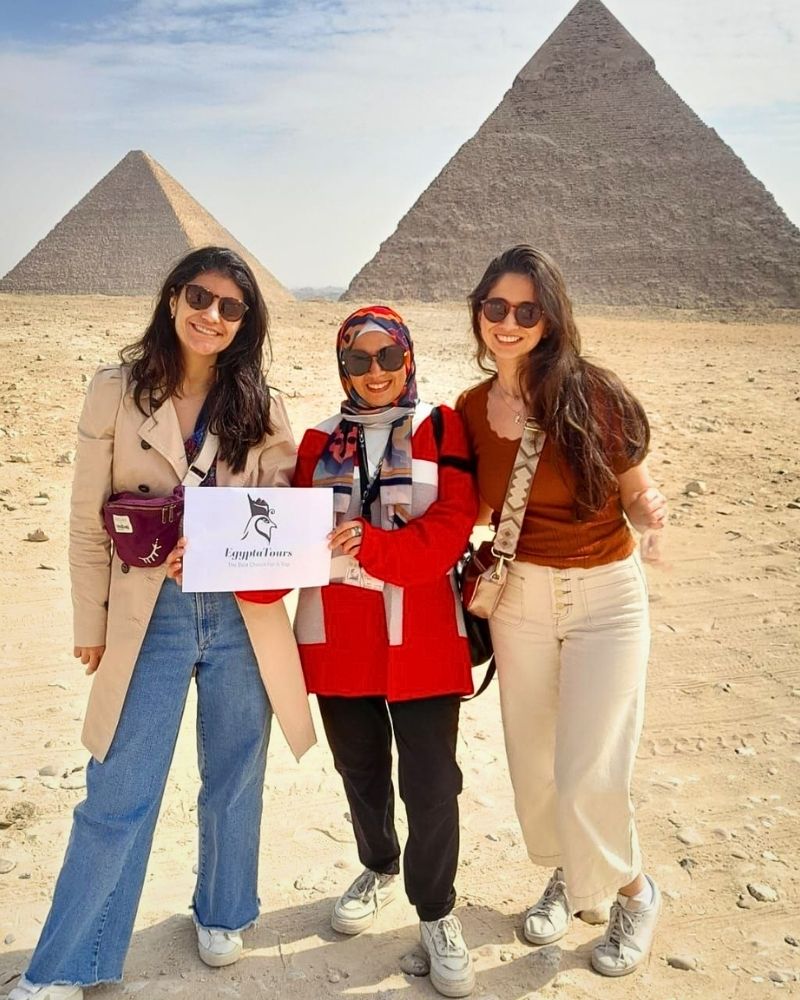
Egypt’s ancient history, wandering around the pyramids and taking souvenir photos of these unique moments.
This tour will take you on an adventure to explore some of the famous landmarks of
ancient Egyptian civilization.
Upon your arrival in Giza, you can head directly to the Pyramids which are located about half an hour’s drive from some downtown areas.
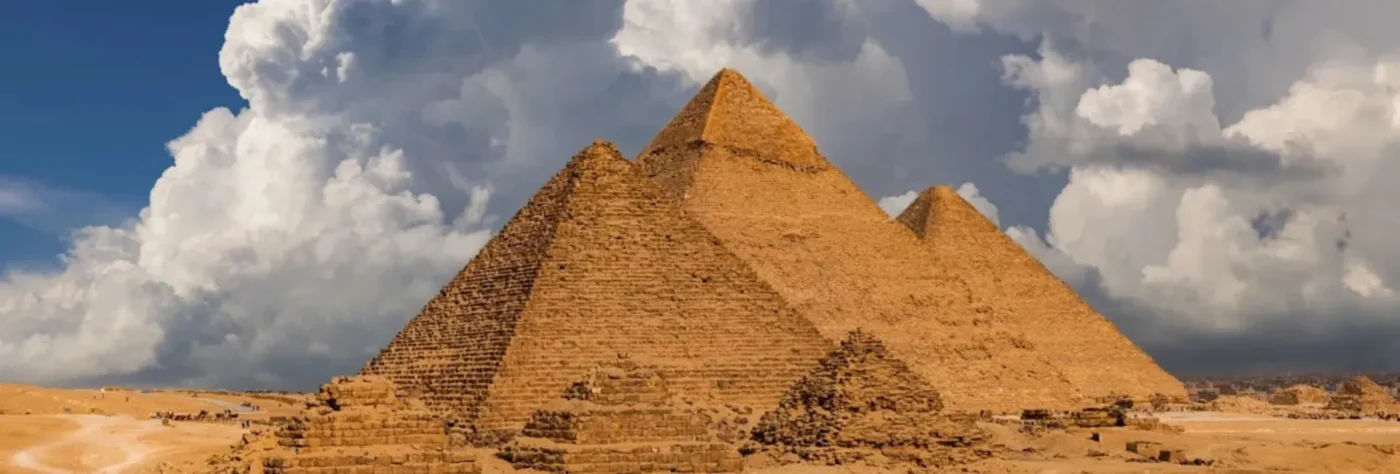
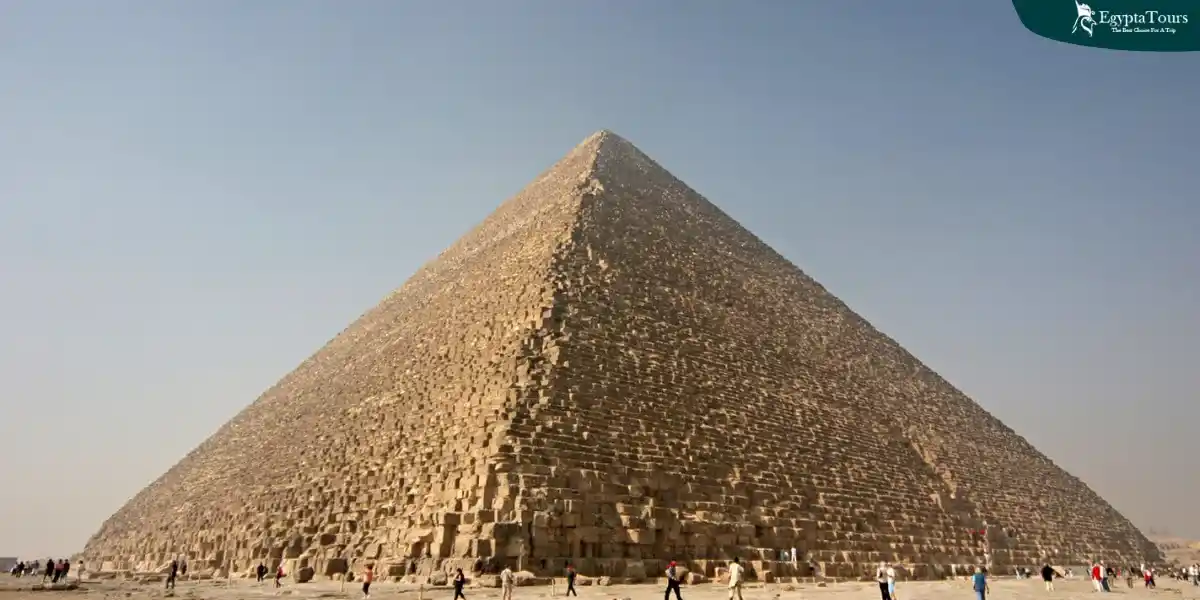
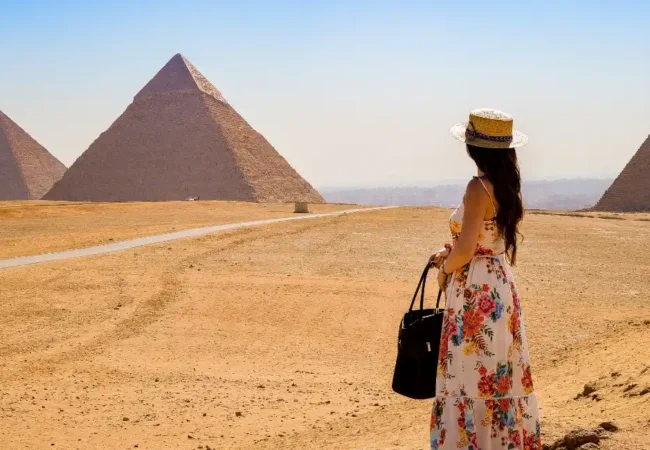
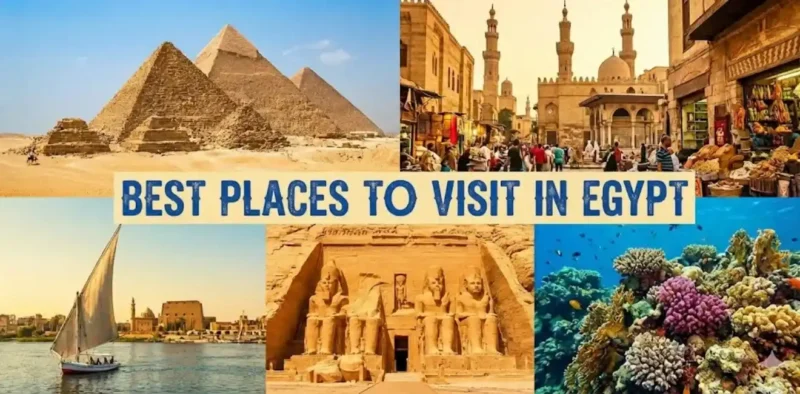
Then you will find yourself in front of one of the Seven Wonders of the World, represented by the Pyramid of Khufu (the Great Pyramid),
the Pyramid of Khafre (the Middle Pyramid) and
the Pyramid of Menkaure (the Smallest Pyramid).
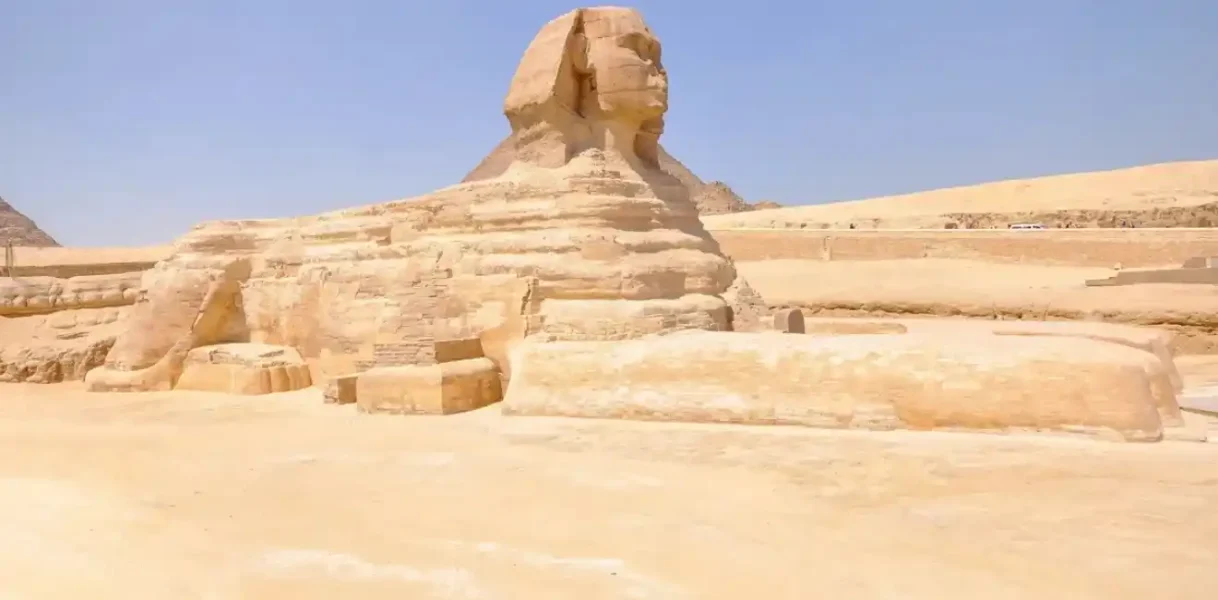
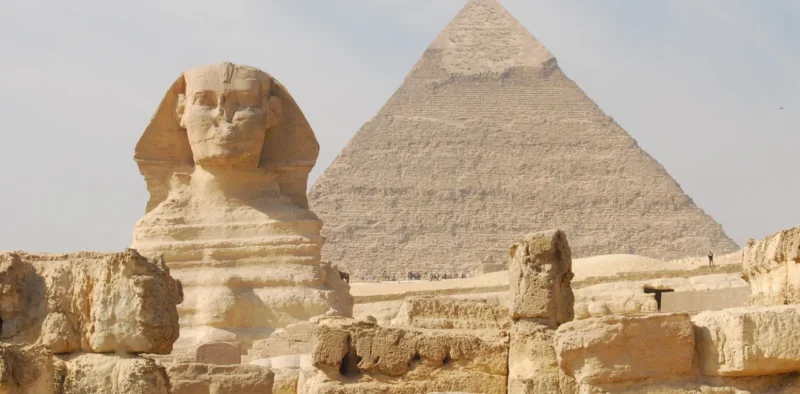
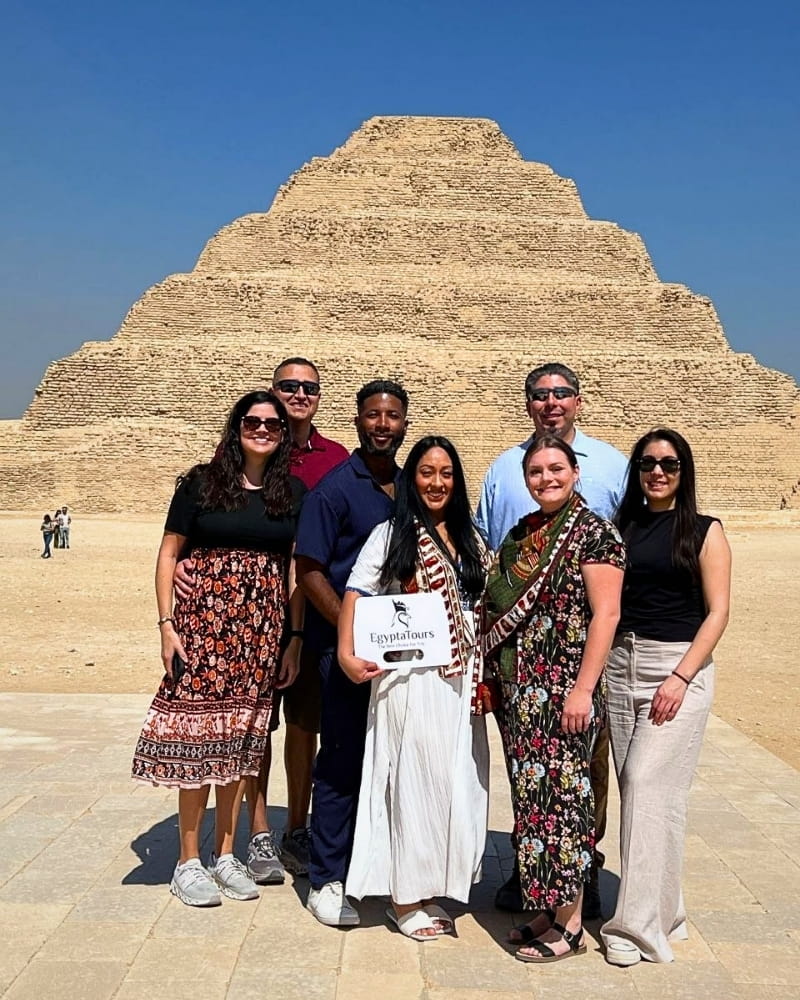
Then you will move to the Step Pyramid which is the Saqqara Pyramid, considered the oldest known large stone structure and the Great Sphinx statue which is characterized by its enormity.
Its body might appear like a lion’s body and its head like a human head.
It likely dates back to the time of
King Khafre and is located in front of what was this king’s funerary complex.
You can also visit
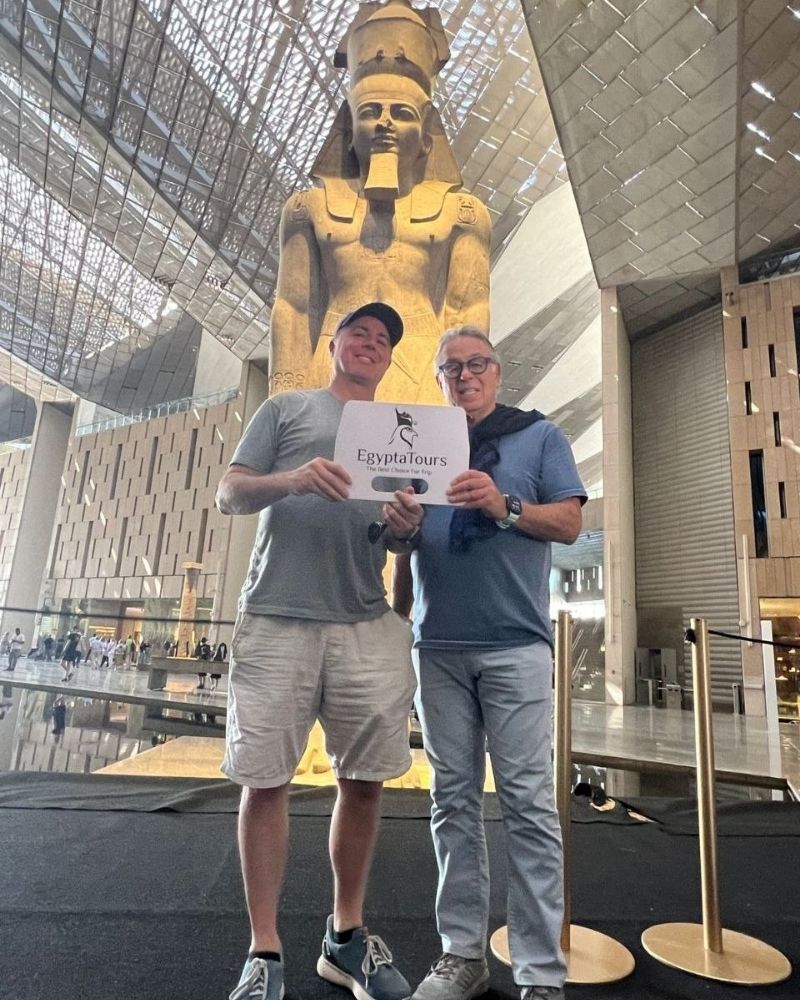
the Grand Egyptian Museum which is located close to the three pyramids and houses priceless archaeological treasures.
Giza Pyramid Complex:
The Giza Pyramid Complex is located on the Giza Plateau in the Western Desert, about 9 km west of the Nile River specifically.
This complex includes the three pyramids: Khufu, Khafre and Menkaure, the Saqqara Pyramid (in a nearby area, not on the same plateau), the Great Sphinx statue, a group of tombs known as the funerary complex or Queens’ tombs.
The tomb of Queen Khentkaus I, the tombs of Queen Hetepheres I, the mastaba area for high officials, the valley temples for both King Khafre and King Menkaure, the tombs and village of the pyramid builders of old and
the Solar Boat pit which was discovered next to the Great Pyramid.
The Great Pyramid of Giza
The Pyramid of Khufu is considered the largest of the Giza pyramids and it represents a significant civilizational leap for the ancient Egyptians. It was constructed around 2560 BC during his reign.
King Khufu, the ruler of the Fourth Pharaonic Dynasty, took this idea from his father,
King Sneferu, when he built his tomb in the shape of a pyramid (like the Dahshur pyramids).
When he assumed power, a group of the most skilled Egyptian engineers and specialized workers participated in its planning and construction.
They continued building it for 20 years according to common estimates.
Its original height reached 148 meters which makes it one of the tallest structures for 3800 years but due to the factors of time, its current height is 138 meters.
Many controversial discussions and diverse opinions have emerged throughout the ages due to the immense size of the pyramid’s stones and its towering height, especially since modern construction equipment as we know it today was not available before.
Some stories and beliefs that are not based on strong scientific evidence also appeared around it.
Some people suggested that the inhabitants of the lost continent of Atlantis were the ones who built the pyramids while others believed that giants from underground built the pyramid.
The Great Sphinx Statue
The Sphinx statue was carved and built from the stone of the plateau itself which is of the Edim type.
When it was exposed to some weathering factors, it was restored using layers of limestone in later eras to preserve it.
Its shape appears as the body of a lion and the head of a human.
The ancient Egyptians called it by a different name, but today it is known as the Guardian of the Giza Plateau because it is located in the Giza Governorate west of the Nile River, specifically on the Giza Plateau.
It has been said that it was built during the reign of King Khafre as the facial features of the Sphinx might resemble King Khafre according to some studies.
However, if you look closely, you will notice that its nose is broken.
Some have rumored that it was intentionally broken and there are other theories about the reason for that.
The Valley Temple:
This type of temple was first built during the reign of King Sneferu.
It directly overlooks a waterway that was connected to
the Nile River in ancient times.
It connects to the pyramids via a road called the causeway or the ascending road.
The tradition of building it continued for years until it was completed and became famous through the kings of the Twelfth Dynasty.
The temple includes some niches which contain statues of the deceased.
The body of the deceased was mummified and prepared in it before being transported to the final tomb.
Khafre’s temple is almost the only valley temple that remains in the Giza area in relatively good condition.
The Grand Egyptian Museum:
The Grand
Egyptian Museum is located near the Giza Pyramids.
It is a huge edifice built to house many
ancient Egyptian artifacts that have been moved from different locations.
Millions of tourists flock to it every year, or are expected to do so.
It was designed with high precision, executed in the shape of a large triangle divided into several smaller triangles.
The design concept was derived from the shape of the pyramids which are located nearby.
It was built on a large area of 100,000 square meters for the main building alone, comprising the section where artifacts will be displayed, an Egyptology library, a conference center, a research center, restoration laboratories, service areas and restaurants.
Future plans that will be implemented include creating a tourist walkway on the road that connects the pyramids to the Grand Egyptian Museum.
Memphis
Memphis is considered a tourist destination that attracts tourists from all over the world who are specifically interested in
ancient Egyptian history.
It is regarded as one of the most important historical landmarks in the country.
It served as an important political, cultural and religious center in the ancient Kingdom of Egypt.
It was founded around 3100 BC by
King Menes (Narmer) and was built on the west bank of the Nile River, becoming close to modern Cairo.
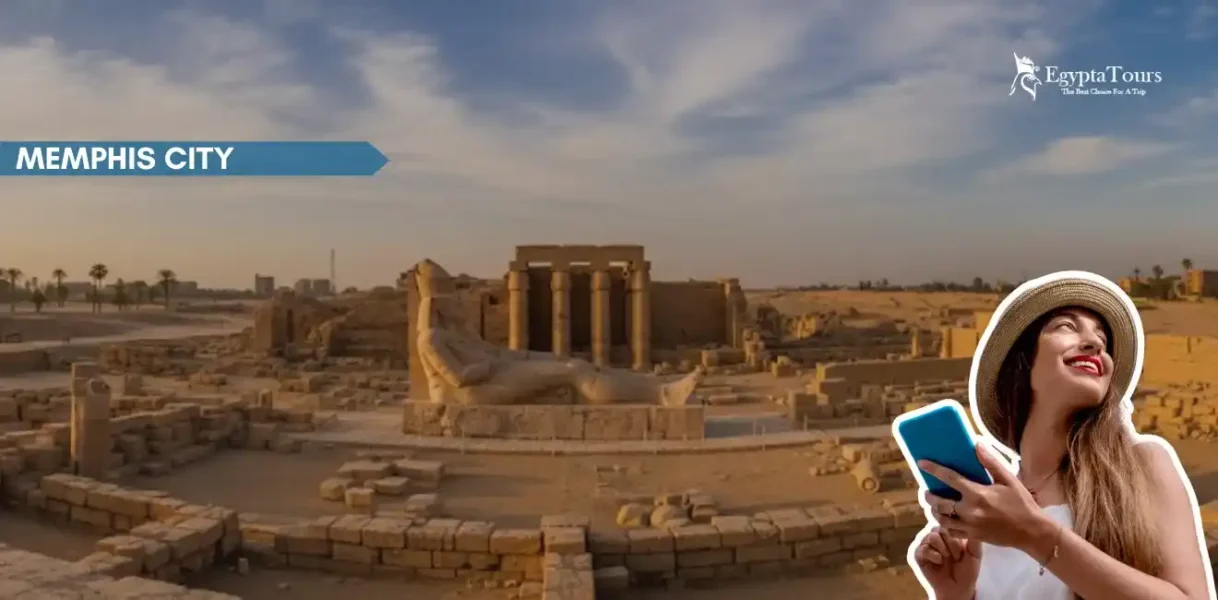
Memphis is famous for its open-air museum which houses a collection of remains of temples such as the Temple of Ptah, palaces and artifacts like the colossal statue of Ramesses II and an alabaster Sphinx statue.
-
Transport:
Private A/C Vehicle
-
Meals:
Lunch