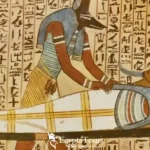
Edfu Temple
Temple of Edfu Facts (also known as The Temple of Horus) is...



Queen Hatshepsut—one of ancient Egypt’s rare and most powerful female pharaohs—governed during the 18th Dynasty for over two decades of remarkable peace and economic prosperity. To immortalize her reign and honor the creator god Amun, her royal architect Senenmut designed the breathtaking mortuary temple of Djeser-Djeseru (“Holy of Holies”) at Deir el-Bahari.
Carved directly into the dramatic limestone cliffs of the Theban Necropolis near Luxor, this multi-tiered architectural marvel stands as a masterclass in environmental integration, monumental relief art, and imperial self-promotion.
Key Takeaways
Rise of a Female Pharaoh: Initially serving as regent to her young stepson Thutmose III, Hatshepsut boldly transitioned from temporary overseer to Egypt’s legitimate monarch, adopting traditional male royal regalia—including a false beard and masculine styling—to assert her authority in a male-dominated society.
Innovative Architecture (Djeser-Djeseru): Designed by Senenmut, the temple breaks away from traditional massive flat complexes by utilizing three expansive stepped terraces connected by gentle ramps, seamlessly harmonizing with the natural rock amphitheater.
The Legendary Punt Expedition: The middle terrace features famous, richly detailed reliefs documenting Hatshepsut’s successful maritime trading expedition to the exotic land of Punt, preserving rare historical records of African flora, fauna, and indigenous trade.
Divine Legitimacy and Birth Colonnade: Interior wall carvings vividly depict Hatshepsut’s divine conception, portraying the god Amun-Ra as her true father to spiritually reinforce her right to the throne.
Posthumous Erasure and Rediscovery: Following her death in 1458 BCE, Thutmose III attempted to erase her from history by defacing her images and omitting her name from king lists. Her monumental legacy was successfully revived when 19th-century archaeologists began interpreting the hieroglyphics at Deir el-Bahari.
In this post, we will provide the facts about Hatshepsut Temple, Egypt’s most famous building.
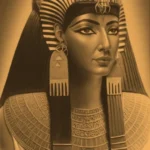
Queen Hatshepsut Temple, located at Deir el-Bahari in Egypt, is one of the most remarkable structures from ancient Egypt, built to honor Queen Hatshepsut, one of the few female pharaohs. She reigned for about 20 years after the death of her husband, Thutmose II, taking on the full role of pharaoh, including wearing the traditional symbols of kingship, such as the false beard.
Her mortuary temple, dedicated to the god Amun, stands as an architectural marvel with its terraced design blending into the cliffs of the Valley of the Kings.
The statue of Hatshepsut, one of many that adorned the temple, reflects her unique position in Egyptian history and can be seen today in the Metropolitan Museum of Art in New York, offering a glimpse into the legacy of a powerful female ruler who defied tradition to secure her place in history.

Who-is-Queen-Hatshepsut-EgyptaTours
Hatshepsut (c. 1508–1458 B.C.) looked comfortable with the conventional female role of supporting player among Egypt’s royals for many years. She was a pharaoh’s daughter (Thutmose I) and the queen wife of another (Thutmose II, her half brother). Hatshepsut dutifully became regent to Thutmose III, who was only six years old at the time, when her husband died in 1479 B.C. and her stepson was named heir.
However, as time passed, Hatshepsut became less of a temporary overseer and more of Egypt’s legitimate monarch, referring to herself as “The Lady of the Two Lands.” She undertook a daring power move as Thutmose III approached adulthood, when he would officially take the throne.
Hatshepsut declared herself a pharaoh, taking the title’s titles and emblems. Hatshepsut did not exile Thutmose III, who was technically her co-ruler, but she definitely overshadowed him. Hatshepsut defends her actions by identifying Amun as her father and saying that he intended for her to rule Egypt: “I acted under his command; it was he who led me.”
Her 21-year reign, 15 of which she was the only ruler, was one of peace and prosperity for Egypt. She oversaw large-scale construction projects, such as two massive obelisks at Karnak and her funerary temple.
Thutmose III ascended to the throne after Hatshepsut died in 1458 B.C. Hatshepsut’s revolutionary reign went unnoticed for generations. Thutmose III attempted to remove Hatshepsut from history by defacing her monuments and omitting her name from the list of monarchs before his own death. Hatshepsut’s status as Egypt’s powerful female pharaoh was revived when archaeologists began interpreting the hieroglyphics at Deir El Bahri in 1822 and later discovered her tomb in 1903.

What-is-Hatshepsut-Temple-EgyptaTours
The stunning Hatshepsut temple, also known as Djeser-Djeseru (Holy of Holies), was constructed for the Eighteenth Dynasty’s “Pharaoh Queen Hatshepsut.” It is one of ancient Egypt’s magnificent temples and is regarded as the finest ancient Egyptian construction. Hatshepsut Temple surpasses all other similar monuments in Ancient Egypt in terms of size and richness of ornamental decorations. With a panorama of Ancient Egypt’s temples, it stands out sharply.
It is devoted to Hatshepsut’s history and the creator god Amun. The Egyptian monarchs had the responsibility of honoring their gods and pharaohs and preserving their memory for all time by building tombs and temples. Queen Hatshepsut regarded the temple as a chance to improve her image and reputation while also immortalizing her name (the mortuary temple succeeded in achieving both objectives).
Queen Hatshepsut’s funerary temple is a semi-rock-carved monument. The Queen’s temple became a jaw-dropping engineering masterpiece of the ancient architects due to its unique characteristics. It is located in the Valley of the Kings.
It is a natural rock amphitheater located in the vicinity of Thebes, near present-day Deir el-Bahri, straight across from the Nile River. This ancient religious and funeral complex, carved out of a deep bay of cliffs, was a major religious and funerary site in the Theban region during ancient times.

Hatshepsut-Temple-Facts-Design-and-Layout-EgyptaTours
In 1479 B.C., Queen Hatshepsut issued the order to build this magnificent temple. She constructed the temple to depict the story of her life, which took roughly fifteen years to finish. Hatshepsut’s administrator, Senenmut, designed the temple. He carefully built it based on the Temple of Mentuhotep II, but he expanded every part of it.
Hatshepsut Temple is a semi-rock structure. A carved-in-the-rock sanctuary links up with its ground chambers. Hatshepsut Temple is made up of three terrace steps that rise over each other and are linked by gentle stair-ramps. The following is a list of these features:
The temple’s lower terrace.
The temple’s second terrace.
The upper terrace of Hatshepsut Temple.
The Lower Terrace of Hatshepsut Temple.
The lower terrace, which acts as the center courtyard, is surrounded by a wall. The builders decorated this wall with stone falcon statues. A 22-column portico closes the yard from the west. This courtyard is divided in the middle by a ramped staircase. Monumental lions framed it, and enormous 8-meter-high sculptures of Queen Hatshepsut stood on either side of the entryway.
These sculptures were crafted after the god Osiris by ancient Egyptian artists. They covered the hall with painted reliefs of Queen Hatshepsut trampling on enemies and offering sacrifices to the god Amun. Scenes of military parades, a chain of enslaved people, and building labor may all be found in this area.
Hatshepsut Temple second terrace can be reached through a stairway that runs through the entrance. There was formerly an artificial pond in the center, surrounded by trees. The ancient builders also added a tetrahedral monolithic column entrance to the western part of the terrace. They divided it with a staircase to provide the foundation for the third top terrace.
Relief compositions related to Queen Hatshepsut’s life have been preserved on the gate’s walls. Here, the mother of Egypt’s future king, Queen Ahmes, marries the god Amun-Ra.
Then there are scenes depicting Hatshepsut’s birth from this “divine” union, as well as her coronation and getting blessings from the goddess Hathor. The reliefs at the other end of the terrace portray a queen-sent expedition.
Hatshepsut sent this expedition to the legendary kingdom of Punt with the intention of bringing back countless jewels and unusual plants. Most experts believe Punt should be located on Africa’s east coast. It is probably the same country that was known to the residents of the Middle East in ancient times as Ophir. The reliefs represent classic African landscapes such as monkeys, panthers, giraffes, and huts on stilts.
The ancient Egyptians decorated the stairs leading to the top terrace with statues of huge cobras, each with a falcon sitting on its back. These are heraldic figures representing Upper (cobra) and Lower (falcon) Egypt, and the entire composition personifies Egypt’s unity. A pair of sphinxes carved from red Aswan granite framed the stairway as well.
The major temple rituals were held on the upper terrace. As a result, the Hatshepsut sanctuary’s entrance was carved into the rocks. The sanctuary facade is a portico with four-sided columns, each of which previously held a massive statue of the queen. Therefore , these massive sculptures could be seen from ships going down the Nile. All of the terraces were surrounded by columns. In addition, three tiny chapel churches were located in the southern wing of the entry. There is a sanctuary to the goddess Hathor, Queen Hatshepsut’s patroness.
A fascinating labyrinth of underground rooms carved from the rocks opens out beyond the colonnade of the entry. The entrance to the main hall was framed by three-meter sculptures of Queen Hatshepsut and the god Osiris.
The Ancient Egyptians covered the hall floors with gold and silver plates. They also used bronze inlay on cedar doors. Hatshepsut also used faceted columns to decorate the walls. She decorated the arches with colorfully painted reliefs. The Ancient Egyptians, on the other hand, created their doors of “black copper” inlaid with Electra (an alloy of silver and gold).
A massive marble statue of the queen stood in the main hall of the underground sanctuary. Unfortunately, only parts of it have remained. The temple has almost 200 sculptures, 140 of which are sphinxes. Sculptures from Hatshepsut’s temple are among the most magnificent examples of XVIII dynasty Egyptian art.
They portray Queen Hatshepsut as a pharaoh, the god Osiris, and a sphinx. These depictions resemble the ancient ruler’s appearance: an oval face narrowed to the chin; a tiny mouth; and almond-shaped eyes under wide arches of brows. The eyelid line was stretched to the temples using makeup.
The cult sculptures from the main temple were created by the first great masters in a fragile and soft style to imitate the queen’s picture look. The sculptors attempted to accurately represent the likeness of all the sculptures. However, huge sculptures (8 and 5 m high) on the temple’s façade simply highlighted the overall resemblance and recreated the most distinguishing aspects.
Despite the fact that some parts of this magnificent ancient monument have been vandalized, several visitors during their Egypt tours stated that this landmark is well-preserved and worth the visit. This magnificent temple is built on three massive terraces linked by ramps.
It is open from 6 a.m. to 5 p.m. daily. A bazaar (or market with different goods) is located just outside the property’s entrance. The Birth colonnade and Punt colonnade, Hathor’s chapel, Anubis chapel, and Amun’s sanctuary may all be found inside this magnificent temple. If you visit Egypt, you definitely have to visit the unforgettable Hatshepsut Temple.
Queen Hatshepsut began some ambitious building projects such as all Egyptian Pharaohs, she gave the order to construct a temple at Deir El-Bahri, it’s regarded one of the most beautiful temples in the world, which was the responsibility of her consultant Senenmut, the tourists in Egypt like to visit this historical place pending their trip to Egypt, this temple was garnished with her great works and honor the gods, she annxed her works in Karnak temple where she reconstructed hypostyle hall of her father and added two Obelisks.
She expanded her father’s tomb to be buried with him. She passed away in 1458 BC as she was in her mid-40s; she was lyied with her father in his tomb in The Valley of the Kings. If you would like to visit Egypt and assists all these archaeological places in lower and upper Egypt and explore more information about the civilization of ancient Egypt, then you can discover our best Egypt tour packages, Nile cruises and choose your remarkable trip.
The temple’s construction relied on the skilled builders, sculptors, and scribes who formed the backbone of the ancient Egyptian workforce.
The period of Queen Hatshepsut began when she married her half-brother Thutmose II and become the Queen in 1492 BC, he was the son of Thutmose I from small wife lady Mutnofret, he was a fragile man with poor health, Hatshepsut controlled on Egypt in the name of the King during she was his wife.
Hatshepsut had only one daughter from her husband Thutmose II Neferu-Ra, she was towering to be the wife of the god Amun, the second great position for women in old Egypt after the Queen Hatshepsut was activating herself to be the pharaoh after her husband passed away. after Thutmose II death, the traditions of the Egyptian opposed the idea of the women ruling Egypt as a Queen.
Hatshepsut had an effective proponents including Senenmut her consultant and chief minister, and this helped her to be the pharaoh of all Egypt with complete authority of pharaoh, she was controlled by male pharaohs, she commanded to be characterized and portrayed as men with a beard and muscles, and shown in traditional female regalia.
Hatshepsut Temple consisted of three levels. Hatshepsut Temple was built on the western side of the capital of Egypt in the New kingdom, Thebes, and it’s around 17 miles northwest of Luxor. The Hatshepsut Temple was designed by the Consultant of The Queen Hatshepsut, Senenmut in 1479 B C, and took around 15 years to be completed.
The design of the Hatshepsut Temple is dependent on a style that was taken from Greek and Roman origins called the Classical Architecture and this was the style of the new kingdom. The description and the majestic wall carvings at the temple of Abu Simbel is Similar to the ones at Hatshepsut Temple, and this is considered one of the main highlights. Some various historical events and achievements about Queen Hatshepsut was her religious loyalty to The god Amun.
Queen Hatshepsut married Thutmose II, and this was her beginning. Queen Hatshepsut is considered the most powerful female Pharaoh in ancient Egyptian history. She was the wife of the god Amun and this gave her a powerful position and when her husband Thutmose II died, she took the control of the throne from her husband’s son.
The Time of queen Hatshepsut was the most peaceful period, as she improved the status of the socioeconomic level by making commercial deals with the punt land and this helped her to extend the Karnak Temple.

Hatshepsut-Temple-Description-EgyptaTours
Hatshepsut Temple was originally guided by a Sphinx Avenue which began from the valley to the inlet which is now demolished. In the opposite of the inlet there were mainly two Persea trees, these were holy trees in the Egyptian mythology like in the story of Anubis and Bata.
Passing through the inlet, you will find yourself in the open court which had at the ancient days some date palms, papyrus plants and probably some of those products imparted from Punt. At the end of this open court you could see two colonnade courts proponent~ed by two ranks of columns, the front ranks are in the format and of squared columns, these two colonnade courts are above the ground level by a Mastaba form block of stones.
The northern colonnaded court is in an extremely bad case of conservation unless at its extreme northern angle there are remnants of chasing views.
The southern colonnaded court is in a little best case of conservation. It has some remnants of the views of the transmission of the two Obelisks of Hatshepsut from Aswan to Karnak.
The obelisks are positioned base to base on the deck of a large tower that is pulled by boats. In the center of the line Thutmose III is dancing before Amonmin. These views, if kept , would have been a wonderful part of the ancient art, but it was smashed.
The central or the middle colonnade court is led by a slope in between both lower colonnaded courts, after that we would see another slope disconnecting this colonnaded court into two sections and that slope is leading to the superior court.
The temple is guarded by twelve square columns. The walls of the temple of Anubis are distinguished for the nice painted views. On the western wall, there is a scene of the god Ra seated on his throne having a great table of offerings presented to him from the queen erased as usual by Thutmose III. Then we would find the entry path of the grave of Anubis.
The northern wall, on the upper there is a view of Thutmose III offering booze to the god “Sokar” , one of the dead gods. The southern wall of this temple is substituting another view of Hatshepsut between Hamachis and Nekhbet with also another view of the falcon over the queen.
The internal wall of the inside grave of Anubis is substituting the character of Hatshepsut erased again between Anubis and Hathor conserved from the upper by the whole character of Anubis and crowned by the winged sun disk.
The birth colonnade of Queen Hatshepsut, the views are substituting the fantasy tale of Hatshepsut being the holy child of the god Amon from queen Ahmos the wife of Thutmose I, the views have gained a lot.
The views in this colonnade court begin from the southern end, just down the slope leading to the superior court. It begins by a view of the council of the gods in the turnout of Amon. Thoth is shown leading Amon to the room of queen Ahmos, who is seated vis a vis with Amon being fattened with the key of life shown to her nose sniffing the holy breath of life.
The seats which are used by the god and the queen are carried up in the vault properly such as the view of Amenhotep III in the temple of Luxor substituting two goddesses seated on a lion-head couch. Then the god khnum is seen getting his instructions from Amon to from Hatshepsut and her ka on his potter’s wheel.
While the frog headed goddess haqtputs the breath of life in the ditchs of the recently born baby. Then Thoth is shown declaring that she is soon going to send. Then Thoth and Haqt are taking the queen to the birth room.
The view now is franked by the queen being seated on a chair with her woman coming on her. Hathor is then shown substituting Hatshepsut to Amon. Then after that Thoth and Amon are assumed to be carrying the child and its ka erased, after that the final views of the colonnade substituiting the queen with various gods.
By moving the southern end of the colonnade what was called the Punt colonnade. undoubted that it is the most amazing series of satisfactions in Egypt substituted the voyage to the land of punt and how they formalized that peculiar foreign land itself in specifics. Which is not running in any other Egyptian documents.
These document the only origin of information about this foreign land of Punt. It seems that the land of Punt is that which lies on the southern end of the Red Sea, which is the Somalise coast, it was named the land of gods or the Holy land.
The satisfactory start view is seeing the ships of the Egyptian delegation heading to Punt and just about to reach there. Facing all of them is the chief of the Punt village called “Barihu” raising his hands whether to greet them and beside him stops his wife called “Aty” and she is very prominent cause of her large baby as well as a view of a donkey who was assumed to hold that big wife of the chief of punt.
These two scenes were stolen after that, and then they were kept back to the Egyptian Museum, and alternated by copies on the walls of the temple. The two rank views are substituting incense trees put in small scuttles filled with clay by the Egyptian sailors substituting the sea.
The remain of the views on the western wall are substituting Hatshepsut erased looking on Amon all the presentations.
Hatshepsut Temple has no rival in terms of its aesthetic impact from afar. The fascinating multi-tiered structure set up against the limestone rocks at the river valley’s shoulder is a very breathtaking sight. Its layout is as unique as the pharaoh who ordered its creation.
We highly recommend that you give yourself plenty of time to visit this massive complex and take in all of its spectacular attractions.
while being in Luxor city you should visit queen Hatshepsut temple through our Egypt tour packages or Nile river cruises.
Hatshepsut was a remarkable figure in ancient Egyptian history, known for being one of the few female pharaohs and serving as queen of Egypt during the 18th Dynasty. She initially ruled alongside her stepson, Thutmose III, after the death of her husband, Thutmose II.
However, she soon asserted her authority and proclaimed herself pharaoh, adopting masculine titles and imagery to solidify her position. Hatshepsut is celebrated for her ambitious building projects, including the magnificent mortuary temple at Deir el-Bahari, which showcases her architectural vision and devotion to the gods.
Her reign, lasting about 22 years, was marked by peace and prosperity, allowing trade to flourish and arts to thrive.
Despite the challenges of being a female ruler in a male-dominated society, Hatshepsut’s legacy endured long after her death, influencing subsequent generations and leaving an indelible mark on Egyptian history.
Hatshepsut, one of the most powerful female pharaohs of Egypt, initially rose to power while acting as regent for the young Thutmose III before declaring herself king. Known for her ambitious building projects and successful trade expeditions, her legacy reaches far beyond Egypt. Today, a tomb in the Metropolitan Museum of Art in New York City preserves artifacts connected to her reign, offering a glimpse into the life of this extraordinary queen.
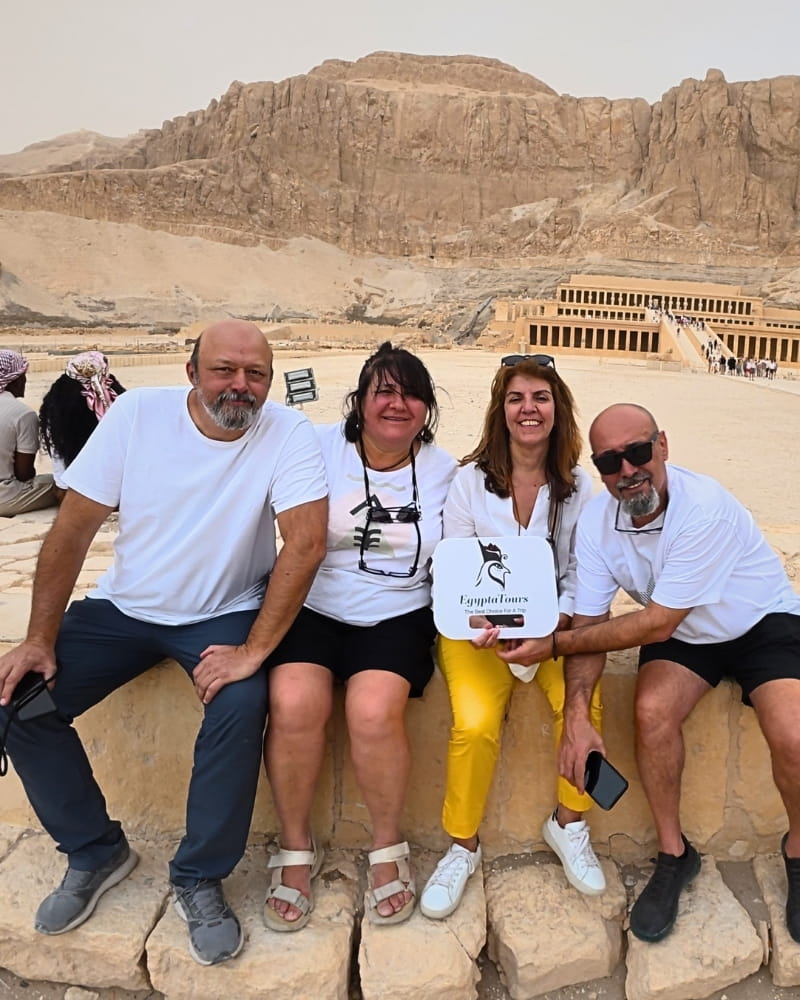
Hatshepsut’s Temple is in Deir El-Bahari, near Luxor, Egypt. It’s on the west bank of the Nile, nestled against the cliffs of the Theban Necropolis.
The temple was commissioned by Pharaoh Hatshepsut and constructed by her royal architect, Senenmut, during her reign in the 18th Dynasty.
It was built as a mortuary temple for Hatshepsut, to honor her legacy and as a sanctuary for the god Amun.
The design is remarkable for its three terraces, which are harmoniously integrated into the natural landscape. Its colonnaded style was innovative for its time.
Yes, it features intricate reliefs and statues, depicting Hatshepsut’s divine birth, her trade expeditions to Punt, and her dedication to the gods.
Hatshepsut had to assert her legitimacy as a ruler in a male-dominated society, often portraying herself in traditional male pharaoh roles and attire.
Yes, ongoing restoration efforts have been undertaken to preserve its art and architecture, largely due to damage from natural erosion and human activity.
Visitors will encounter stunning architecture, rich history, and panoramic views of the surrounding landscape. Interpretive signs and guides are available to enrich the experience.
It’s often praised for its architectural elegance and integration with the environment, setting it apart from the more massive and traditional temples like Karnak or Luxor Temple.
Yes, it’s open to the public. It’s a popular tourist site, attracting visitors from around the globe who are interested in ancient Egyptian history and architecture.



Confidently choose your perfect Egyptian adventure from our selection of trusted, expert-curated tours.



Unlock the true wonders of Egypt with confidence. We combine expert local knowledge, seamless logistics, and round-the-clock support to deliver flawless, responsible, and unforgettable travel experiences.