The Temple of Philae, located on a peaceful island and devoted to the goddess of love, is a holy place that has astonished tourists since the first Nile cruises left Cairo, and is one of Egypt’s most important monument sites.
The Philae Temple was originally built on the island of Philae, which in Ancient Egyptian meant “the end.” It was one of the last temples dedicated to the cult of Isis, who was worshipped for reviving her husband Osiris after his brother Seth murdered and dismembered him.
In this post, we’ll provide a comprehensive travel guide to the Temple of Philae to help you make sense of the most prominent tourist attractions in the Aswan area.
People come here for beauty, yes, but also for meaning. This is one of Egypt’s most loved temple sites, closely tied to Isis, one of the most powerful goddesses in ancient belief.
In this guide, you’ll learn what “Philae Temple” really refers to, why it mattered so much in late Egyptian history, how it was moved to Agilkia Island, and how to visit today from Aswan.
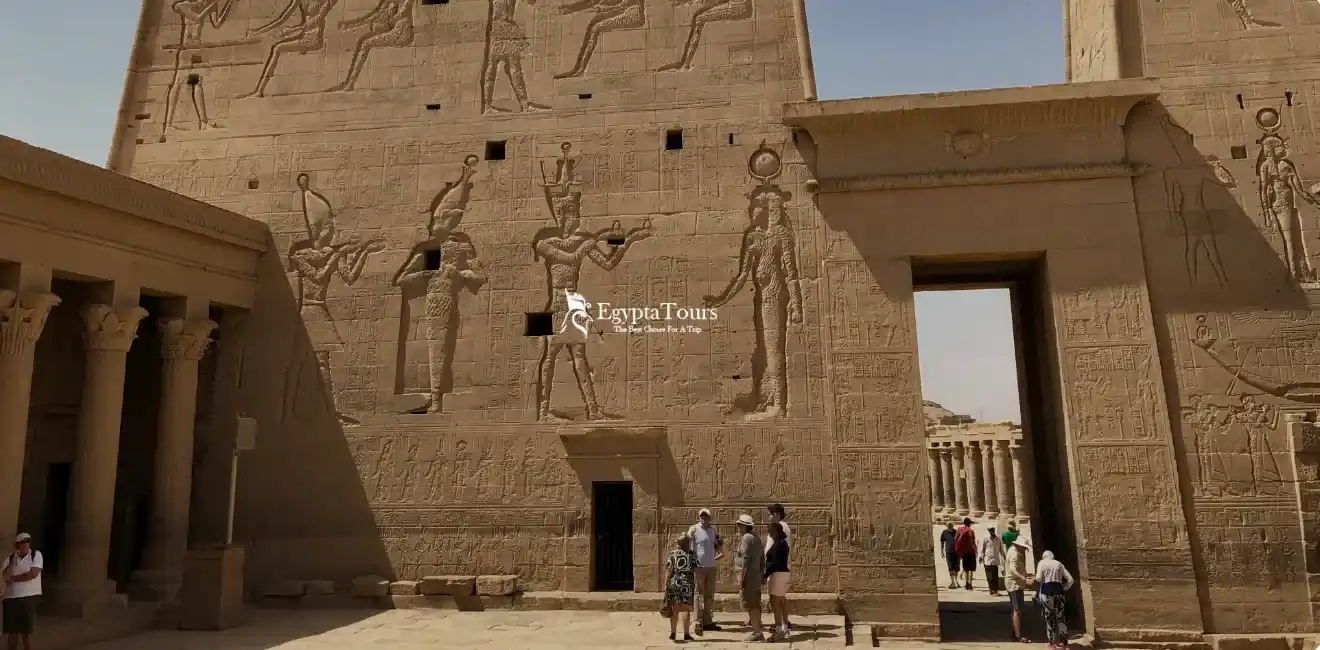
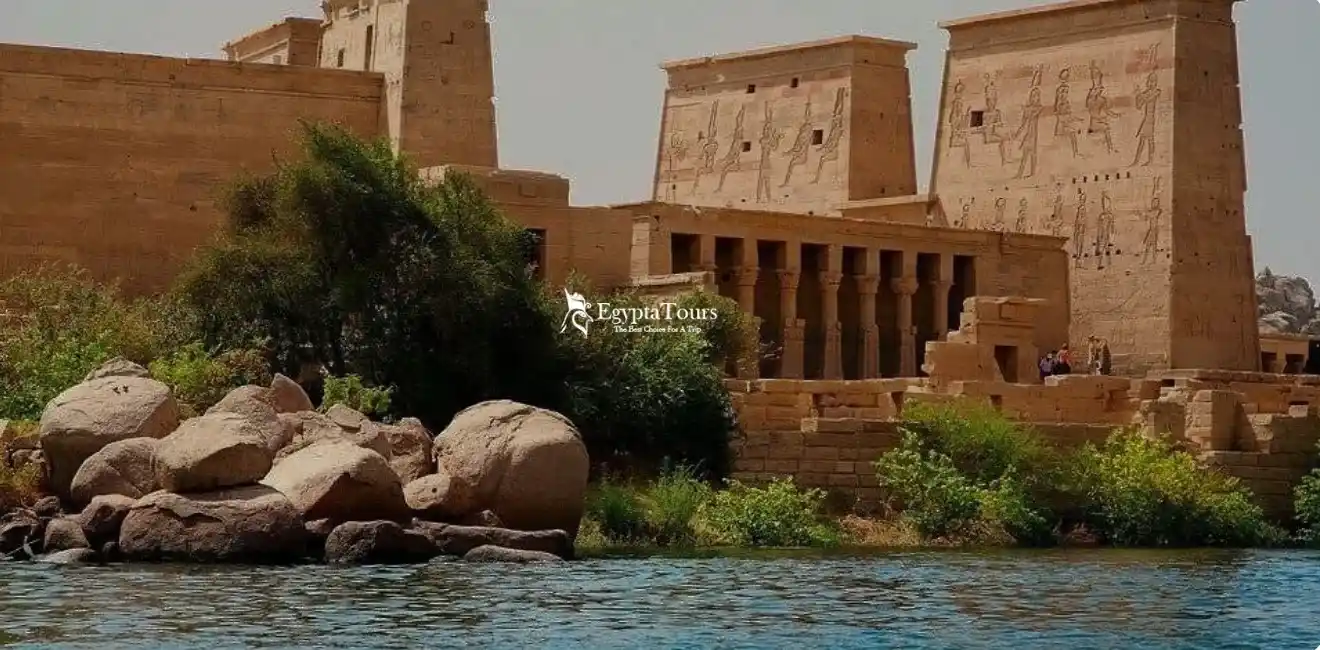
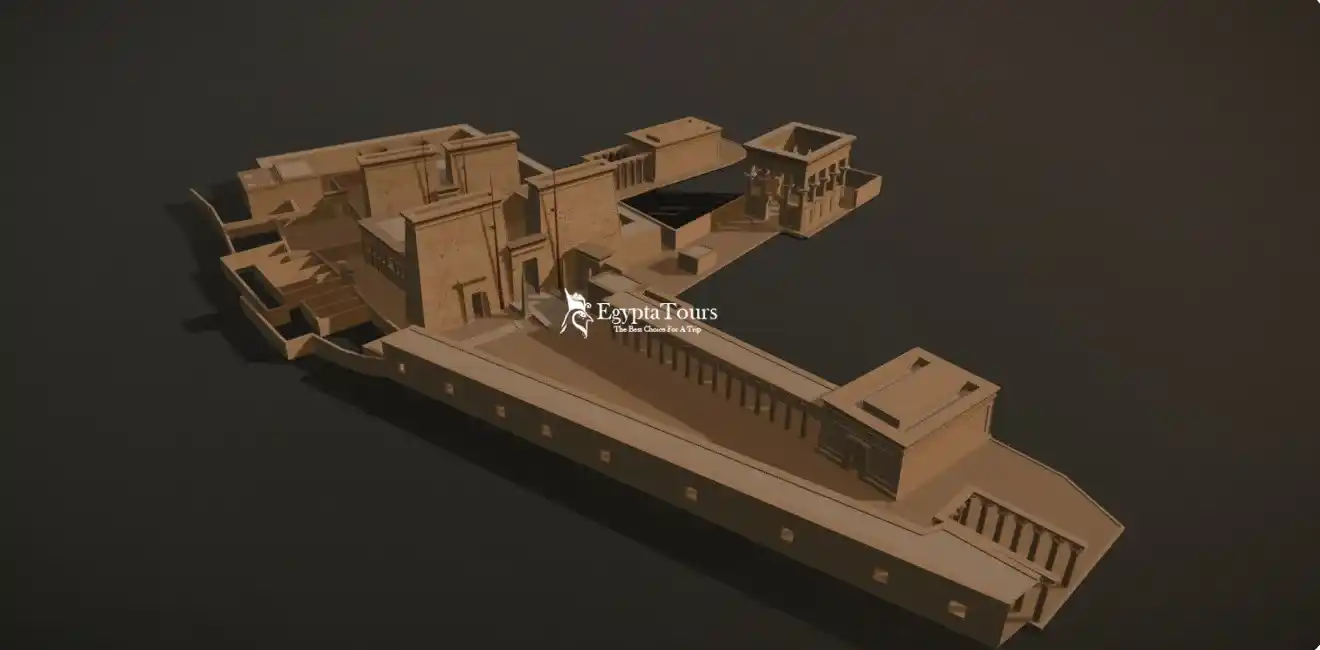
Philae Temple is near Aswan, in southern Egypt, and it’s reached by a short boat ride. When travelers say “Philae Temple,” they usually mean the whole Philae temple complex, not a single building. The site includes gateways, courtyards, columns, small shrines, and scenic corners where carved stone meets bright sky.
So why is it famous?
First, it’s tied to Isis worship, which drew pilgrims for centuries. Second, it’s set on an island, which changes the mood. The approach by water feels like arriving at a place set apart from daily life. Third, many of the standing structures come from the Ptolemaic and Roman periods, and the reliefs can be strikingly crisp. At the same time, the site’s sacred role is older than those stone layers. Philae was already special long before the final temples were built.
It’s also famous for its modern story. The complex was threatened by rising water from dam projects, then saved through a careful relocation. That rescue is part of why Philae remains such a talked-about site today.
A temple complex dedicated to Isis (and other gods)
Isis is the heart of Philae. In ancient Egypt, she was linked with protection, healing, motherhood, and royal power. At Philae, her story connects with Osiris and Horus, names you’ll see often in Egyptian temple art.
As you walk through, you’ll also spot other divine figures, including Hathor in some areas. The walls show classic temple themes: rulers offering gifts to gods, priests performing rituals, and long lines of hieroglyphs that recorded names, titles, and sacred phrases.
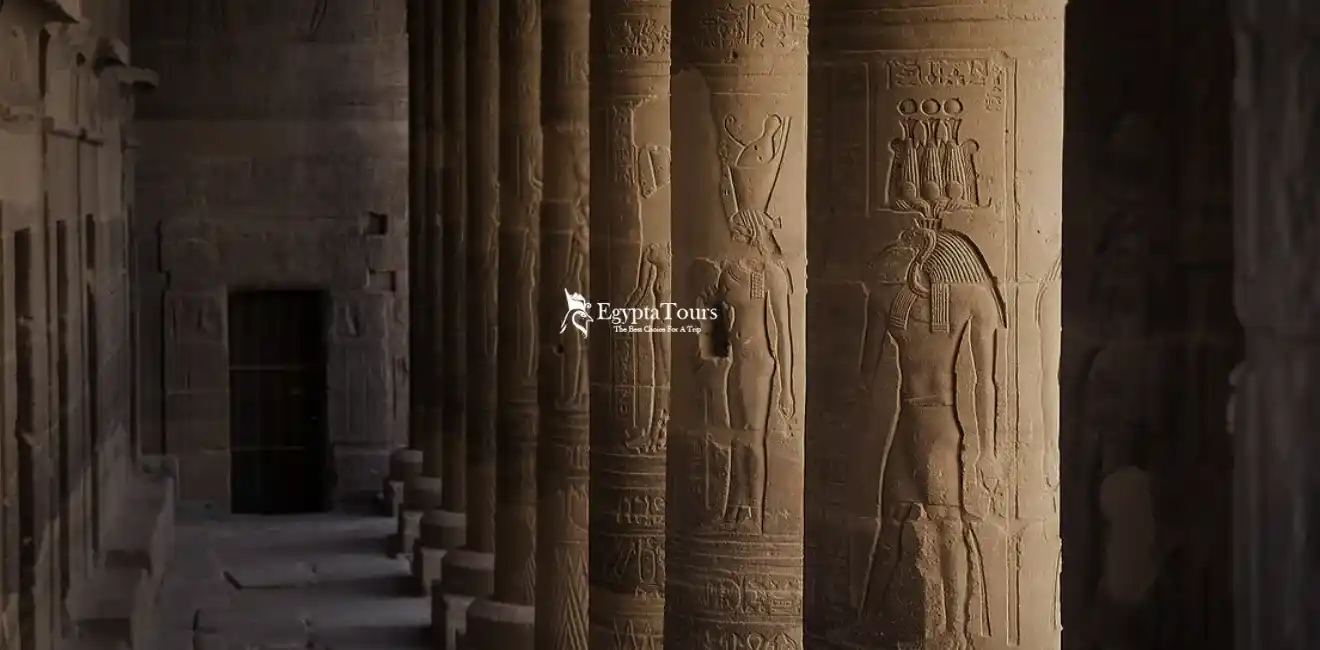
These carvings aren’t just decoration. They’re like a visual script for belief, showing how people thought the world stayed in balance: through offerings, order, and respect for the gods.
A late chapter of ancient Egyptian religion
Philae matters because it stayed active very late compared to many other temple sites. While Egypt’s religious life changed over time, Philae continued as an important place of worship into late antiquity.
It’s often described as among the last active pagan temple centers in Egypt. The temple’s religious role ended officially in the 6th century CE, when authorities shut down remaining traditional cult practices. You can feel that “last chapter” quality in the stone. The art looks Egyptian, but the time period is close to the early medieval world.
That mix, old forms lasting into a new era, gives Philae a special place in Egypt’s long timeline.
The ancient Egyptian name meant “the boundary”. The place was considered a garrison for Greek and Roman soldiers. The first religious building in Philae was built by Pharaoh Taharqa of the 25th Dynasty and it is said to be dedicated to the god Amun. The blocks used to build this temple were reused in later buildings.
The oldest temple in the place was a small kiosk built by Psamtik II for the worship of Isis. Then the place developed and buildings followed from Amasis II and Nectanebo I. Of all these buildings, only the kiosk of the entrance to the old temple of Isis and a gate that was later incorporated into the first pylon of the current temple remain.
Ptolemaic Era
More than two thirds of the remaining structures in Philae Island date back to the Ptolemaic era. Pilgrims came from as far as Anatolia, Crete and Greece making Philae surpass Elephantine as the most important temple in southern Egypt. Some pilgrims recorded their presence with inscriptions on the walls. Among these inscriptions is the oldest known Latin inscription in Egypt dating back to three Romans at the first pylon.
Many Ptolemaic rulers took an interest in Philae as did the Nubian king Arqamani who contributed to the Temple of Arensnuphis and the mammisi. After him, Adikhalamani whose name was found on a stela on the island. Scholars interpret all this as indicating cooperation between the Ptolemies and Nubia while others interpret it as a period of Nubian occupation of the place. After that, Ptolemy V erased Arqamani’s cartouches, and Adikhalamani’s stela was reused as filling under the floor of the pronaos.
Roman Era
There is a relief in a chamber in Philae depicting a Kushite diplomatic mission sent by King Talakhidamani. This era saw a decline in the number of pilgrims but despite that, Philae remained one of the most important and sacred sites especially for Nubians.
Many emperors made artistic and architectural contributions to Philae. Most of the additions date back to the Julio Claudian era. Afterwards, a triple arch was built by Diocletian. Diocletian ceded the Roman territories near the cataract. The Kushite king Yesebokheamani made a pilgrimage to Philae and took over Roman hegemony.
Philae in the Roman era is considered the site of the latest known inscription and the latest Demotic inscription in Egyptian hieroglyphs.
Christianization
Christianity likely arrived in Philae by the 4th century, coexisting with traditional Egyptian religion. According to Coptic tradition, Macedonius, the first bishop of Philae, killed the island’s sacred falcon, though this account is disputed.
By the mid 5th century, multiple churches operated alongside pagan temples as evidenced by Bishop Appion’s petition to emperors Theodosius II and Valentinian III. Traditional worship continued until at least the 5th century with the historian Priscus noting a treaty in 452 ensuring access to Isis’ cult image.
In 537, the temple was officially closed by Narses the Persarmenian on Justinian I’s orders marking the conventional end of ancient Egyptian religion. However, Jitse Dijkstra argues that organized paganism ended in the 5th century with some adherence persisting into the 6th.
Philae remained a Christian center with five temples converted to churches (including Isis’ temple dedicated to Stephen) and two new churches built on the north side of the island.
19th Century
Philae Island had an important attention in the 19th century. In the 1820s, British Egyptologist Joseph Bonomi the Younger visited. Amelia Edwards, a British novelist also visited in 1873-1874 describing the approach by water as “quite the most beautiful” and the island as rising from the river like a mirage.
These visits reflect Victorian Britain’s fascination with Egypt making tourism to Philae popular.
1900s
The Aswan Low Dam completed in 1902, threatened to submerge Philae’s temple complex. The British prioritized modernization over preservation, raising the dam twice (1907-1912 and 1929-1934) nearly submerging the island.
Relocation was proposed but instead, the temples’ foundations were reinforced. The island’s vegetation and temple reliefs’ colors were washed away and bricks became encrusted with silt.
From Philae Island to Agilkia Island, the temple rescue story
Philae’s island setting is part of its charm, but it also became its greatest danger. As dams were built and expanded near Aswan, water levels rose and the temple complex suffered.
At first, flooding came in cycles, then it became more constant. Water doesn’t just cover floors. It seeps into joints, weakens surfaces, and can slowly blur inscriptions that survived for centuries in dry air.
Saving Philae meant doing something that sounds impossible on paper: taking a temple apart and rebuilding it nearby.
The relocation, supported through an international effort connected to UNESCO’s wider campaign to protect Nubian monuments, is still seen as a major win for cultural heritage. Philae didn’t just survive, it kept its identity as an island sanctuary, even after the move.
How flooding threatened the temple (and what visitors used to see)
Before the relocation, travelers sometimes arrived to find parts of the complex surrounded by water. In certain seasons, the courtyards and lower areas could be damp or submerged. The temple wasn’t simply “by” the river anymore, it was being worn down by it.
The damage risk was clear:
Stone surfaces can crack and flake after long exposure to water.
Reliefs and hieroglyphs lose sharp edges as salts and moisture work into the rock.
Foundations can weaken when water levels stay high.
That shifting waterline also changed the travel experience. Philae could feel like a half-drowned monument, beautiful from a distance, fragile up close.
Rescue of the Philae Temples
Philae Island was surrounded by the waters of the Nile for most of the year, threatening its precious archaeological treasures of temples, shrines, columns and Pharaonic gates. Nectanebo, who was one of the last native Egyptian kings, began building a temple on the island in the 4th century BC and the Ptolemies added their own shrines, making it an important center for the worship of Isis and pilgrimage.
The construction of the High Dam radically changed the situation as the island would be partially submerged throughout the year with continuous waves damaging the stones and leading to the deterioration of the monuments. Therefore saving Philae was essential to preserve this archaeological heritage.
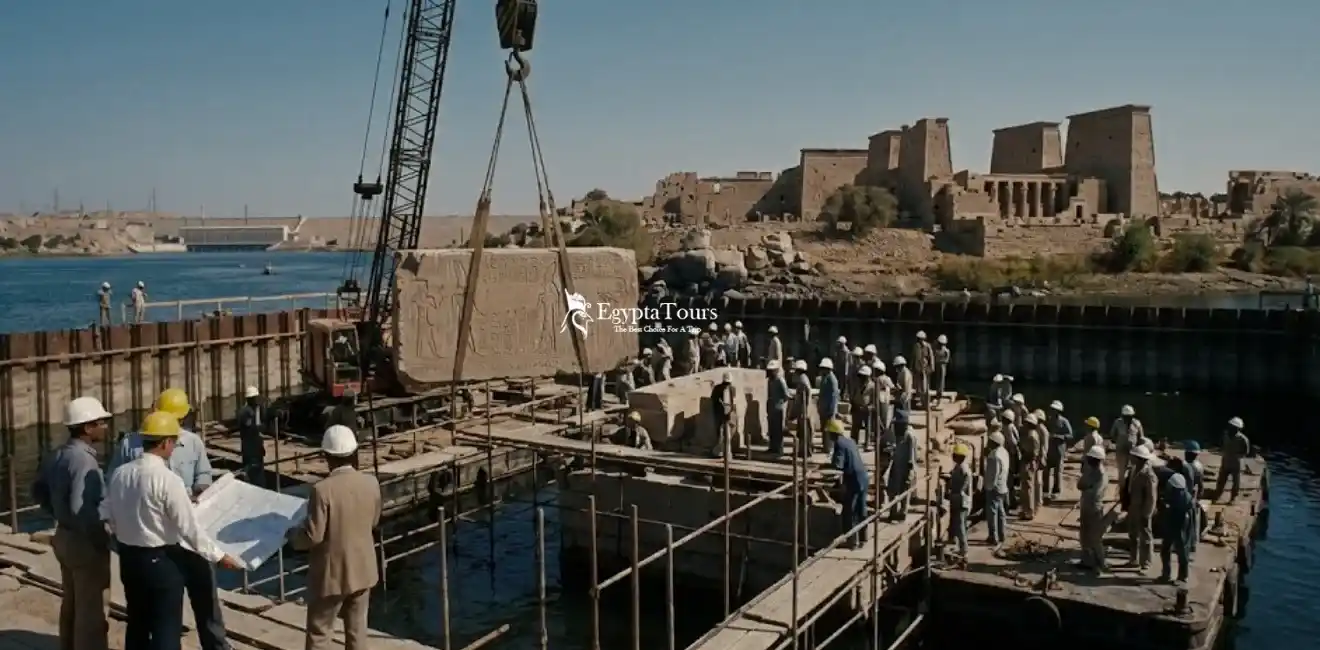
The international community responded quickly to the rescue operation and the rescue process began in 1972 under the supervision of UNESCO. 3,000 steel plates were fixed at the bottom of the Nile to form a temporary dam and it took two years to surround the island with two rows of interlocking piles 12 meters long. A mixture of water and washed sand was poured to support the steel and the lifebelt around the island was completed.
It was proposed to transfer the monuments to Agilkia Island due to the impact of artesian water and the cost of the project. The transfer process began in the 1970s and the temple was dismantled into more than 40,000 pieces, transported to Agilkia Island and reassembled there, allowing this part of ancient Egyptian history to be preserved.
The UNESCO-backed relocation, cut, numbered, and rebuilt
The solution was careful and methodical. Teams documented the complex, then dismantled sections into manageable blocks. Those blocks were labeled, moved, and reassembled on nearby Agilkia Island, which was shaped to echo the original setting.
The basic steps were simple to describe, hard to execute:
Survey and record the structures in detail
Cut and remove stone blocks
Number and transport each piece
Rebuild the temples in the correct order and alignment
This wasn’t done to “modernize” the site. It was done to keep the carvings, spaces, and sightlines as close as possible to what visitors and worshippers once knew. When you visit today, you’re seeing a rescued monument that still feels coherent, not a pile of fragments.
Today, Agilkia Island has become an important archaeological site where visitors can see the reassembled temple and learn about its history.
The island of Philae was not merely a sacred place but it was also considered a commercial center between Meroë and Memphis. The rapids of the cataracts were not navigable in some seasons and goods were unloaded at Aswan and Philae and re shipped. The adjacent granite quarries employed a large number of miners and stonemasons and a road was built in the rocks to facilitate traffic.
Philae was characterized by the strange effects of light and shadow resulting from its location near the Tropic of Cancer. As the sun approaches its northern limit, the shadows gradually decrease from the projecting cornices and plaster moldings of the temples on the flat surfaces of the wall. When the sun reaches its highest altitude, the vertical walls are covered with dark shadows, contrasting with the intense light that illuminates all surrounding objects.
It was said that birds did not fly over Philae and even did not approach its shores. Since the Ptolemaic era, Philae was frequently visited, either by pilgrims to the tomb of Osiris or by people on secular errands until officials requested Ptolemy VIII to ban public officials. Afterwards, William John took the Philae obelisk.
Who is ISIS?
Isis was the daughter of the earth god Geb and the sky goddess Nut, as well as the sister of Osiris, Seth, and Nephthys. She was the sister and wife of Osiris, the deity of the underworld. It is believed that she and Osiris were in love even when she was still in the womb. Isis was also the mother of Horus, the pharaoh’s protector.
Ancient Egyptian religious beliefs were based heavily on the Great Mother Isis, the goddess of magic and healing. Today, the world recognizes her by her Greek name, Isis. The ancient Egyptians, on the other hand, referred to her as Aset. Her name literally translates to “Queen of the Throne,” and her headdress, which resembles a throne, reflects this.
Because she had so many different powers, Isis was worshipped by the ancient Egyptians. She was the guardian of women as well as the bearer of magic. Isis began as a subordinate figure to her husband Osiris, but she evolved into the Queen of the Universe and the personification of cosmic order after thousands of years of worship. By the Roman period, she was thought to have the power of fate itself.
According to a Greek myth, Osiris was killed or drowned by Seth, who ripped his body into 14 pieces and threw them across Egypt. Isis and her sister Nephthys eventually recovered and buried all of the pieces except the phallus, reviving Osiris, who remained in the underworld as a judge and a ruler. His son Horus defeated Seth, avenging Osiris and becoming the new ruler of Egypt.
Where is The Philae Temple of Isis Located?
The Philae Temple is located in “The Nubian City,” one of Aswan’s most famous monumental sites. It was a rocky island known in Hieroglyphics as “Apo,” which means “Ivory.” It is located on Agilika Island, 12 kilometers south of Aswan, downstream of the Aswan High Dam and Lake Nasser. It was originally placed near the vast first cataract of the Nile in Upper Egypt, but it was relocated as part of the UNESCO Nubia Campaign project to nearby Agilkia Island. It was a sacred location as an old pilgrimage center for the religion of Isis center.
When was The Temple of Philae Built?
Built during the reign of Ptolemy II (Egypt’s Greco-Roman Period), the island was originally dedicated to the goddess Isis. Ptolemy II Philadelphus (reigned 285-246 BCE) and his successor, Ptolemy III Euergetes, finished the Temple of Philae complex of temples (reigned 246–221 BCE). Its decorations, which date from the reigns of the Ptolemies and the Roman emperors Augustus and Tiberius (27 BCE–37 CE), were never finished. Hadrian (reigned 117–138 CE) constructed a gate to the west of the complex.
Other smaller temples or shrines devoted to Egyptian gods include Hathor’s temple, Imhotep’s temple, and chapels dedicated to Osiris, Horus, and Nephthys.
One entryway to the Philae Temple is through the first pylon. The Birth House, located on the western side of the forecourt, was devoted to Hathor and Isis in honor of the birth of her son, Horus. It is surrounded by colonnades. The second pylon is an impressive 32-meter-wide, 12-meter-high gateway. The foundations of a small chapel stand in front of it. There are some fading Christian artworks as well.
A Look Inside the Philae Temple
The first chamber of the temple contains eight columns divided from the court by screens. Many Coptic symbols and Greek inscriptions can be found inside this room, revealing the temple’s transformation into a Christian site under the rule of Bishop Theodore during the Byzantine period. Above the gate, there is an inscription commemorating the 1841 archaeological expedition to Philae.
The top relief on the south wall above the door depicts Horus seated on a bench, with Nephthys and Isis offering the crowns of Lower and Upper Egypt. To the left of the door, there are incomplete obelisks depicting the king giving land grants. On the right, there is an incredible relief depicting the Nile’s origins.
The Sanctuary House of Isis
The Sanctuary House may be reached after passing through various antechambers. To the left of the first antechamber, there is a small room with reliefs of the king in the presence of Isis, but on the west side of the room, there is a door that goes out of the temple to the Gateway of Hadrian.
The Philae Temple In Danger
With the construction of the new Aswan dam (1960-1970), which drowned the area, the temple was at risk of being submerged forever. Fortunately, due to the efforts of the Egyptian government and UNESCO, who worked together to pump the area dry, The Temple of Isis was painstakingly dismantled and relocated stone by stone (over 50.000 stones) to a nearby high island named Agilkia, where it stands today.
Despite early Christian vandalism and flooding, the Temple of Isis remains one of Egypt’s most magnificent temples. The columns of its hypostyle hall are remarkably well-preserved, and reliefs like the sculptures of musical scenes in the Temple of Hathor have kept much of their original beauty.
Interesting Facts you Need to Know About The Philae Temple
Philae Temple’s construction was completed about 690 A.D., making it the last of the ancient temples built in the classical Egyptian style. It was created to honour the goddess Isis and is an outstanding demonstration of a cult based on the story of Isis and Osiris.
The temple of Philae was regarded as the most sacred of all the temples by both Egyptians and Nubians because God Osiris was buried on the island where the temple stood.
Philae is only a few meters away from Biggeh, which was believed to be one of Osiris’ burial places and was thus greatly respected by Egyptians in ancient times. Because only priests could live or visit the island, it was called “the pure island” and “an unapproachable place.” It was also believed that birds would avoid flying over it and that fish would avoid swimming near its shores.
For decades, the temple complex was the holiest place for Isis worshipers. It was formerly thought that the temple was formally closed down in the 6th century A.D. by the Byzantine emperor Justinian (527–556 AD) (Late in Justinian’s reign, the temple was converted into a church.), but a new study on the history of the Isis religion has revealed that the cult was still operating until the 9th century.
When travelling around Egypt, you come across a lot of hieroglyphs, but the ones in Philae stand out. The walls of Philae’s temples are covered in ancient hieroglyphs.
They were the Ancient Egyptians‘ last works to be written. Inscriptions in the exquisite pictorial alphabet, depicting the history of this civilization, may be found among the huge carvings of the gods of Ancient Egypt.
How to visit Philae Temple today, what to look for, and practical tips
How-to-visit-Philae-Temple-today-EgyptaTours
Visiting Philae Temple from Aswan is usually straightforward. Most trips start at a riverside landing, followed by a short motorboat ride to the island. That boat approach is part of the experience, so don’t rush it. Watch the temple grow larger as the shoreline drops away.
Go early if you can. The light is softer, the air is cooler, and the stone details show up better in photos. Late afternoon can also be lovely, but midday heat can be intense, especially in warmer months.
Expect uneven paving, steps, and narrow passages in places. Boarding a boat can also be a small challenge for anyone with limited mobility, so it helps to plan with a guide or driver who’s used to accessibility needs.
Top highlights inside the complex (first-time visitor checklist)
You don’t need an architecture degree to enjoy Philae. A few key spots help you get the full story:
Temple of Isis: The main event, with grand gateways and detailed reliefs.
The first pylon: A dramatic entrance wall that sets the tone for the complex.
Courtyards and colonnades: Great for shade, symmetry, and close-up carvings.
Small shrines and side chapels: Quieter corners with surprising details.
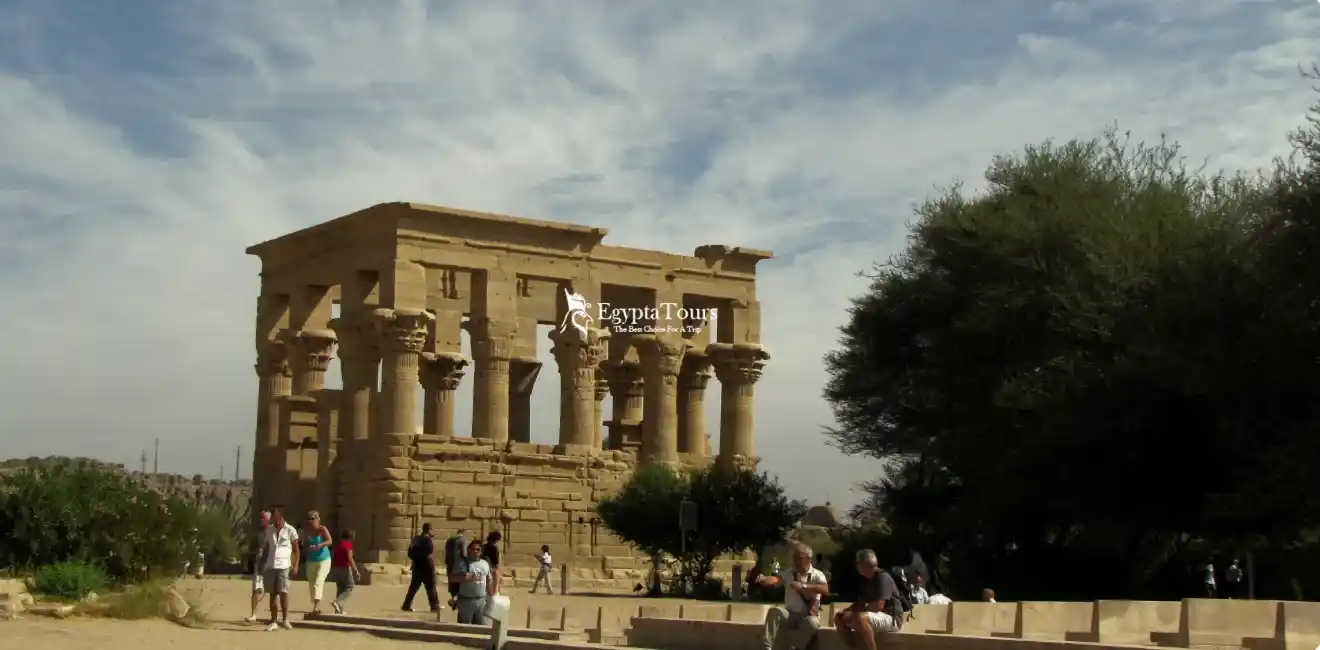
Kiosk structures (often called the “Philae kiosk”): Photogenic, open, and set near the water.
Waterfront viewpoints: Step back and look at how stone, sky, and river meet.
As you look at the reliefs, focus on the clean lines in the hieroglyphs, the repeated poses of offerings, and the way the carvings frame doorways like sacred borders.
Planning your trip from Aswan: timing, boats, and comfort
A few practical choices can make your visit calmer and more enjoyable:
What to bring: Water, sunhat, sunscreen, and shoes with grip. Stone paths can be slick in worn areas.
Boat ride tips: Expect a short transfer. Hold onto your phone and camera, and step carefully when boarding.
Local logistics: Having small cash can help for simple needs (like tips or quick purchases), but check current rules and norms locally.
You might also hear about the evening sound-and-light show. It can be a fun add-on if you like stories and atmosphere, but schedules change, so confirm times in Aswan.
One last thing: treat the site gently. Don’t climb on walls, and don’t touch carvings. Those fine lines have already survived more than enough.
How to reach the Temple of Philae
The simplest way to get to the Philae temple is to take a taxi from Aswan. You’ll most certainly stay here while visiting the region, and the Temple of Philae is an excellent day trip from Aswan! It’s simply a few kilometers away and shouldn’t take more than 15 minutes to get there.
The cab will drop you off at the Philae Temple marina, where authorized boats will take you to Agilkia Island. Transportation there and back, including waiting time, will cost roughly 150 EGP for two individuals.
You’ll need at least 1–1.5 hours to explore the entire complex, so make sure to agree on this before you take the boat.
Admission and working hours
Regular visiting hours are 7 a.m. to 4 p.m. (from October to May) or 7 a.m. to 5 p.m. (from June to September). Adult admission is 50 EGP (about $3), while student admission is 25 EGP (about $1.50). If your negotiation abilities are up to scratch, a roundtrip boat journey from the mainland to Agilkia Island should cost roughly 10 EGP, but boatmen will usually try to charge you more. The Sound and Light Show costs about $14 per person.
You Can Check Our Tour Packages to Aswan City to find out how is So Beautiful:
Philae Temple earns its fame in more than one way. It’s the island home of Isis, a place where art and belief meet in carved stone, and it carries a rare “late era” echo of ancient Egyptian religion. Add the rescue and relocation to Agilkia Island, and you get a monument with a modern story too.
If you’re planning time near Aswan, put Philae Temple on your list, slow down, and study the walls up close. The best visit isn’t the fastest one, it’s the one where the details stay with you
What is the historical significance of Philae Temple?
Philae Temple is dedicated to the goddess Isis and dates back to the Ptolemaic period. It’s known for its role in ancient religious practices and as a symbol of Egyptian culture and art.
Where is Philae Temple located?
Philae Temple is situated on Agilkia Island in the Nile River, near Aswan, Egypt. It was relocated here from its original site on Philae Island due to the construction of the Aswan High Dam.
How was the temple moved to its current location?
The temple was dismantled and reconstructed on Agilkia Island between 1972 and 1980 as part of a UNESCO project to save it from being submerged by the Aswan Dam reservoir.
What are the main features of the temple?
The temple complex includes several structures, such as the Temple of Isis, the Kiosk of Trajan, and the Temple of Hathor. The reliefs and carvings depicting ancient gods and pharaohs are key attractions.
What languages are inscriptions in the temple found?
Inscriptions at Philae feature Egyptian hieroglyphs, Greek, and Demotic texts. They provide valuable insights into the temple’s history and religious significance.
Are there any famous events associated with Philae Temple?
Philae is notable for being one of the last places where the ancient Egyptian religion was practiced. The island remained an active religious site until the 6th century AD.
When is the best time to visit Philae Temple?
The best time to visit is during the cooler months, from October to April, when the weather is more comfortable for exploring.
Are there guided tours available at Philae Temple?
Yes, guided tours are available and highly recommended. They offer detailed insights into the temple’s history and its architectural highlights.
Is there an entry fee for visiting Philae Temple?
Yes, there is an entry fee. Prices may vary, and there might be additional charges for guided tours and photography. It’s best to check current rates before visiting.
What should visitors expect when exploring the temple?
Expect to walk through beautifully preserved ancient structures, admire detailed carvings, and enjoy panoramic views of the Nile. It’s a culturally enriching experience.
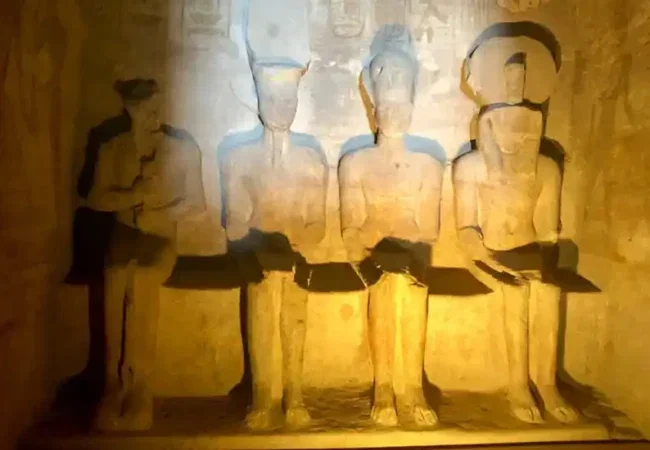
The Abu Simbel Sun Festival in October is one of the most dazzling astronomical phenomena in the world when the sun shines directly on the face of King Ramses II. This twice-yearly event turns into a celebration that attracts visitors from all over the world to witness a historic moment that showcases the ancient Egyptians’ […]
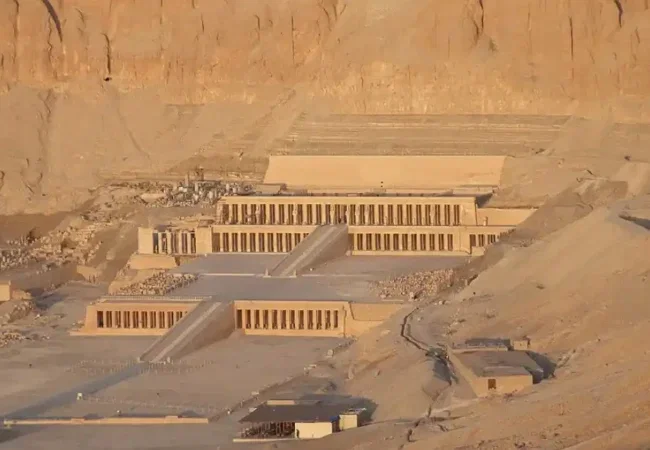
In this post, we will provide the facts about Hatshepsut Temple, Egypt’s most famous building. Queen Hatshepsut Temple, located at Deir el-Bahari in Egypt, is one of the most remarkable structures from ancient Egypt, built to honor Queen Hatshepsut, one of the few female pharaohs. She reigned for about 20 years after the death of […]
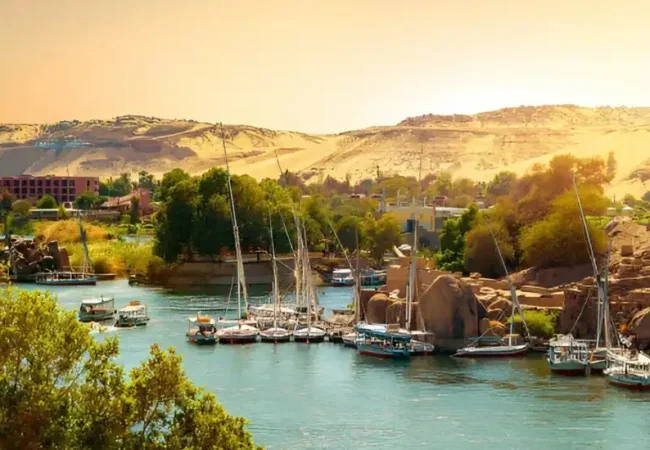
Aswan is one of the most beautiful cities in Egypt, characterized by its ancient history and captivating nature. Despite the presence of numerous famous tourist attractions in Aswan that visitors flock to from all over, there are still many hidden attractions waiting to be discovered. These places are not just less famous than their well-known […]
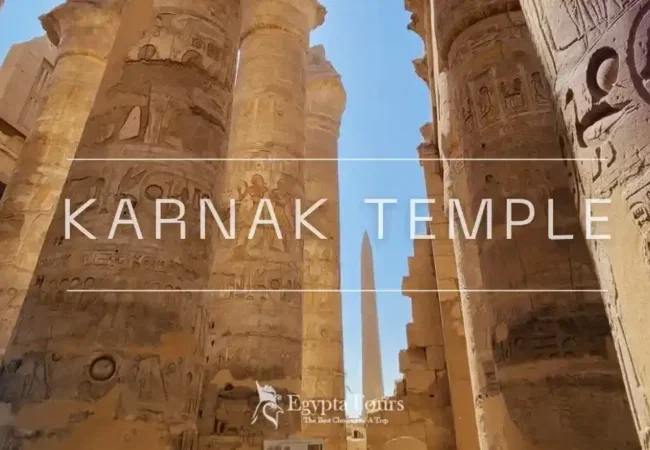
How Did The Ancient Egyptians Make The Karnak Temple? The builders of the Temple of Amen-Ra at Karnak used local limestone to carve and transport the massive stone blocks. Once they were at the site, it was up to hundreds of workers to put them together. This required great precision—if a block was even slightly […]
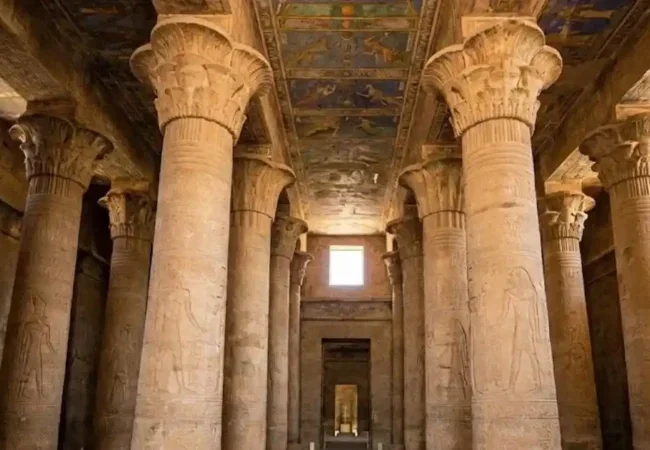
Temple of Edfu Facts (also known as The Temple of Horus) is one of the most stunning destinations to visit in Egypt’s incredible history to experience the audacious ambition of Egypt’s temple architects. Temple of Edfu is recognized as the crown jewel of Aswan’s wonderful city, where the legends of the past are revived in […]
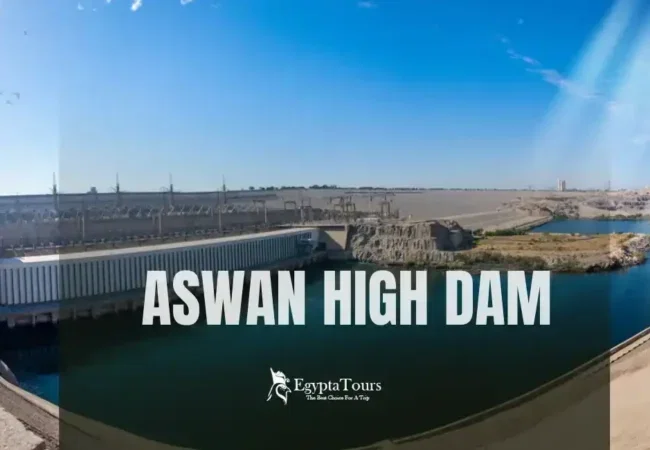
Imagine if the Aswan Dam was less than a third of its size and served mainly as a hydroelectric power station. You probably can’t, because the Hoover Dam is one of the most impressive landmarks in the United States. But that’s exactly what the High Dam in Aswan, Egypt is like. Completed in 1970, the […]
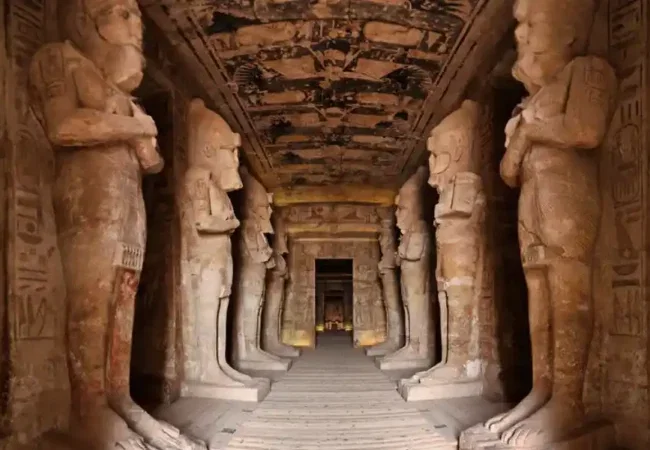
The temples of Abu Simbel are among the most impressive ancient Egyptian temples in the country. They are located in southern Egypt near the border with Sudan about 280 kilometers south of Aswan. The site includes two massive rock cut temples that were built during the reign of Ramesses II who ruled Egypt between 1290 […]
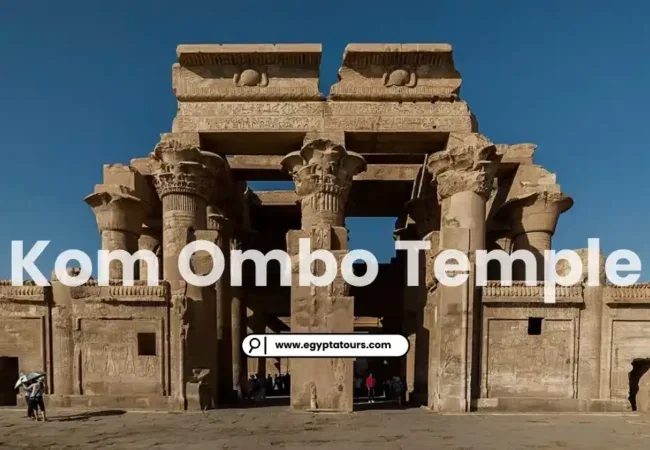
The Kom Ombo Temple in Egypt is a mysterious and ancient structure that has captivated visitors for centuries. Located in Aswan, this temple dates back to the Ptolemaic period and is believed to be over 2000 years old. It was built to honor two gods – Sobek, the crocodile god, and Haroeris, the falcon god […]