






Ancient Egypt Colors
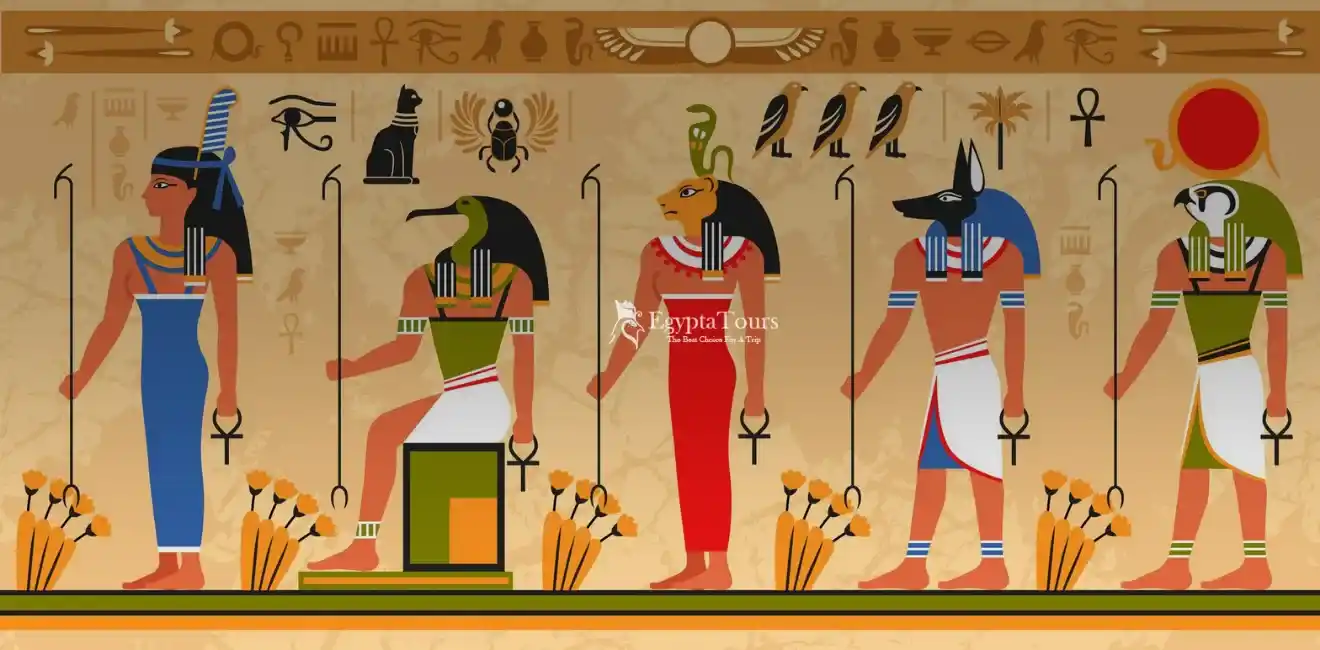
Ancient Egypt Colors were an important part of daily and religious life. The ancient Egyptians used them to decorate temples, tombs, and royal artifacts.
However these colors were not just for decoration, they carried important connotations that expressed their religious beliefs, a person’s status in society, and their connection to the nature around them.
They believed that color which they called “iwen,” not only signified external appearance but also expressed the essence of a thing or object. Therefore colors were a fundamental means of expressing their ideas, stories, and beliefs.
Ancient-Egypt-Colors-Overview-EgyptaTours
Ancient Egypt Colors were more than just aesthetics. Each color had a specific meaning. For example gold symbolized the gods while green expressed the fertility of the land and the bounty of the Nile River.
The Egyptians did not limit themselves to using natural colors they developed mineral pigments and invented synthetic colors such as the well-known Egyptian blue which demonstrates their advancement in chemistry and the arts.
In this article, we will learn how they used colors their meanings, and how these colors influenced their culture and art leaving an impact that is still evident today.
These colors are as follows:
Black (kem): The Color of Fertility and Resurrection
Among the ancient Egypt Colors black had a dual meaning representing death and resurrection without being associated with evil. Among its meanings are:
- The Fertility of the Nile: The term “kemet” (black earth) referred to the rich silt left behind by the Nile flood which sustained agriculture and life.
- Renewal and Resurrection: Black was associated with the god Osiris the god of the afterlife and eternal life. He was often depicted with black skin to symbolize his fertility and role in restoring life. Statues of Osiris and funeral statues were often made of black basalt to reflect these meanings.
- The Afterlife: Black was also associated with the underworld as a symbolic bridge between the world of the living and the world of the dead.
White (Hedge): The Color of Purity and Holiness
Among the ancient Egypt Colors white was central to the Egyptians’ perception of purity and holiness. This is evident in the following:
- Priestly and Ritual Vestments: White linen was the primary fabric for priestly garments signifying the purity and cleanliness required for sacred duties.
- Sacred Tools and Temples: Many ritual tools and temple furnishings were made of white alabaster a symbol of divine purity.
- The White Crown (Hedjet) was the crown of Upper Egypt worn by kings on formal occasions. It symbolized divine sovereignty and cosmic order. White also had astronomical connotations representing the stars and the moon further connecting it to the divine realm.
Red (Desher): The Color of Life and Chaos
Red had two contradictory meanings. It was one of the most prominent ancient Egypt Colors representing both vitality and danger. It also represented:
- Life energy. Red is the color of blood and fire a symbol of strength, passion, and the sap of life. Red clay was used to color male skin in paintings to represent activity and vitality.
- Desert and Chaos: Red also represented the harshness of the desert (Deshert the red earth) and was associated with the god Seth the god of chaos, storms, and violence.
- Funeral and Protective Uses: Red dyes were used in burial rituals as a symbol of life energy and were believed to protect the deceased from evil spirits.
Green (Waj) – The Color of Life and Regeneration
Green was one of the most positive ancient Egypt Colors symbolism, representing:
- Vegetables and growth. Green symbolized fertile fields and seasonal renewal of life. The hieroglyph for green was a papyrus stalk reflecting its association with nature.
- The Otherworld. The “Malachite Fields” were a metaphor for the Otherworld the Green Paradise. Osiris was often depicted with green skin to symbolize his fertility and role in regeneration.
- Health and Protection. Malachite a green mineral was used in jewelry and cosmetics, and green amulets symbolized health and protection.
Blue (Ertio) – The Color of the Heavens and Creation
Blue was one of the ancient Egypt Colors sacred and protective, associated with:
- The Sky and Water. Blue represented the heavens and the primordial waters of creation. Ceilings in temples and tombs were often painted blue to represent cosmic order.
- Divine Attributes: Deities such as Amun and Nut were depicted with blue skin symbolizing their heavenly and protective qualities.
- Technological Innovation: The creation of Egyptian blue the first synthetic pigment during the Archaic period reflects its importance. It was widely used in royal tombs temples, and statues.
Yellow (Khent): The Color of Immortality and Divinity
Yellow the most famous ancient Egypt Colors was often associated with gold and represented:
- Eternal life and the sun. Yellow represented Ra the sun god, and the idea of immortality. Statues and coffins were often painted yellow or covered in gold to embody these meanings.
- The Body of the Divine: The Egyptians believed that the skin of the gods was golden making yellow the color of divine perfection. The gold mask of Tutankhamun (c. 1323 BC) embodies this belief.
- Funeral art used yellow to represent the eternal and unchanging nature of the afterlife as seen in the coffins of the Eighteenth Dynasty.
Stunning Color Pairs and Duos in Ancient Egypt

Ancient-Egypt-Colors-EgyptaTours
Egyptian culture emphasized balance and harmony in the ancient Egypt Colors reflected in its use of complementary colors:
- Red and white represented the unification of Upper and Lower Egypt under King Narmer (c. 3100 BC) with a unified crown combining the white crown (Hedjet) and the red crown (Desret) symbolizing the political and cosmic order.
- Green and black were used interchangeably to express life and rebirth with black mud and green fields symbolizing the eternal cycle of life.
- Gold and silver symbolized the sun and moon and represented the celestial duality. Silver was superior to gold and was used to represent the light of the moon and stars.
Materials and Techniques: Color Production in Ancient Egypt and Natural Dyes Natural Resources and Their Sources
The pigments used By <strong>Egyptian artists</strong> in ancient Egyptian paints were derived from local and imported materials such as:
- Red and yellow clay were extracted from the deserts of Egypt ground into a powder and mixed with binders to make paint.
- Malachite (green) and azurite (blue) were extracted from the Eastern Desert and Sinai and were prized for their bright colors. Evidence of their use dates back to the Old Kingdom.
- Carbon black was extracted from burnt wood or bone and was widely used to color hair eyes, and hieroglyphic inscriptions.
Innovations in Color Production
The Egyptians pioneered the manufacture of synthetic pigments for use in ancient Egyptian paints the most important of which are:
- Egyptian blue was the first known synthetic pigment used from the Old Kingdom to the Roman period. Remains of it have been found in the tombs of Giza and Tell el-Amarna.
- Lead-antimony yellow was developed during the New Kingdom and produced a bright long-lasting yellow color used to decorate the walls of tombs such as those of Amenhotep III and Tutankhamun.
The Role of Colors in Religious and Funerary Contexts and Divine Colors in Ancient Egypt
The ancient Egypt Colors played a fundamental role in depicting the gods the most important of which are:
- Gold: The god Ra was depicted with golden skin expressing his role as the giver of life. Amulets and jewelry were often made of gold to bring divine protection.
- Blue was used to depict gods such as Amun and Nut signifying their connection to the heavens and the cosmic order.
Stunning Funerary Art and the Afterlife

Stunning-Funerary-Art-and-the-Afterlife-EgyptaTours
The ancient Egypt Colors found in the murals of ancient Egyptian tombs were more than just aesthetic they were loaded with magical powers such as:
- Green and black were used to depict Osiris and the green afterlife ensuring regeneration and immortality for the deceased.
- Yellow was used in coffins and masks to represent the immortal nature of the soul and Tutankhamun’s mask is a timeless example.
The Role of Color in Daily Life and Fashion in Ancient Egypt Colors in Fabrics and Clothing
Fabrics were often white with linen being the preferred fabric. However dyed fabrics began to become more prevalent in the New Kingdom such as indigo and saffron.
These dyes were restricted to the upper class symbolizing wealth and luxury.
Cosmetics and Personal Adornment
Cosmetics were an important aspect of Egyptian life. In ancient Egypt colors the most important ones include:
- Malachite green was used as eyeshadow and was believed to ward off evil spirits and promote health.
- Black kohl was used to protect the eyes from the sun and as a cosmetic.
Preserving and Restoring Ancient Egyptian Colors: Challenges of Color Preservation

Preserving-and-Restoring-Ancient-Egyptian-Colors-EgyptaTours
Egyptian dyes that produced ancient Egypt colors have been damaged over the centuries due to:
- Environmental factors: Exposure to sunlight and humidity led to the colors fading.
- Chemical reactions such as the reaction of verdigris dye which turned black due to sulfides.
Conclusion
Ancient Egypt Colors were among the most important elements of symbolic and cultural expression used by the Egyptians in various aspects of their lives whether in architecture art, or religious rituals.
These colors relied on precise natural and artificial sources and reflected clear concepts related to life, gods, and death.
FAQS
Did ancient Egypt have the color purple?
Yes, ancient Egypt knew purple but it was rarely used due to the difficulty of extracting it and its high cost. Therefore it was associated with royalty and power.
What were the colors of ancient Egyptian art?
The most important ancient Egypt Colors art included red yellow, blue, green, white, and black. Each color carried subtle symbolic connotations expressing religious and natural concepts.
What colors did the ancient Egyptians use?
The ancient Egyptians used colors extracted from natural minerals such as ochre hematite, and malachite in addition to artificial colors such as Egyptian blue. Their purpose was to convey meanings related to life the universe, and the spirit.
About EgyptaTours

EgyptaTours is a name synonymous with trust, excellence, and unforgettable travel experiences, proudly standing as one of the leading travel agencies in Egypt. Renowned for its deep expertise, personalized service, and carefully crafted itineraries, EgyptaTours serves as the ultimate gateway to discovering Egypt in its most authentic and inspiring form.