





Ancient Egyptian Mythical Creatures and Monsters
Ancient Egyptian mythical creatures and monsters have long fascinated the entire world, embodying symbolic and spiritual forces. The ancient Egyptian civilization witnessed many creatures that blended the physical attributes of animals and humans.
These creatures held a sacred status for the ancient Egyptians, untouchable as they expressed their beliefs and daily rituals. They reflected their existential philosophy and creed. If you wish to learn more, we will cover all the information about Ancient Egyptian mythical creatures and monsters.
Egyptian myths formed an important part of the cultural and religious aspect of the ancient Egyptians. Ancient Egyptian thought expressed its understanding of the universe and the eternal struggle between the forces of good and evil through these myths, most importantly those of Osiris, Isis, and Ra.
All myths played an important role in maintaining cosmic balance, which was the belief of the ancient Egyptians.
Ancient Egyptian mythical creatures and monsters were not just tales; they pointed to their beliefs and orientations. They were relied upon in religious rituals and appeared in their architecture and art. These myths still appear in contemporary artworks expressing the ancient Egyptians.
Most Famous Mythical Creatures in Ancient Egypt
The diversity of Ancient Egyptian mythical creatures and monsters reflects the deep influence of ancient Egyptian thought.
Among the most famous mythical creatures in ancient Egypt are:
Apep (Apophis)
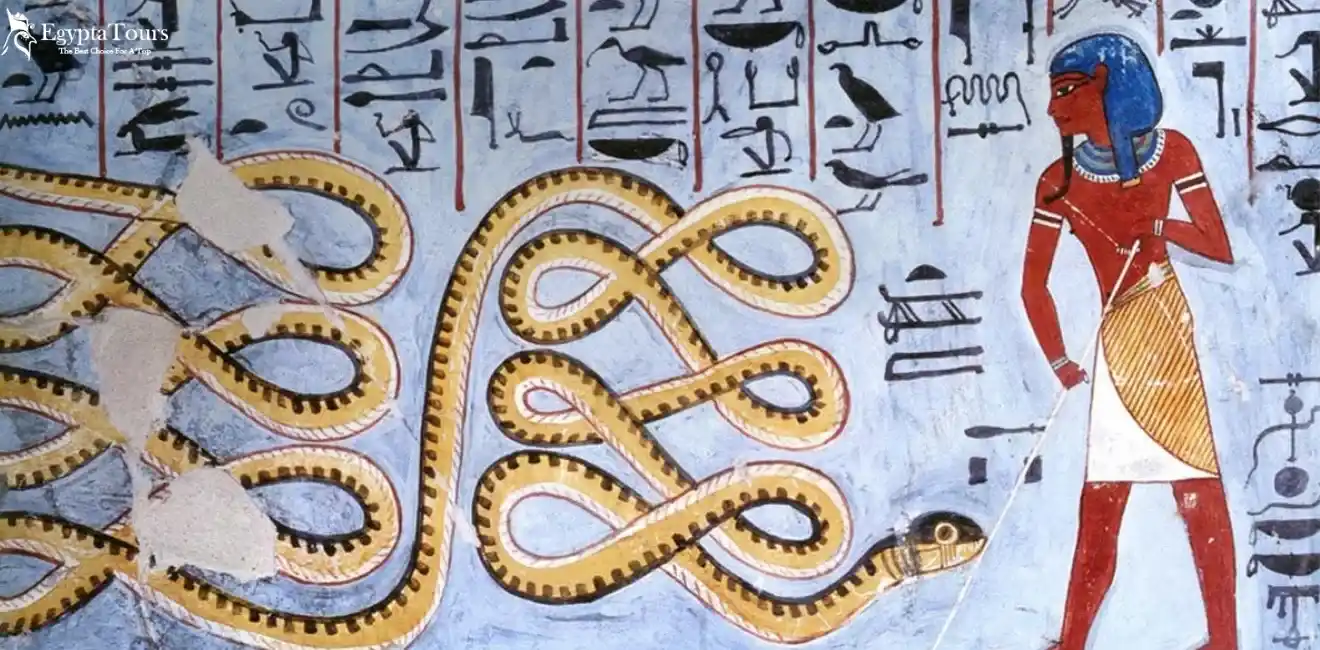
Apep-(Apophis)-Ancient-Egyptian-Mythical-Creatures-And-Monsters-EgyptaTours
He represents the arch-enemy of the god Ra and takes the form of a huge serpent, reflecting the forces of darkness and chaos. According to the myth, Apep constantly tried to swallow the sun during its journey through the underworld each night, which symbolized the eternal conflicts between the forces of light and darkness.
Ammit
She appears as a terrifying creature, part lion, part crocodile, and with the hindquarters of a hippopotamus. It was believed that she waited by the scales of judgment in the other world. The heart of the deceased was weighed against the feather of truth; if it was heavier, she would devour that soul, signifying its eternal damnation.
The Sphinx
It combines a human head with a lion’s body and is one of the most famous ancient Egyptian mythical creatures. It is a symbol of wisdom and power and is closely associated with protecting secrets and temples. It still holds many secrets that have puzzled the world to this day.
Bennu
A legendary bird similar to a heron, it is a symbol of renewal and rebirth. It was associated with the creator god Atum and the sun god Ra and holds a unique place in ancient Egyptian beliefs.
Shezmu
Sometimes taking the form of a man with a lion’s head, he represents the god of perfumes and wine. He is strongly associated with violence and symbolizes revenge and protection. It is said in the myths that he would press the heads of enemies.
Sobek
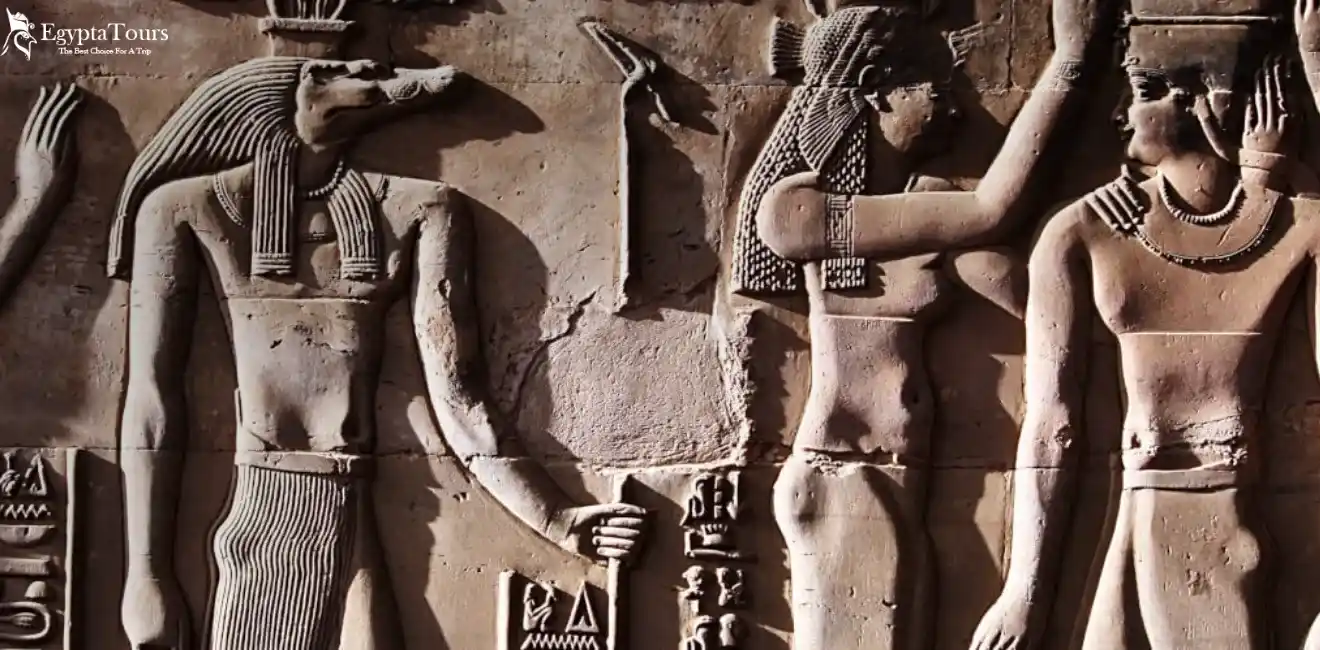
God-Sobek-And-Ancient-Egyptian-Mythical-Creatures-And-Monsters
He is a god represented with a crocodile’s head, symbolizing power and protection. He was linked to the strength and danger of the Nile River. He was one of the deities worshipped, particularly in areas where crocodiles were prevalent.
Taweret
An ancient Egyptian goddess embodied as a female hippopotamus with a crocodile’s tail and the arms of a lioness. She symbolizes protection and childbirth. She cared for and protected pregnant women and their children, and her amulets were relied upon to bring blessings and ward off evil spirits.
Serpopard
A mythical creature that combines the body of a lion with the head and long neck of a serpent or leopard. It primarily symbolizes power and control. The ancient Egyptians often depicted it in scenes of defeating chaos and establishing order.
Griffin
This mythical creature appears in ancient Egyptian beliefs with the body of a lion and the head of an eagle or falcon. It is a symbol of protection and strength and was used on amulets and decorations. It represented a form of divine guardianship for sacred areas.
Bes
A god in ancient Egyptian myths who appears as a dwarf with terrifying but friendly and familiar features. He is a symbol of protection and joy. He is relied upon to guard homes, ward off evil spirits, and is used on amulets to protect children and pregnant women from any harm.
The Set animal
Ancient Egyptian myth says that the Set animal is a mysterious creature associated with the god Set, who represents the god of storms and chaos. Its exact form has not been precisely determined but has been depicted as a composite of several animals. It points to cosmic conflict, power, and mystery.
Anubis
He was the god of the dead in ancient Egyptian myths, appearing in the form of a human body with the head of a jackal. He is the god relied upon for mummification and accompanying souls through the other world, and his role in guiding them on the journey to judgment.
Sekhmet
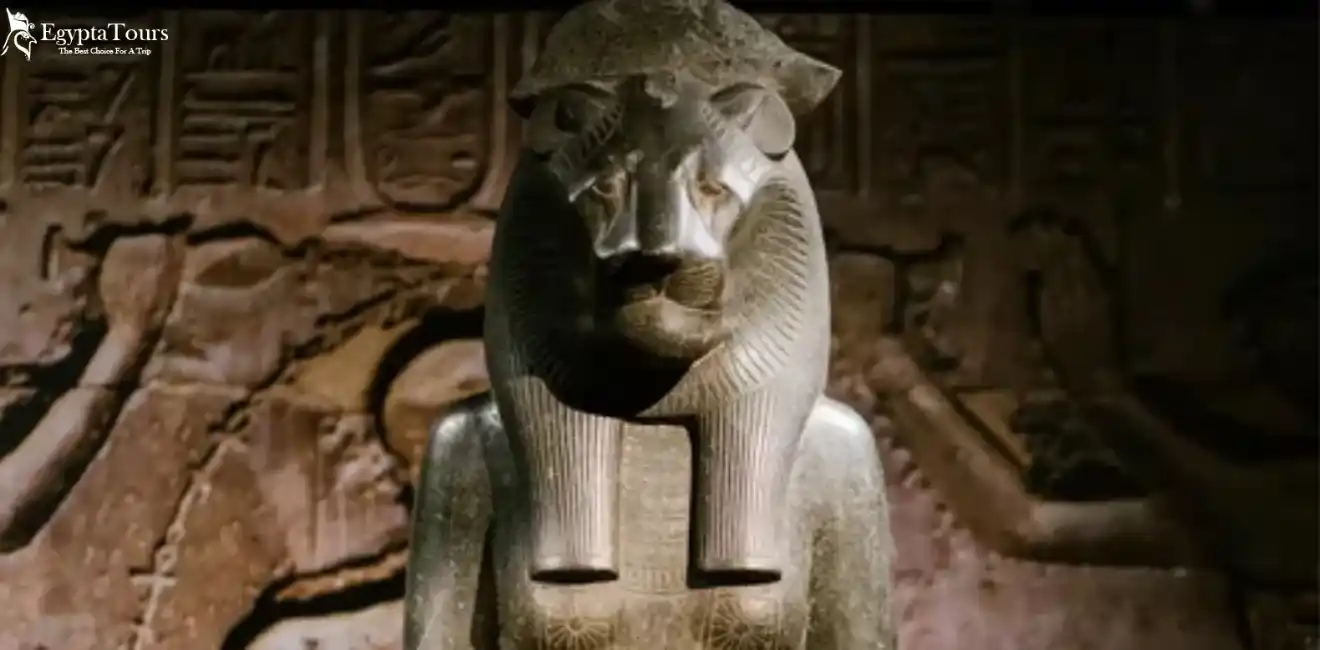
Gods-And-Ancient-Egyptian-Mythical-Creatures-And-Monsters-EgyptaTours
She appears in the form of a woman’s body with the head of a lioness and represents the goddess of war and destruction. She symbolizes power and courage and was relied upon to protect the pharaohs, but she mostly expressed violence in battles.
The Role of Mythical Creatures in Protecting Tombs and Temples
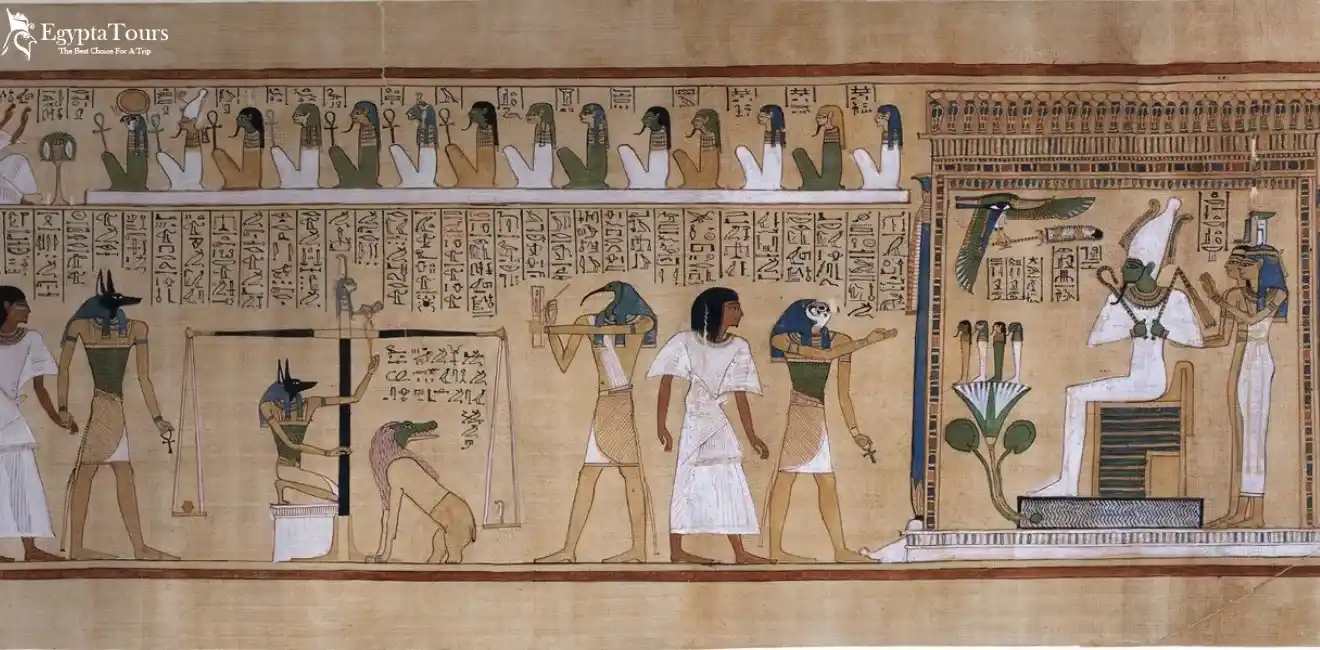
Ancient-Egyptian-Mythical-Creatures-And-Monsters-In-Art-EgyptaTours
Mythical creatures played an important role in protecting tombs and temples in ancient Egypt, including:
- Guarding sacred places from both thieves and evil spirits. The most famous ancient Egyptian mythical creatures for this were the Sphinx and Sekhmet.
- Preserving the safety of the dead by relying on the powers and symbols these mythical creatures possessed, which maintained the cosmic order.
- Providing spiritual and physical protection for ancient Egyptian culture and preventing chaos that could threaten the afterlife.
How were Mythical Creatures Reflected in Popular Beliefs?
Ancient Egyptian mythical creatures and monsters were not confined to religious rituals and texts but were also reflected in popular beliefs as follows:
- The mythical creatures represented spiritual and natural forces, and the ancient Egyptians believed they protected them.
- The ancient Egyptians believed that these creatures maintained the balance between the world of the living and the other world.
- The ancient Egyptians would hang amulets bearing images of the Sphinx and Anubis in their homes as a prevailing belief for protection from diseases.
- The ancient Egyptians would talk about and narrate the stories of ancient Egyptian mythical creatures to children to teach them justice, courage, and patience and to explain to them the concept of death and resurrection.
- The ancient Egyptians showed all their beliefs in ancient Egyptian mythical creatures through their folk arts and on wall paintings to enhance the spiritual presence of these myths.
- Egyptian myths and creatures were formed as an integral part of their popular beliefs, which resulted in their religious and cultural identity in ancient times.
Conclusion
Ancient Egyptian mythical creatures and monsters are one of the manifestations of ancient Egyptian civilization, which blended religion, art, and myths. These creatures embodied Egyptian beliefs about death, life, and the universe in general, which immortalized the ideas of the ancient Egyptians that still amaze and are admired by the world.
FAQs
Does Egyptian mythology have monsters?
Yes, of course. Egyptian mythology included many monsters and mythical creatures, among them the mythical creature Apep in the form of a giant serpent, as well as the Serpopard, a creature shaped like a lion’s body with a giraffe’s head, and others.
What is the most powerful creature in Egyptian mythology?
No single creature from ancient Egyptian myths was considered a symbol of absolute power. Power was distributed among several creatures according to the cosmic and symbolic role of each. Generally, among the most powerful were Sekhmet, Set, and Apep.
What religion was Egypt before Islam?
During the seventh century AD, before the advent of Islam in Egypt, the country went through several religions, the most prominent of which were paganism and Christianity. However, the ancient Egyptian religion was the origin.
About EgyptaTours

EgyptaTours is a name synonymous with trust, excellence, and unforgettable travel experiences, proudly standing as one of the leading travel agencies in Egypt. Renowned for its deep expertise, personalized service, and carefully crafted itineraries, EgyptaTours serves as the ultimate gateway to discovering Egypt in its most authentic and inspiring form.