





Ancient Egyptian Papyrus: Fascinating Secrets of Early Writing
The ancient Egyptian civilization contains many great secrets that were recorded through ancient Egyptian papyrus, as the ancient Egyptians had a rich history full of stories and novels that were written on papyrus and placed in their tombs and historical temples, as some stories and secrets were announced recently and others have not been disclosed yet, and we will learn together about some other details about papyrus, so follow us.
Ancient-Egyptian-Papyrus-Origins
Papyrus was one of the first types of paper in the world and is derived from the papyrus plant, and was called ancient Egyptian papyrus, and was developed in Egypt until it spread throughout the ancient world such as Western Asia, and before papyrus spread, many countries wrote on tablets made of clay.
Origins of Papyrus
The term papyrus is derived from the Greek word (papiros) and refers to a type of paper made from the pith of the papyrus plant, which is a plant native to the Nile Delta in Egypt. Papyrus was one of the first writing papers in the world and played an important role in the development of communication and writing in the ancient world.
Papyrus was made by removing the green outer shell of the papyrus plant, leaving the white inner pith. The pith was then cut into thin strips and placed in a crisscross pattern, then pressed well, and placed in the sun to become a soft, durable material ready for ink.
History of Ancient Egyptian Papyrus

History-of-Ancient-Egyptian-Papyrus
The first documented case of ancient Egyptian papyrus appeared during the First Dynasty of Egypt, but some researchers believe that papyrus was used as a basic writing material since 4000 BC, and was used until the eleventh century, and its most prominent competitors as a writing material were manuscripts made from animal skins and the Chinese method of making paper from rags, and the use of paper and parchment spread in Europe by the twelfth century, but papyrus was one of the best options in many places around the world.
The influence of papyrus outside Egypt
The papyrus industry was developed in innovative ways by the ancient Egyptians and they exported it to several locations in the ancient world through trade and cultural exchange, and the Greeks adopted this material and it was widely used in the Roman Empire, and these manuscripts provided a great opportunity to spread literature, ideas and knowledge between civilizations.
Christ also used papyrus to write the New Testament in the early centuries after the death of the Messiah, and these Christian texts were in the form of manuscripts and contained several collected sheets like a modern book.
Ancient Egyptian papyrus of the Pharaohs in medicine and monitoring daily life

Ancient-Egyptian-papyrus-of-the-Pharaohs-in-medicine-and-monitoring-daily-life
The ancient Egyptians were one of the greatest peoples who excelled in agriculture, industry, medicine, engineering and all other fields, and these fields were recorded on ancient Egyptian papyrus that monitored all the Pharaonic geniuses, as they knew the composition of the human body through the process of mummification of the dead, which they did in order to preserve the body of the dead.
Among the most famous papyrus in medicine are the Edwin Smith Papyrus, the Ebers Papyrus, the Kahun Papyrus, the London Papyrus, the Berlin Papyrus and many other medical treatment papyrus.
Ebers Papyrus
The Ebers Papyrus is one of the most famous ancient Egyptian papyrus that contains extensive medical information dating back to 1550 BC and is currently in Germany in the Leipzig University Library.
The document was purchased by George Ebers in 1873 in Luxor, and is about 110 pages long. It is one of the oldest medical documents in the world and includes about 700 magical and herbal prescriptions.
This papyrus explains the ancient Egyptians’ knowledge of the heart, but at the same time it contains special spells to get rid of demons. The most prominent medical topics covered by the manuscript are burns, dentistry, contraception, asthma, and orthopedics.
Kahun Papyrus for the Treatment of Gynecological Diseases
Kahun-Papyrus-for-the-Treatment-of-Gynecological-Diseases-EgyptaTours
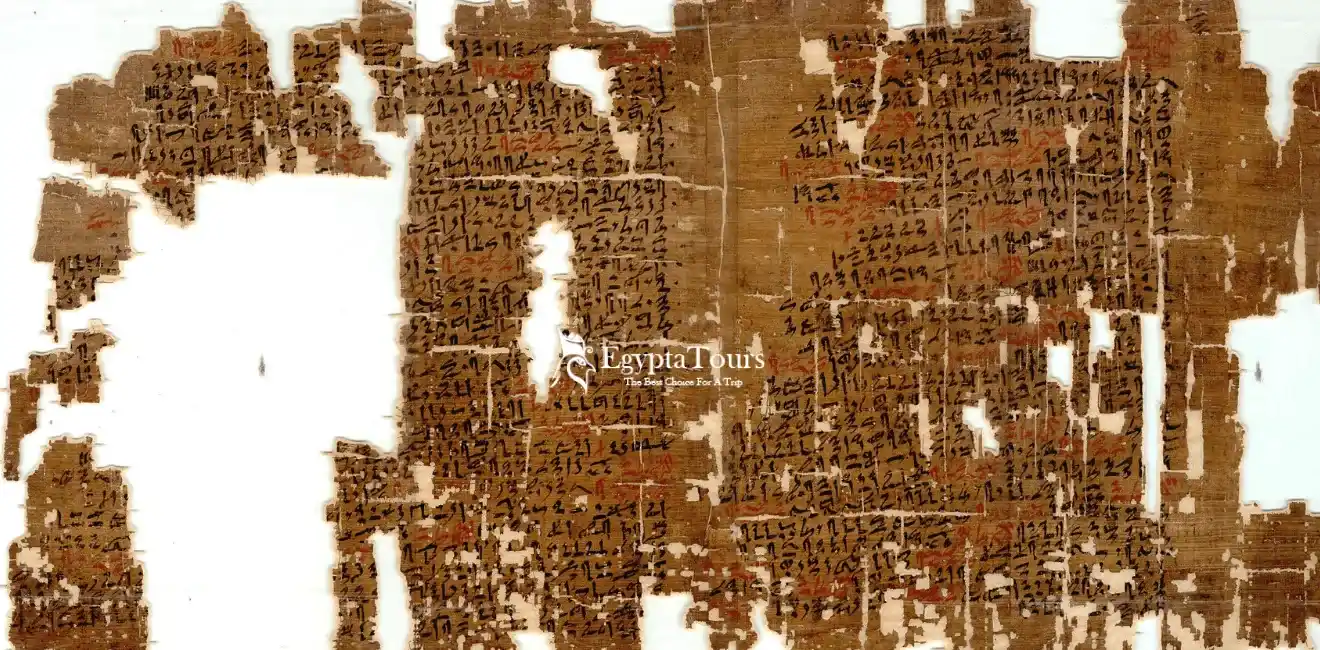
One of the most prominent ancient Egyptian papyrus that was found in 1889 is the Kahun Papyrus for the Treatment of Gynecological Diseases.
This papyrus is now in the University of London and was written in hieratic. It dates back to the twenty-ninth year of the reign of Amenemhat III, 1825 BC.
The Kahun Papyrus for Gynecology also provides treatment recipes for people suffering from some symptoms, such as recipes given orally or placed inside or outside the vagina.
The papyrus also talks about steaming the vagina by making a recipe to increase the chance of pregnancy, in addition to taking some vaginal suppositories as a safe method of contraception.
Hearst Papyrus for Treating Reptile Bites and the Digestive System
The Hearst Papyrus for Treating Reptile Bites and the Digestive System is one of the most famous ancient Egyptian papyrus that was found in 1901 AD.
This papyrus consists of 18 pages containing 260 paragraphs, and it includes parts of the digestive system, reptile bites, the urinary system, bones, teeth, and blood.
It also contains treatment recipes for some unspecified diseases.
The Chester Beatty Papyrus and Magic Spells for Treating Headaches and Anal Diseases
The Chester Beatty Papyrus are part of a collection of papyrus donated by businessman Sir Alfred Beatty to the British Museum after they were found during excavation work in the village of the Theban Necropolis workers. These papyrus were dispersed to be displayed in several places, including the French Institute in Cairo, the Ashmolean Museum in Oxford, and the Chester Beatty Museum in Dublin.
The third part of the Chester Beatty Papyrus includes magic spells specifically for treating migraines, and most of the paragraphs of the papyrus revolve around anal diseases.
The Carlsberg Papyri VIII and the Ramesseum Papyrus to determine the sex of the fetus and children’s diseases
The origins of the Carlsberg Papyri date back to the Nineteenth or Twentieth Dynasty, and the paragraphs of the papyrus revolve around methods of detecting pregnancy and knowing the sex of the fetus, as well as the woman’s ability to become pregnant or not.
The Ramesseum Papyrus was discovered in 1896, Seventeen papyrus were found in a wooden box inside a tomb behind the Ramesseum Temple in Thebes.
This papyrus talks about pediatrics, gynecology, and ophthalmology, and also includes specific treatments for muscle and tendon injuries.
Papyrus and Ancient Egyptian Civilization

Fascinating-Facts-About-Ancient-Egyptian-Papyrus-EgyptaTours
Papyrus was very important in the growth of ancient Egyptian civilization. It is believed that papyrus was first developed around 2900 BCE. Its use became more common during the New Kingdom period (around 1550–1070 BCE). The oldest physical evidence of papyrus comes from 2560–2550 BCE, found at an ancient Egyptian harbor on the Red Sea coast.
Papyrus had many benefits compared to older writing materials like clay tablets and animal skins. It was light, flexible and easy to carry and store. This made it a good material for writing and keeping information safe.
Ancient Egyptians used papyrus to write religious writings, government records, laws, stories and even personal letters. Being able to write down and share information helped Egypt become strong in administration and learning.
Papyrus was not only used for writing. It was also used to make everyday items like baskets and mats.
Preservation of Papyrus in Ancient Egypt
Preservation-of-Papyrus-in-Ancient-Egypt-EgyptaTours
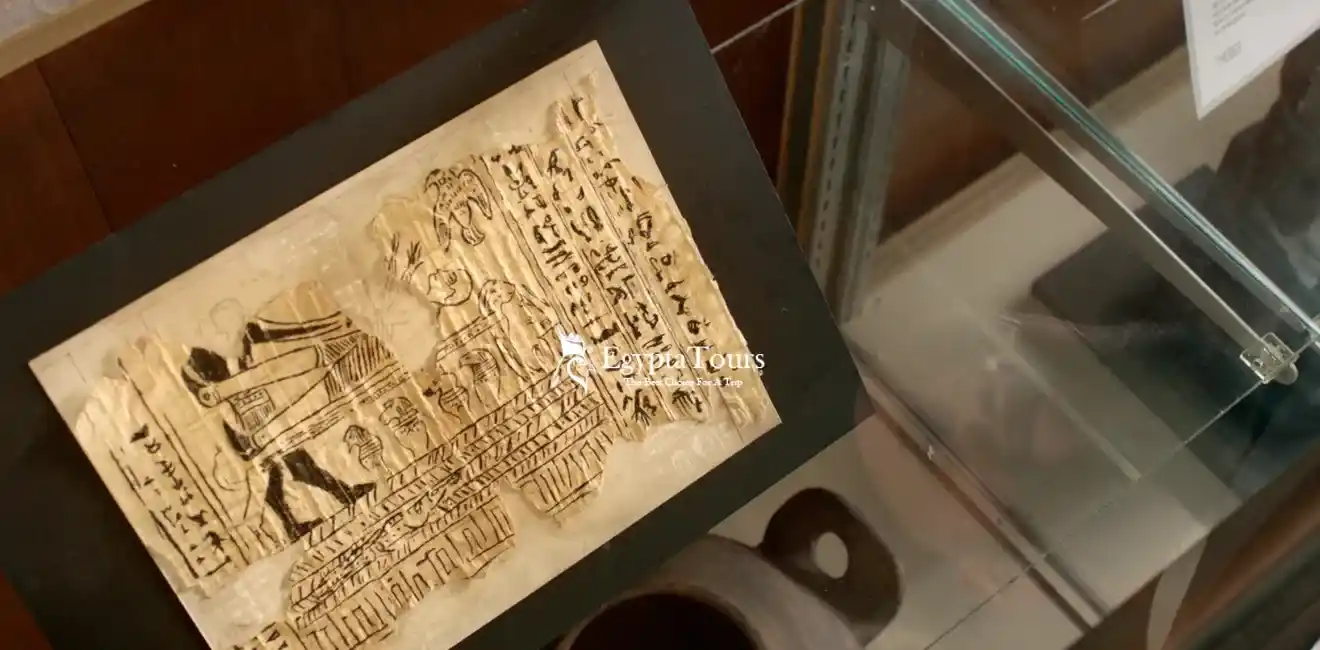
Luckily, Egypt’s dry climate helped papyrus last for thousands of years. The low moisture in the air protected it from damage caused by tiny living organisms like mold which could have ruined it. In ancient Egypt, the inks used for writing were very strong and long-lasting. The black ink (made from carbon) and the red ink (made from red ochre) did not dissolve in water and were not affected by light. Because of this, the writing can still be read today.
The way papyrus was first used also affected how well it was preserved. For example, the Books of the Dead were special and carefully made texts that were meant to be used only once placed with the mummy during burial. Because they were buried and protected, some of these papyrus texts have survived in very good condition.
Where can you see Papyrus in Egypt
At the Egyptian Museum in Cairo, you can see many ancient papyrus writings and drawings. Some of the damaged papyrus pieces on display show Egyptian gods like Thoth, Anubis and Horus, along with Ammit and the scales of judgment.
You can visit the Papyrus Institute near Giza to learn how papyrus was made in ancient times. It is one of the best places to understand how papyrus is produced, from the past until today. Visitors can also watch a live demonstration of how papyrus is made now.
At Selkhet Papyrus in Hurghada, which is the largest papyrus gallery in Egypt, visitors can see how papyrus is made and learn how ancient Egyptians used hieroglyphs to communicate.
Other Notable Papyrus Discoveries
The Dead Sea Scrolls : One of the most important archaeological discoveries connected to papyrus is the Dead Sea Scrolls. They were found in the middle of the 20th century near the Dead Sea in Israel. Today, they are displayed at the Israel Museum in Jerusalem. These ancient Jewish texts include parts of the Bible and were written on different materials including papyrus. They give us valuable information about ancient Jewish life and religious beliefs.
Oxyrhynchus Papyri : The Oxyrhynchus Papyri were found in the late 1800s and early 1900s in the Egyptian city of Oxyrhynchus. This collection includes thousands of papyrus pieces with many types of texts, such as stories, letters and legal papers.
These writings have helped us better understand everyday life, literature and government work in ancient Egypt. Many of these fragments can be seen at the Sackler Library in the United Kingdom.
The Herculaneum Papyri : In the 1700s, an important discovery was made in the Roman town of Herculaneum which was buried after the eruption of Mount Vesuvius in 79 CE. Among the findings were papyrus scrolls that were burned and turned black by the volcanic heat. These scrolls, called the Herculaneum Papyri, contain Greek philosophy, epic poetry and other writings.
They are displayed at the National Library of Naples. Today, experts use modern imaging technology to slowly open and read these fragile scrolls which may help us learn more about ancient Greek ideas.
The Role of Papyrus in Egyptian Religion and Mythology
The-Role-of-Papyrus-in-Egyptian-Religion-and-Mythology-EgyptaTours
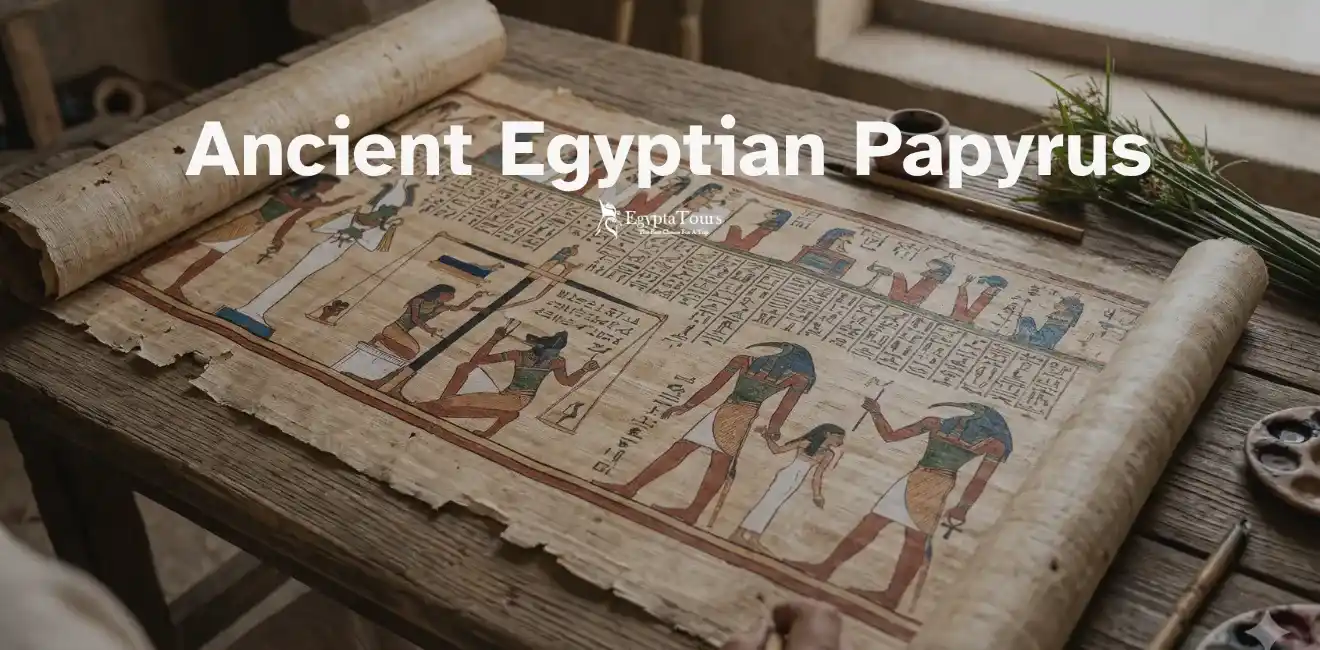
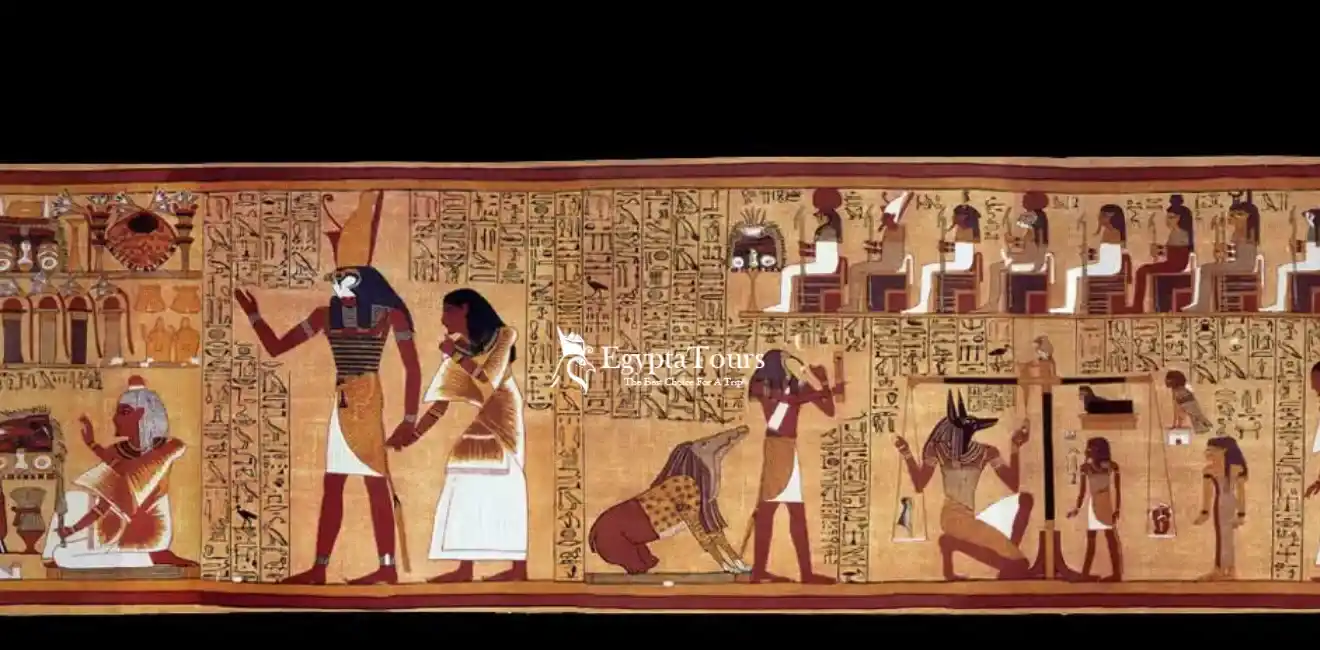
Religion was very important in ancient Egyptian life and papyrus art was the main way people showed their religious beliefs. The Book of the Dead was written and painted on long rolls of papyrus. It helped guide the soul in the afterlife with spells, prayers and colorful pictures. These drawings often showed gods like Osiris, the god of the underworld and Anubis, the jackal headed protector of the dead.
Many papyrus scenes showed the heart being weighed against the feather of Ma’at which stood for truth and justice. These paintings were not just for decoration they were holy objects believed to help a person gain eternal life. Every detail in the artwork had deep religious meaning, making papyrus art both useful and spiritual.
Symbolism and Style in Papyrus Paintings
Symbolism-and-Style-in-Papyrus-Paintings-EgyptaTours
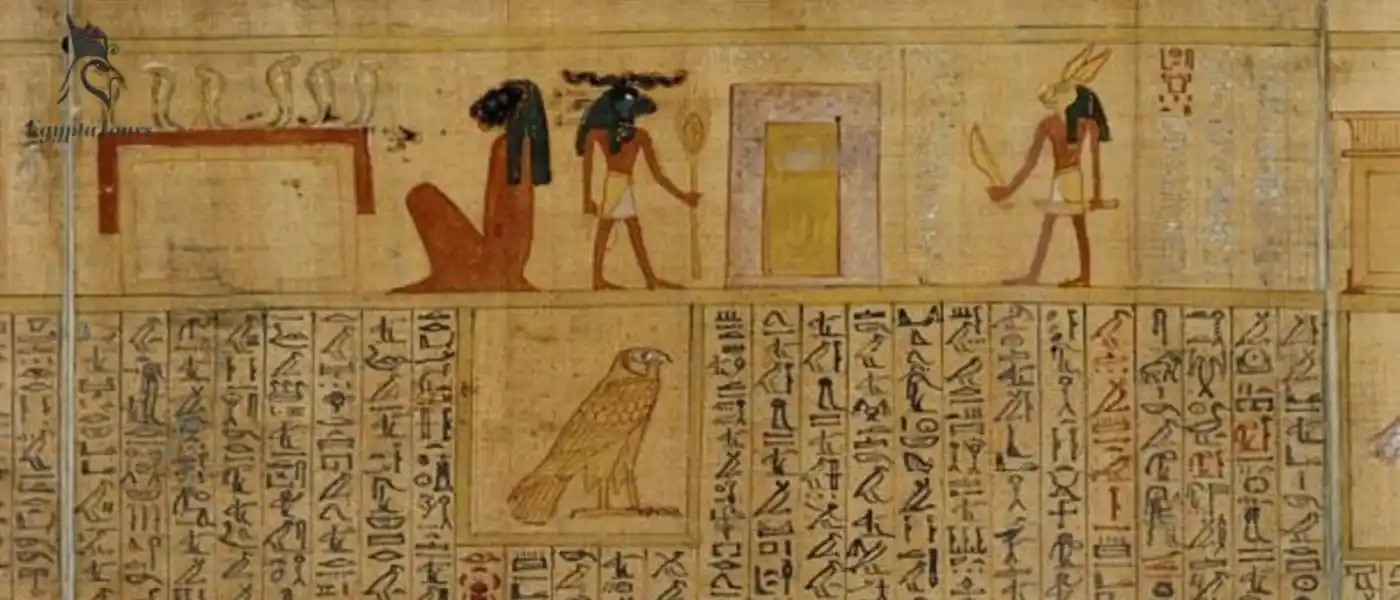
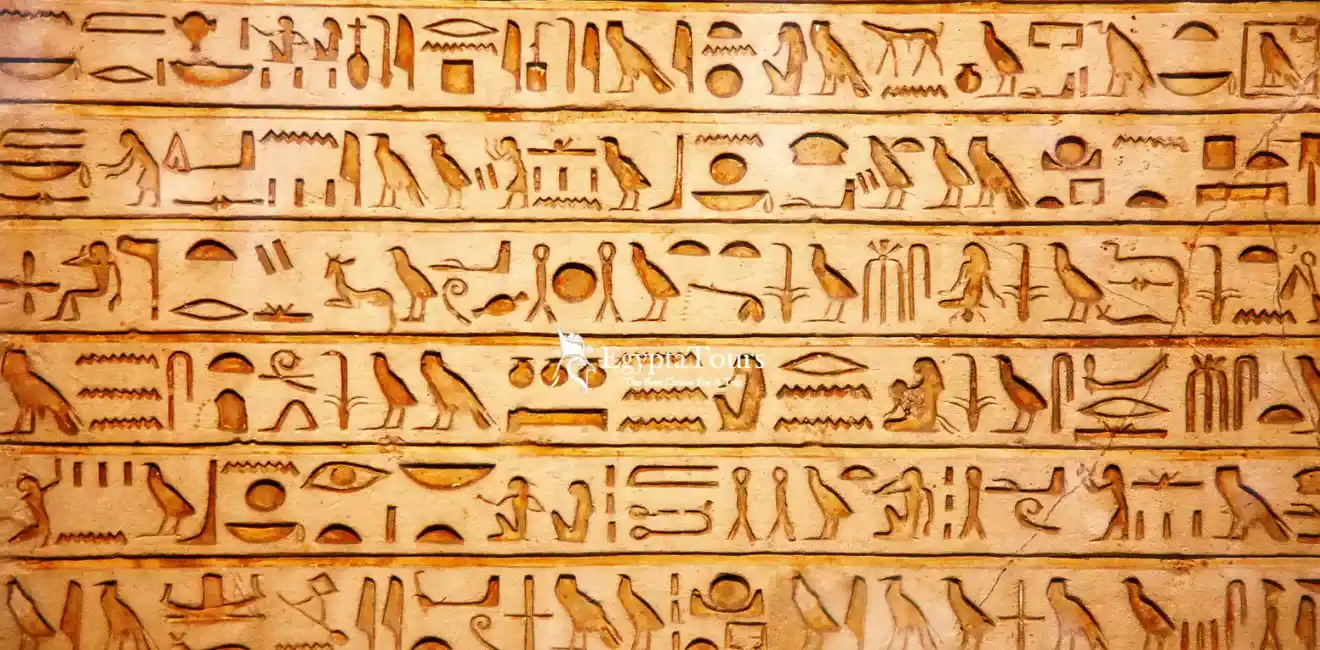
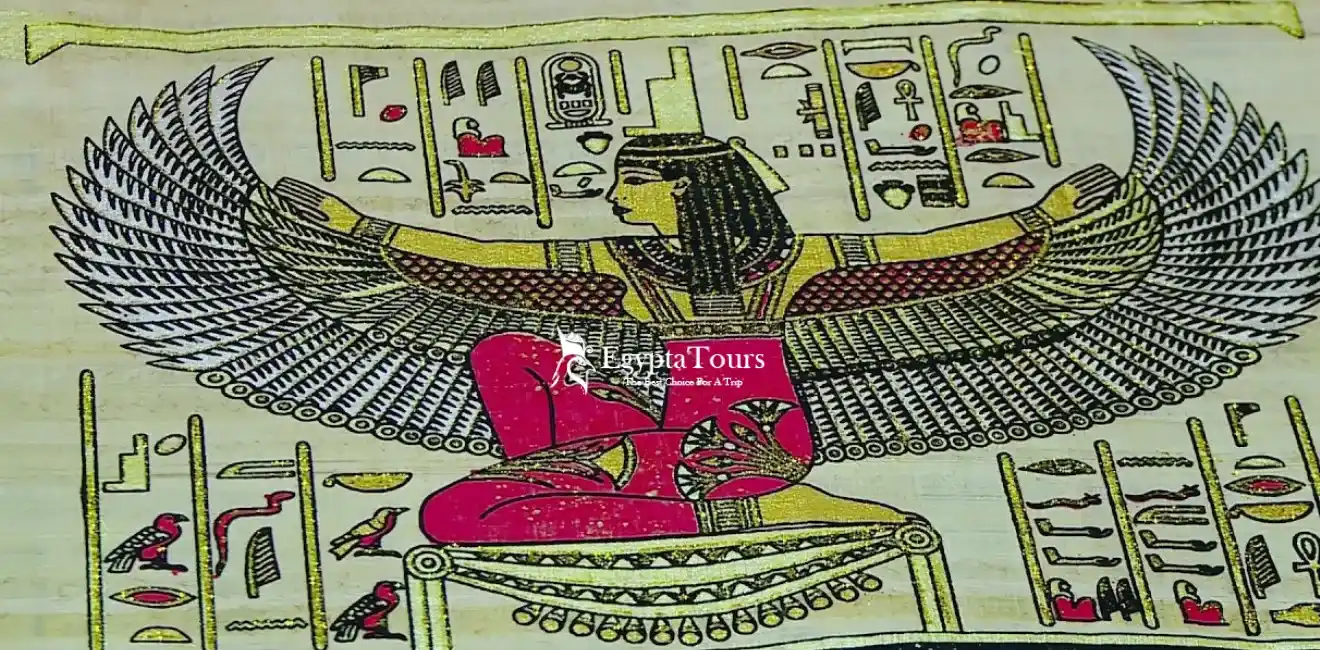
Egyptian papyrus art followed clear and fixed rules. Artists used strong outlines, bright colors and flat drawings to make the images easy to understand instead of making them look realistic. Each color had a special meaning: green meant growth and fertility, red showed danger or chaos, gold stood for gods and holiness and blue represented the sky and heaven. People were drawn in a special mixed style, heads from the side, eyes facing forward and bodies turned to the front. This made the art style easy to recognize.
Papyrus scrolls often had hieroglyphic writing next to the pictures, joining words and images into one story. These symbols helped people understand the message through both reading and looking at the pictures so even those who could not read easily could still understand the meaning.
The revival of Papyrus Art in modern Egypt
Today, papyrus art is still popular as an important part of Egypt’s culture and as a successful tourist business. Skilled workers use old traditional methods to make papyrus sheets and paint them with classic designs of gods, pyramids and pharaohs. Many tourists buy these artworks as gifts or souvenirs to take a part of Egypt’s long history home with them.
Workshops in Cairo, Luxor and Giza show visitors how papyrus is made and let them try the process themselves. This renewed interest connects the past with the present and helps keep papyrus art alive, important and appreciated by new generations.
The Lasting Influence of Papyrus on Global Culture
Papyrus was not only used in Egypt it also spread around the Mediterranean Sea and influenced Greek and Roman civilizations. It became the main material for writing in early libraries, such as the Library of Alexandria. Papyrus stayed the common writing material for many years until parchment and later paper replaced it.
The influence of papyrus art can still be seen today in handwritten books, book illustrations and religious images. Without papyrus, the history of writing might have developed in a very different way. Because it was the early form of paper, papyrus is considered one of the most important inventions in human history.
Caring for Papyrus Today
Old papyrus sheets are often fragile and easily broken. They usually have problems like missing parts, tears and other damage. These ancient documents must be stored and handled very carefully so they can last for future generations.
At the British Museum, papyrus is used by visiting researchers, shown in the galleries, or loaned to museums around the world for exhibitions.
In the museum, papyrus is protected by placing it between two pieces of glass that are taped around the edges. The papyrus is held in place with small Japanese paper hinges so it does not move.
This Japanese paper is very clean and made from long fibers, making it thin but strong. The glass supports the whole papyrus and lets both sides be seen, as many papyri have writing on both sides. For very large papyrus sheets, the glass is supported by a wooden or metal frame. This keeps the papyrus steady and prevents the glass from bending.
Production Process of Papyrus in Ancient Egypt
Making papyrus had a few important steps. First, workers cut the stalks of the papyrus plant. Then they removed the hard outer layers. After that, they cut the soft inner part into thin strips. The strips were carefully laid out to make a sheet. One layer of strips was placed across and the next layer was placed up and down, forming a crisscross pattern. Finally, the sheets were pressed and dried. The plant’s natural sap worked as glue, so no extra adhesive was needed. The finished sheets were often rolled up into scrolls, which was the usual way to write in ancient Egypt.
Uses of Papyrus in Ancient Egypt
Uses-of-Papyrus-in-Ancient-Egypt-EgyptaTours
Ancient Egyptians used papyrus for many important things. It was their main material for writing. Scribes wrote on it for official papers, religious texts and different kinds of stories and books. Its smooth surface made it easy to write on with ink. This made papyrus perfect for keeping important information and passing on knowledge.
Besides writing, papyrus was also used for art and decoration. Craftsmen made detailed scrolls with pictures and carefully drawn hieroglyphs. These decorative scrolls were often placed in tombs and temples, showing that papyrus was important for both art and religion.
Egyptians also used papyrus to make many everyday things. They made mats, sandals, baskets and even small boats from this useful plant. This showed that papyrus had many uses in daily life.
Symbolic Significance of Papyrus
Besides being useful, papyrus also had important symbolic meaning in ancient Egypt:
Unity and Order: The papyrus plant was often shown with the lotus flower, representing the joining of Upper and Lower Egypt.
Connection to the Gods: The goddess Wadjet who protected Lower Egypt, was often shown holding a papyrus scepter showing how important the plant was in religion and culture.
FAQs
How did ancient Egyptians make papyrus and what materials were used?
Papyrus was made from the pith of the papyrus plant, which grew along the Nile River. The stalks were cut into thin strips, soaked, and pressed together in overlapping layers to form sheets that were then dried and polished for writing.
What was the significance of papyrus in ancient Egyptian society and culture?
Papyrus was essential for record-keeping, literature, and religious texts. It allowed Egypt to develop one of the world’s earliest writing systems and became a major export that spread Egyptian knowledge and culture across the ancient world.
Where can original ancient papyrus manuscripts be seen today?
Ancient papyrus manuscripts can be viewed in museums such as the Egyptian Museum in Cairo, the British Museum in London, and the Louvre in Paris, where many examples display hieroglyphic, hieratic, and demotic scripts.
About EgyptaTours

EgyptaTours is a name synonymous with trust, excellence, and unforgettable travel experiences, proudly standing as one of the leading travel agencies in Egypt. Renowned for its deep expertise, personalized service, and carefully crafted itineraries, EgyptaTours serves as the ultimate gateway to discovering Egypt in its most authentic and inspiring form.