The Lighthouse of Alexandria: Engineering Marvel of the Ancient World
📋 Summary & Quick Facts
The Lighthouse of Alexandria, also known as the Pharos, was far more than just a navigational tool; it was a towering symbol of ancient engineering and maritime dominance. Built by the Ptolemaic Kingdom, this 300-foot-tall marvel safely guided sailors into Egypt’s busiest port using a groundbreaking mirror system that amplified an open flame for miles.
Although a series of devastating earthquakes eventually claimed the physical structure, its legacy as one of the Seven Wonders of the Ancient World lives on through historical texts, Roman coins, and the ongoing underwater archaeological discoveries just off the Mediterranean coast.
Key Takeaways
-
-
A Ptolemaic Masterpiece: While the city was founded by Alexander the Great, the lighthouse itself was initiated by Ptolemy I Soter and completed by his son, Ptolemy II Philadelphus.
-
Engineering Marvel: Standing over 300 feet tall, it was one of the tallest man-made structures on earth at the time and a vital protector of maritime trade.
-
Innovative 3-Tier Design: To withstand harsh coastal weather, the architect Sostratus of Cnidus designed a massive square base, an octagonal middle tier, and a cylindrical top crowned with a magnificent statue.
-
Groundbreaking Technology: The Pharos utilized a highly advanced system of mirrors to reflect an open flame, projecting a beacon of light far out into the treacherous Mediterranean Sea.
-
An Underwater Legacy: After being destroyed by earthquakes between the 12th and 15th centuries, the remnants of the grand tower now lie scattered on the seafloor, currently protected and studied by underwater archaeologists.
-
Alexandria Lighthouse, commonly referred to as the Pharos, remains one of the ancient world’s most captivating wonders.
While the bustling coastal city was originally founded by Alexander the Great, this architectural marvel was actually built by the Ptolemaic Kingdom. The monumental project was initiated by Ptolemy I Soter to serve as a beacon of guidance for sailors navigating the treacherous Mediterranean Sea.
The grand structure was ultimately finished during the reign of his son Ptolemy II Philadelphus in the third century BCE. At over 300 feet tall, the lighthouse was one of the tallest man-made structures of its time.
It was constructed in three distinct sections:
-
A square base: Providing a massive foundation.
-
An octagonal middle tier: Adding aesthetic flair.
-
A cylindrical top: Housing the open flame and crowned with a magnificent statue of Triton. (Also, remove the stray quotation mark at the end of Triton).
These tiers gave the lighthouse a majestic and imposing appearance, which could be seen from miles away.
The materials used for its construction, such as limestone and granite, ensured its resilience against natural elements.
The lighthouse’s purpose was to safely guide sailors through the treacherous waters of the Mediterranean Sea and into the harbor of Alexandria. An open flame at its peak was enhanced by a system of mirrors, allowing the light to reach far out to sea, an innovation that was groundbreaking for its time.
This made the lighthouse not only a vital tool for maritime navigation but also a symbol of Alexandria’s significance as a center of trade and culture.
Throughout history, this ancient wonder has inspired countless tales and artistic works. Because the structure eventually succumbed to a series of devastating earthquakes, historians rely heavily on ancient texts, mosaics, and detailed depictions stamped onto ancient Roman coins to understand exactly what it looked like.
The remnants of this once-grand structure still lie scattered on the seafloor, and ongoing underwater archaeological efforts, supported by the Egyptian government, aim to uncover more about its storied past
As one of the Seven Wonders of the Ancient World, the Lighthouse of Alexandria remains a testament to the ingenuity and ambition of its creators, leaving an indelible mark on history.
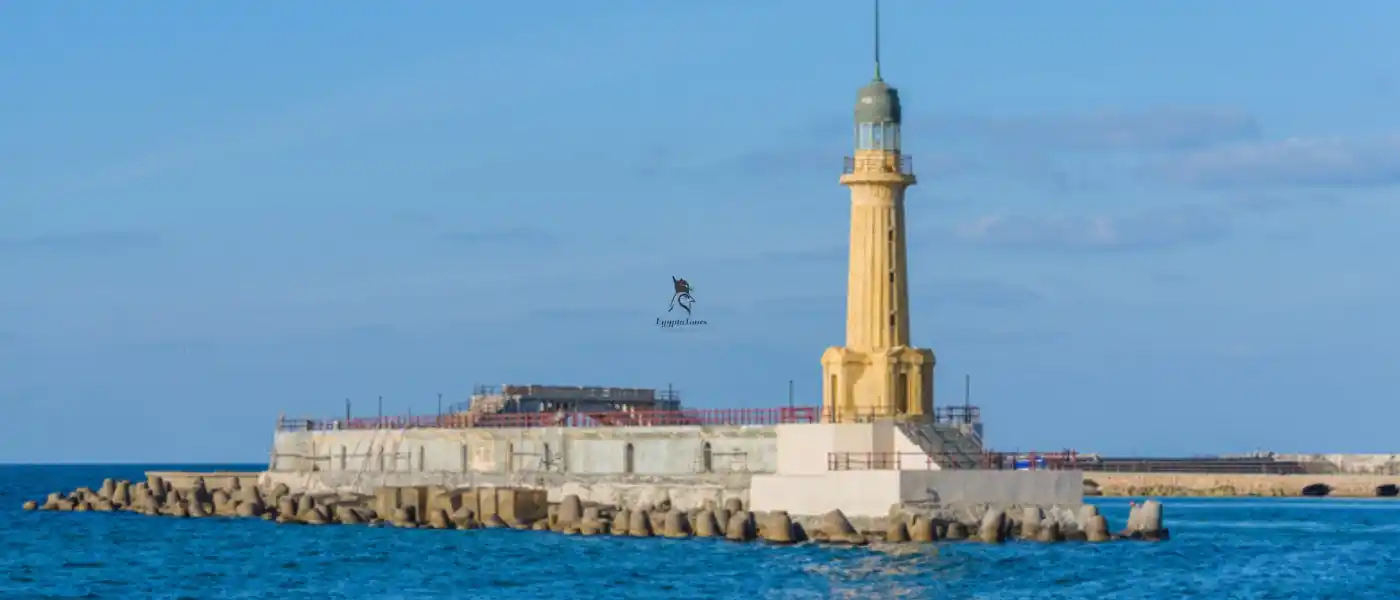
Alexandria-Lighthouse-Architectural-Design
The architectural design of the Lighthouse of Alexandria reflected the advanced engineering capabilities of the ancient Greeks.
Designed by the Greek architect Sostratus of Cnidus and constructed during the reign of Ptolemy II Philadelphus, the structure featured three distinct sections: a square base, a middle octagonal tier, and a cylindrical top.
Standing over 300 feet tall, the lighthouse was an imposing presence on the coastline.
The materials chosen for its construction were carefully selected for durability. Large blocks of light-colored stone, likely limestone and granite, were used, and these blocks were held together by molten lead.
This technique ensured the structure’s stability against the harsh maritime conditions, including crashing waves and strong winds.
The lighthouse was not only functional but also aesthetically pleasing, adorned with statues, columns, and other decorative elements.
The lighthouse’s design was not just about its towering height. The use of mirrors to amplify the light from an open flame at its peak was a groundbreaking innovation. This allowed the light to be visible for miles at sea, significantly aiding in maritime navigation and reducing the risk of shipwrecks.
The lighthouse’s structure was thus a blend of form and function, showcasing the ingenuity of its creators.
In addition to its practical uses, the lighthouse was a symbol of Alexandria’s wealth and power. Its impressive design and the technology it employed were a reflection of the city’s status as a major center of trade and culture in the ancient world.
The lighthouse’s presence on the island of Pharos was a testament to the city’s architectural and engineering prowess, drawing admiration from all who saw it.
Its influence extended beyond its immediate function, leaving a lasting impact on subsequent architectural projects and serving as a source of inspiration in ancient literature and art.
The image of the lighthouse appeared in various artistic mediums, underscoring its cultural significance.
Structure and Materials of the Pharos
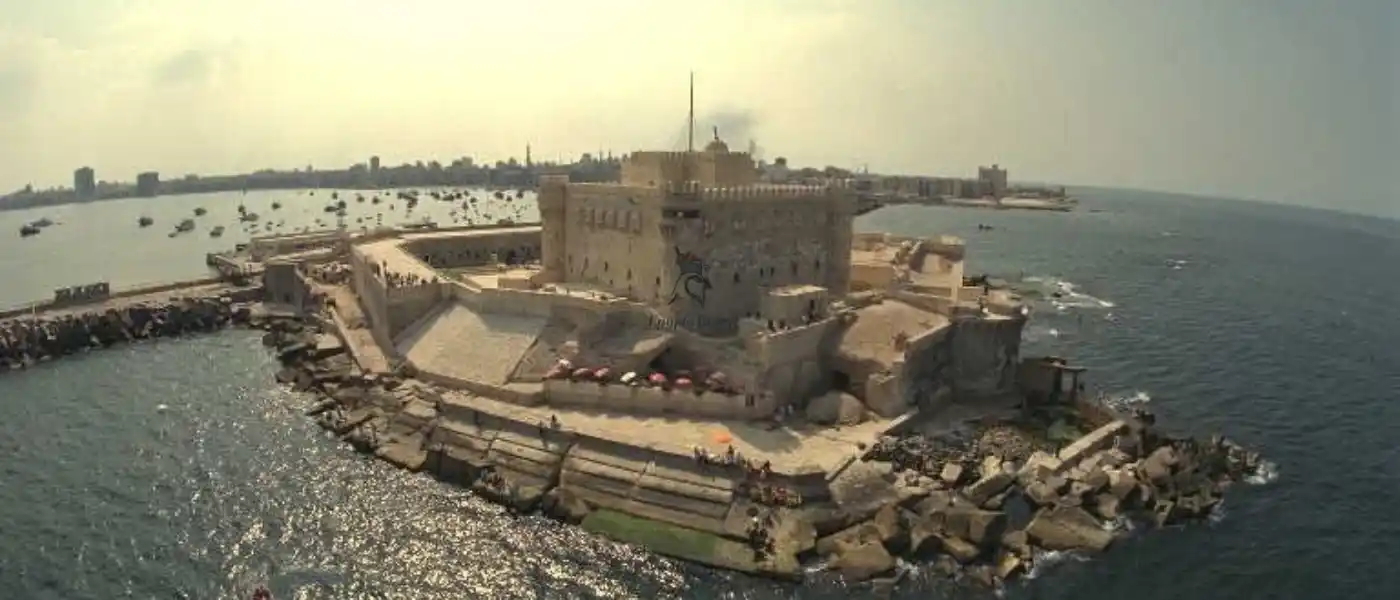
Description-of-the-lighthouse’s-structure-and-materials-used
The ancient beacon was an engineering marvel constructed using large blocks of light-colored limestone and granite. These stones were chosen for their durability and ability to withstand the harsh conditions of the Mediterranean Sea.
The blocks were held together using molten lead, a technique that provided additional stability against the elements, including strong winds and crashing waves.
The structure itself was built in three main sections: a square base, an octagonal middle, and a cylindrical top.
Each tier was carefully designed to support the next, creating a balanced and imposing edifice. The square base provided a sturdy foundation, while the octagonal middle added an aesthetic flair.
The cylindrical top housed the open flame that served as the lighthouse’s light source.
The lighthouse’s height exceeded 300 feet, making it one of the tallest man-made structures of its time.
This impressive height, combined with the innovative use of mirrors to amplify the light from the flame, allowed the lighthouse to be seen from miles away.
This feature was crucial for guiding sailors safely into the harbor of Alexandria, reducing the risk of shipwrecks.
The design also incorporated various decorative elements, including statues and columns, which not only enhanced its visual appeal but also served as symbols of Alexandria’s wealth and power. The lighthouse was more than a functional structure; it was a monument to the city’s status as a major center of trade and culture.
Despite its eventual downfall due to a series of earthquakes, the materials and construction techniques used in the monumental tower left a lasting impact on architectural design. The remnants of the structure, still visible underwater near Alexandria, continue to inspire admiration for the ingenuity and craftsmanship of its creators.
The Alexandria Lighthouse remains a timeless symbol of ancient engineering prowess and architectural sophistication.
Innovations in design for its time
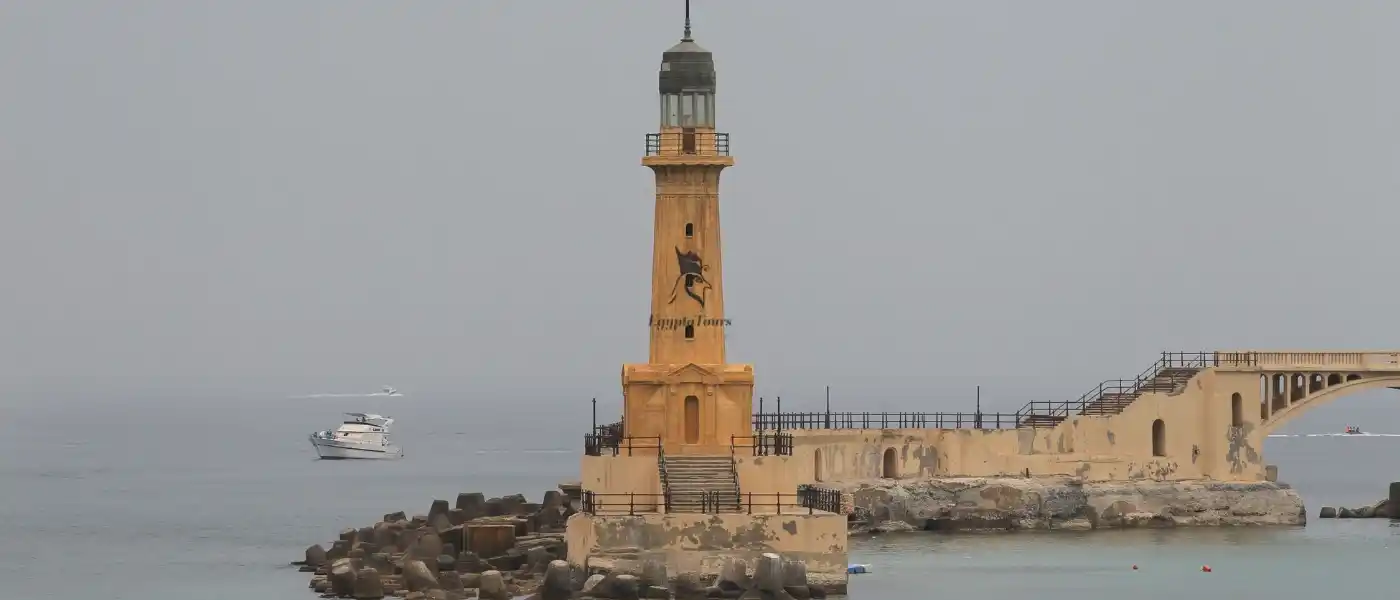
Innovations-in-design-for-its-time-EgyptaTours
The imposing structure introduced several groundbreaking design elements that set it apart from other structures of its era.
One of the most notable innovations was its tiered structure, which included a square base, an octagonal middle, and a cylindrical top.
This multi-tiered design not only provided stability but also enhanced its visual impact, making it an imposing sight along the coastline.
Each section was meticulously crafted to support the next, demonstrating an advanced understanding of architectural principles.
A significant technological advancement was the use of mirrors to amplify the light from the open flame at the top of the lighthouse.
This method allowed the light to be projected over greater distances, ensuring that it could be seen by sailors navigating the treacherous waters of the Mediterranean Sea.
The use of reflective technology in this manner was ahead of its time and showcased the ingenuity of its designers.
Another remarkable aspect of the lighthouse’s design was its aesthetic elements. Adorned with statues, columns, and other decorative features, the lighthouse was not just a functional structure but also a symbol of the city’s grandeur and cultural importance.
These artistic elements were carefully integrated into the design, enhancing its overall appeal and solidifying its status as a marvel of ancient engineering.
The materials used in its construction were also chosen for their durability.
Large blocks of light-colored limestone and granite were selected to withstand the harsh maritime conditions. The stones were held together using molten lead, providing additional stability against strong winds and crashing waves.
Furthermore, the lighthouse’s strategic location on the island of Pharos played a crucial role in its functionality.
Positioned near the bustling port of Alexandria, it served as a vital guide for incoming ships, reducing the risk of maritime accidents and facilitating trade.
This architectural wonder thus set a precedent for future lighthouse designs, combining practical innovation with architectural beauty in a way that had never been seen before.
Explore our Exclusive Alexandria Tours
FAQs
What was the Alexandria Lighthouse and where was it located?
The Alexandria Lighthouse, also known as the Pharos of Alexandria, was an ancient tower built on Pharos Island near the harbor of Alexandria, Egypt.
Who built the Alexandria Lighthouse and when was it constructed?
It was built during the reign of Ptolemy II Philadelphus between 280 and 247 BCE by the Greek architect Sostratus of Cnidus.
Why was the Lighthouse of Alexandria considered one of the Seven Wonders of the Ancient World?
It was one of the tallest man-made structures of its time and a remarkable feat of engineering and design, serving as a beacon for sailors.
How tall was the Alexandria Lighthouse and what did it look like?
Estimates suggest it stood between 100 and 130 meters (330–430 feet) tall, featuring three tiers: a square base, an octagonal midsection, and a cylindrical top crowned with a statue.
What materials were used to build the Lighthouse of Alexandria?
The structure was primarily made of large blocks of light-colored stone, likely limestone and granite.
Similar Posts



About EgyptaTours

EgyptaTours is a name synonymous with trust, excellence, and unforgettable travel experiences, proudly standing as one of the leading travel agencies in Egypt. Renowned for its deep expertise, personalized service, and carefully crafted itineraries, EgyptaTours serves as the ultimate gateway to discovering Egypt in its most authentic and inspiring form.