





Ancient Egyptian Medicine: Powerful Secrets of Healing and Science
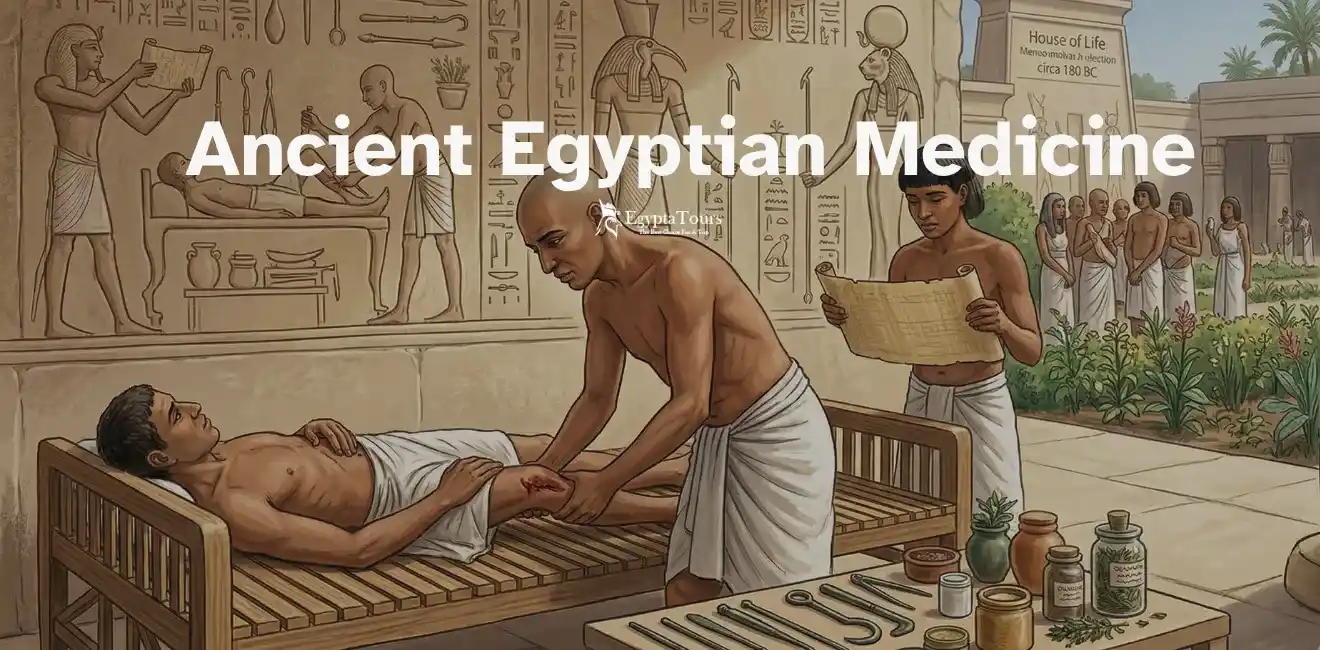
Ancient Egyptian medicine is considered one of the most prominent fields that showed scientific and human progress, as the ancient Egyptians were among the first peoples to practice medicine in an organized manner.
There is part of Ancient Egyptian medicine still used today, as they relied on a combination of scientific knowledge and spiritual traditions. They excelled in diagnosing and treating diseases using medicinal herbs and natural drugs, in addition to performing simple and advanced surgeries, benefiting from their deep understanding of anatomy.
Priests and doctors played a role in ancient Egyptian society, as they were considered mediators between humans and the gods, believing that healing is a process that combines medical treatment and prayer. In this article, we talk in detail about ancient Egyptian medicine.

Ancient Egyptian medicine was very advanced, as it included simple surgeries, repairing bone fractures, and manufacturing many medicines.
The ancient Egyptians used medical papyri such as the Edwin Smith Papyrus and the Ebers Papyrus, which contain diagnoses and treatments for some injuries and diseases.
Egyptian doctors were highly respected not only in Egypt but also in neighboring countries.
One of the most famous doctors in ancient Egypt was Imhotep, who is considered the founder of medicine in ancient Egypt, and was revered as the god of healing in the late ages of the Pharaohs.
There are many Ancient Egyptian medicine facts, as it combined scientific medicine with magical medicine because they believed that diseases might be caused by evil spirits or the wrath of the gods. However, they had advanced knowledge of human anatomy thanks to the mummification processes they performed.
Diseases in Ancient Egypt
In ancient Egypt, there were many diseases that affected the population, the most famous of which are:
- Malaria: It was transmitted by mosquitoes and caused high fever.
- Schistosomes: It was transmitted through polluted water and caused problems in the urinary system.
- Plague: It was widespread at certain times and caused great deaths.
- Respiratory diseases: Such as tuberculosis, which was common among the ancient Egyptians.
- Eye diseases: They were common due to environmental conditions and dust, and the ancient Egyptians treated them using herbal medicines.
Diagnostic Methods in Ancient Egypt

Throughout Ancient Egyptian medicine history, diagnostic methods relied on a combination of medical knowledge and religious traditions. Ancient Egyptian doctors used a variety of methods to diagnose diseases and injuries. Among the methods they relied on were:
- Visual examination: Doctors would carefully examine the patient, noting any visible signs on the skin, eyes, or mouth.
- Listening to symptoms: They would listen to the patient’s description of the symptoms he was experiencing, such as pain, fever, or fatigue.
- Feeling and pressure: Doctors would use their hands to feel and press on different parts of the patient’s body to identify areas of pain or swelling.
- Using magic and religion: In some cases, they would resort to priests and magicians to diagnose diseases that they believed were caused by evil spirits or the wrath of the gods.
Therapeutic experiences in ancient Egypt
There were many advanced therapeutic experiences that showed the extent of the development of ancient Egyptian medicine, including:
Surgery
The ancient Egyptians performed complex surgeries such as suturing wounds and repairing fractures, and they used advanced surgical tools such as scalpels and forceps.
Herbal Medicine
The ancient Egyptians used a wide range of herbs and medicinal plants to treat diseases. The Ebers Papyrus contains over 700 herbas from Ancient Egyptian medicine recipes.
Mummification
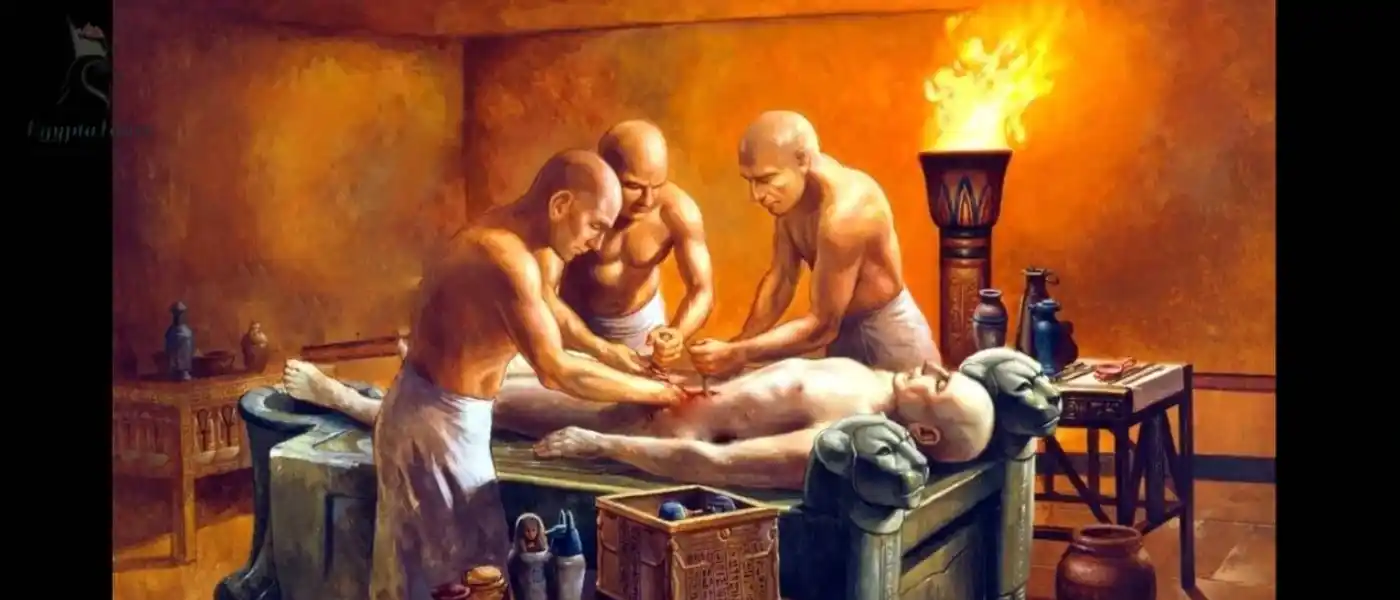
The process of mummification was not only to preserve bodies, but also reflected a deep understanding of the anatomy of the human body and how to keep it from decomposing.
Treatment with amulets and charms
The ancient Egyptians believed that diseases could be caused by evil spirits, so they used amulets and charms as part of their treatment.
Water Therapy
They used holy water in treatment, as they believed it had healing properties.
The most famous doctors in ancient Egypt

In ancient Egypt, there were many doctors who were famous for their medical skills and knowledge. Among these doctors are:
Imhotep
Imhotep is considered one of the most famous Ancient Egyptian medicine names in ancient Egypt. He was a minister to King Zoser and was famous for his medical skills. It is believed that he wrote a medical papyrus containing prescriptions.
Hesy-Ra
He was the chief dentist during the reign of King Zoser, and is considered the first recorded dentist in history.
Peseshet
She is considered one of the pioneers of ancient Egyptian medicine, as she was the first known female doctor in history, and worked as the chief physician of the palace in the Fourth Dynasty.
Merit Ptah
She was a famous doctor in the Third Dynasty, and is considered the first known female doctor by name in history.
Bentu
He was a doctor during the reign of King Akhenaten, and was famous for his medical skills and service in the royal palace.
Healing gods and Medicines
Like doctors, dentists in Ancient Egypt used magic spells to chase away the tooth worm which they believed caused tooth pain. After that, they used the medicines they had to reduce the pain.
Doctors and dentists often used herbs and spices as medicine. For example, to treat long lasting bad breath, people chewed a small ball made of honey, cinnamon, myrrh, frankincense and pine nuts.
There is proof that they pulled out teeth and even made false teeth. Opium was sometimes used to reduce pain during treatment. They understood that diet was important and they suggested changing eating habits to improve health.
For clear physical injuries, they first used practical treatments. But for toothaches, gum problems, or other illnesses, they usually believed the cause was supernatural.
Belief in magic was a strong part of Egyptian culture. People saw it as something normal and natural, just like any other part of life. The god of magic was also the god of medicine. His name was Heka, and he carried a staff with two snakes wrapped around it.
This symbol later passed to the Greeks. They connected it with their god of healing, Asclepius. Today, this symbol is known as the Caduceus and is used as a sign of the medical profession.
However, the caduceus did not originally come from Egypt or Greece. It first appeared in Sumer as the staff of Ninazu who was the son of Gula, the Sumerian goddess of healing.
Besides Heka, there were many other important gods and goddesses of healing. These included Sekhmet, Serket (also called Selket), Sobek and Nefertum.
All the priests of Serket were doctors, but not every doctor belonged to her religious group. Serket and Sekhmet were often called upon in magic spells together with Heka. Sometimes other gods were also asked for help, such as Bes or Taweret, especially in cases related to fertility or children’s illnesses.
Sobek, the crocodile god, was mainly asked for help during surgeries and serious medical procedures. Nefertum, the god of perfume and the lotus flower, was connected with healing through pleasant smells. In treatments that we would today call aromatherapy, people prayed to him.
In the Kahun Papyrus, doctors often advised that women should sit over burning incense smoke to remove an evil spirit from the body. In these cases, Nefertum would have been called upon for help.
Besides using spells and magic words, Egyptian doctors also used natural herbs and spices, as well as medicines they made themselves.
Surgery and Medical Tools
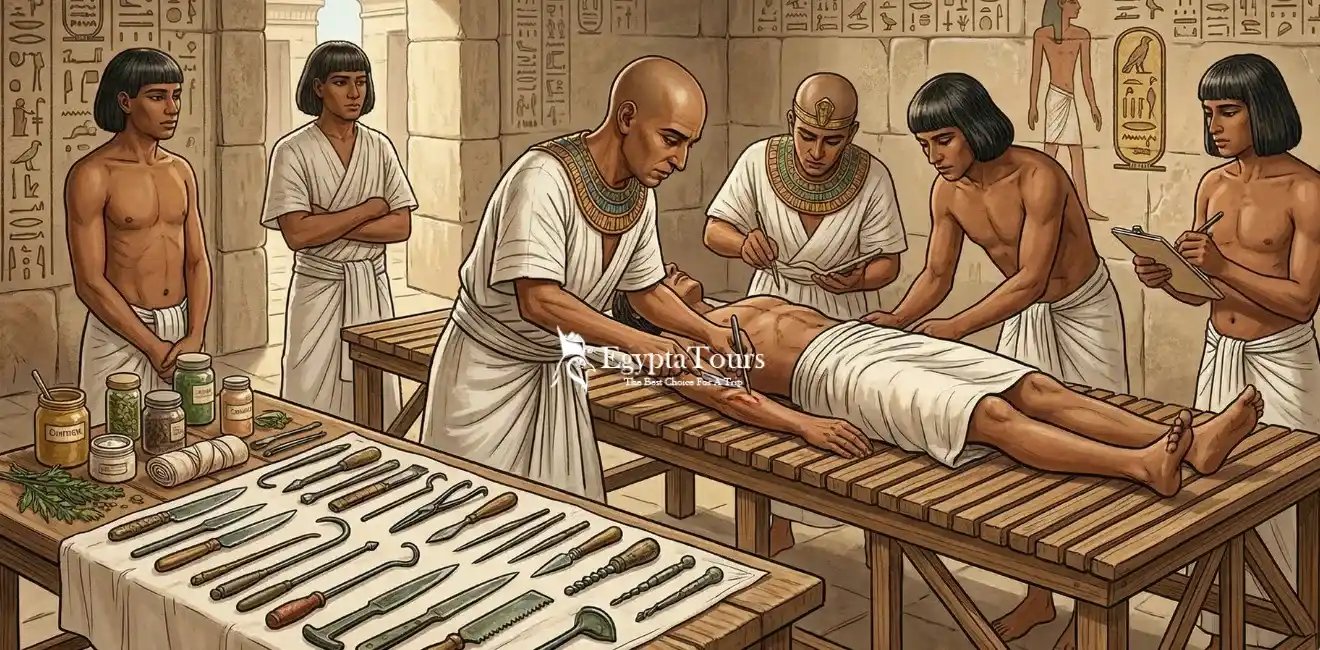
Surgery-and-Medical-Tools-Ancient-Egypt-EgyptaTours
Surgery was common and many of their medical tools are similar to ones still used today. The Egyptians had stone and metal knives (scalpels), tools for pulling teeth, bone saws, thin tools for examining wounds (probes), tubes for draining liquid (catheters), clamps to stop bleeding, tools for opening the body to examine it (specula), gripping tools (forceps), sharp tools for cutting veins (lancets), sponges, scissors, small bottles (phials), linen bandages and scales to measure the right amount of ingredients for medicine.
Many surgeries were successful. This is shown by mummies and skeletons that prove people lived for years after losing a limb or even having brain surgery. Artificial limbs, usually made of wood, have also been discovered.
The Most Famous Papyrus on the practice of medicine in ancient Egypt
Papyrus scrolls were documents written on sheets made from the papyrus plant. They were an important source of information about many parts of ancient Egyptian life.
In Pharaonic Egypt, papyri were used in schools and temples for higher education and for writing important records, because the ink on them was hard to remove.
One of the most famous examples is the Ebers Papyrus. It is the oldest surviving scientific manuscript from ancient Egypt.
It is an important source for information about internal medicine, eye diseases, skin diseases, bone and limb problems, women’s health and even some types of surgery.
This papyrus includes more than 700 magic spells and medical recipes to treat different illnesses.
It also contains terms related to the structure of the body, how the body works and different treatment methods.
It is believed to have been written around 1500 BCE, although some parts may be as old as 3400 BCE.
The Ebers Papyrus is one of the oldest known medical texts and shows that the Egyptians used organized and careful medical methods.
It also suggests that Egyptian doctors understood the structure of bones and the functions of important organs like the brain and the liver.
Fields of Medicine in Ancient Egypt
According to the Ebers Papyrus, many different areas of medicine were explained clearly and in detail including how body organs work and the different ways to treat illnesses.
The Heart
The ancient Egyptians believed that the heart was the main center of blood flow in the body. They thought it was the place where all the body’s vessels came together, carrying tears, urine, semen and blood.
Mental illness
In 2014, modern researchers said that the Egyptians’ knowledge of the heart and blood vessels was very advanced, but not completely correct.
The papyrus also talked about the signs, causes, and treatments of mental illnesses, like dementia and depression.
Surgery
The Egyptians thought that mental illnesses happened because of evil spirits or the anger of the gods.
Egyptian doctors sewed up wounds and used some plants, like willow leaves, to prevent infection. They also used simple surgical tools, such as forceps and clamps.
Dentistry
The ancient Egyptians also treated teeth, because tooth decay was common.
They used remedies made from cumin, incense and onions to reduce swollen gums, and opium to ease pain.
Sometimes, they drilled holes in the jaw to drain infections, although there is little proof that they removed teeth.
Family planning
The manuscript contained information about birth control methods, how to tell if a woman was pregnant and other women’s health problems.
General Health Advice
The papyrus gave instructions for treating skin problems, tooth diseases, eye problems, stomach and intestine issues, parasites, tumors, burns, abscesses and broken bones.
Doctors also gave advice to keep people healthy. They told them to wash and shave their bodies to avoid infections, eat carefully and stay away from dirty animals and raw fish.
Ancient Egypt Dentistry practices
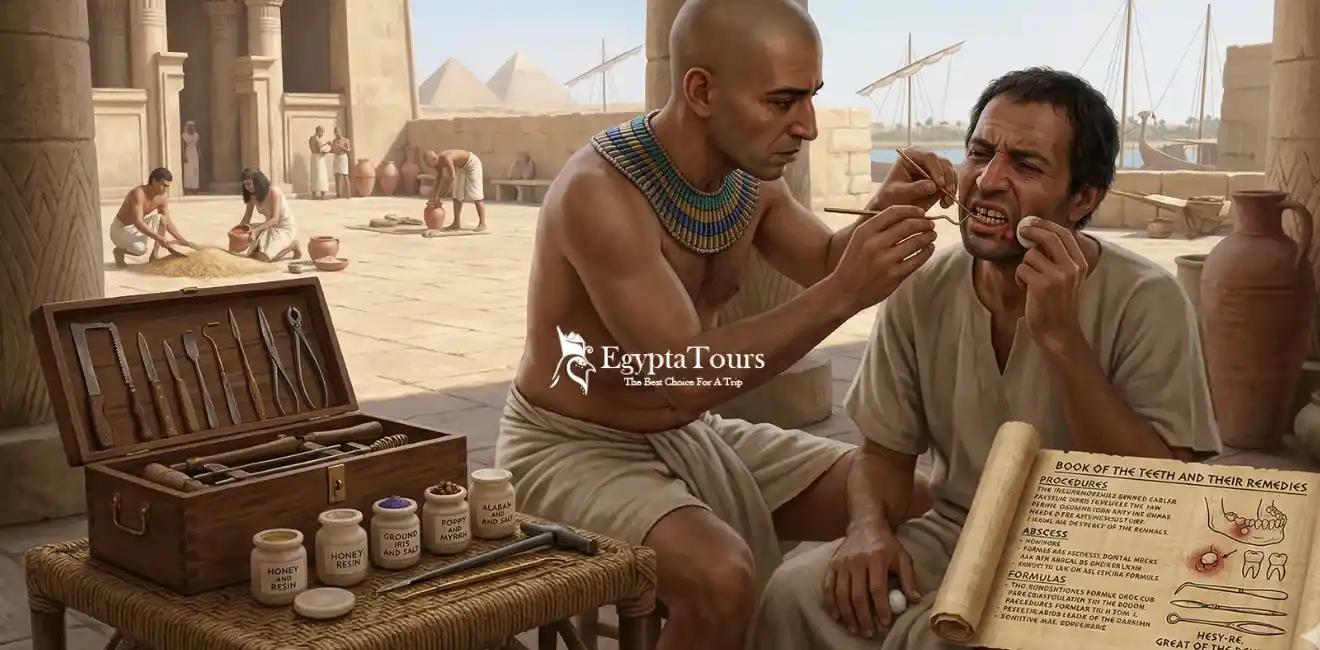
Ancient-Egypt-Dentistry-practices-EgyptaTours
The timeline of ancient Egyptian medicine shows the first known dental treatment. This happened between 3,000 B.C. and 2,500 B.C. It probably involved drilling cavities or pulling out teeth. The Egyptians also had ways to treat tooth injuries and pain.
The Edwin Smith Papyrus gives instructions on healing mouth wounds. Because their diet was rough, a common problem was attrition which is the wearing down of tooth material. Attrition caused inflammation, tooth loss and infections (abscesses).
To prevent attrition, the Egyptians made mouthwashes to reduce pain and keep teeth and gums healthy. These mouthwashes were made from ingredients like bran, celery and sweet beer.
Dental surgery was also done, such as fixing a dislocated jaw, removing diseased gums and draining infections (abscesses).
Dental bridges have been found on mummies, but it is not clear if they were made while the person was alive or added later as part of the mummification process.
The Medical Texts

Ancient-Egyptian-Medicine-Discover-Best-Healing-Practices-EgyptaTours
Even though there were probably many more medical texts in ancient Egypt, only a few have survived until today. These remaining texts, however, give a lot of information about how the Egyptians understood disease and what they thought could help a patient or cure an illness.
The texts are named after the person who owned them or the place where they are kept. All of them, to some extent, use both magic and practical medical methods.
The Chester Beatty Medical Papyrus, from around 1200 BCE, gives treatments for problems with the anus and rectum and even suggests cannabis for cancer patients. This is earlier than the first mention of cannabis in Herodotus.
The Berlin Medical Papyrus (also called the Brugsch Papyrus, from the New Kingdom, c. 1570–1069 BCE) talks about birth control, fertility, and has the earliest known pregnancy tests.
The Ebers Papyrus (c. 1550 BCE) gives treatments for cancer (though it says there is no cure), heart disease, diabetes, birth control and depression.
The Edwin Smith Papyrus (c. 1600 BCE) is the oldest known text about surgery.
The Demotic Magical Papyrus of London and Leiden (c. 3rd century CE) is fully about magic spells and predicting the future.
The Hearst Medical Papyrus (New Kingdom) treats urinary tract infections and digestive problems.
The Kahun Gynaecological Papyrus (c. 1800 BCE) talks about conception, pregnancy and birth control.
The London Medical Papyrus (c. 1782–1570 BCE) gives prescriptions for eye and skin problems, burns and pregnancy issues.
These are the main papyri that focus entirely on medicine. There are many others that mention medical topics, but they are not usually considered full medical texts.
Herbal Medicine in Ancient Egypt
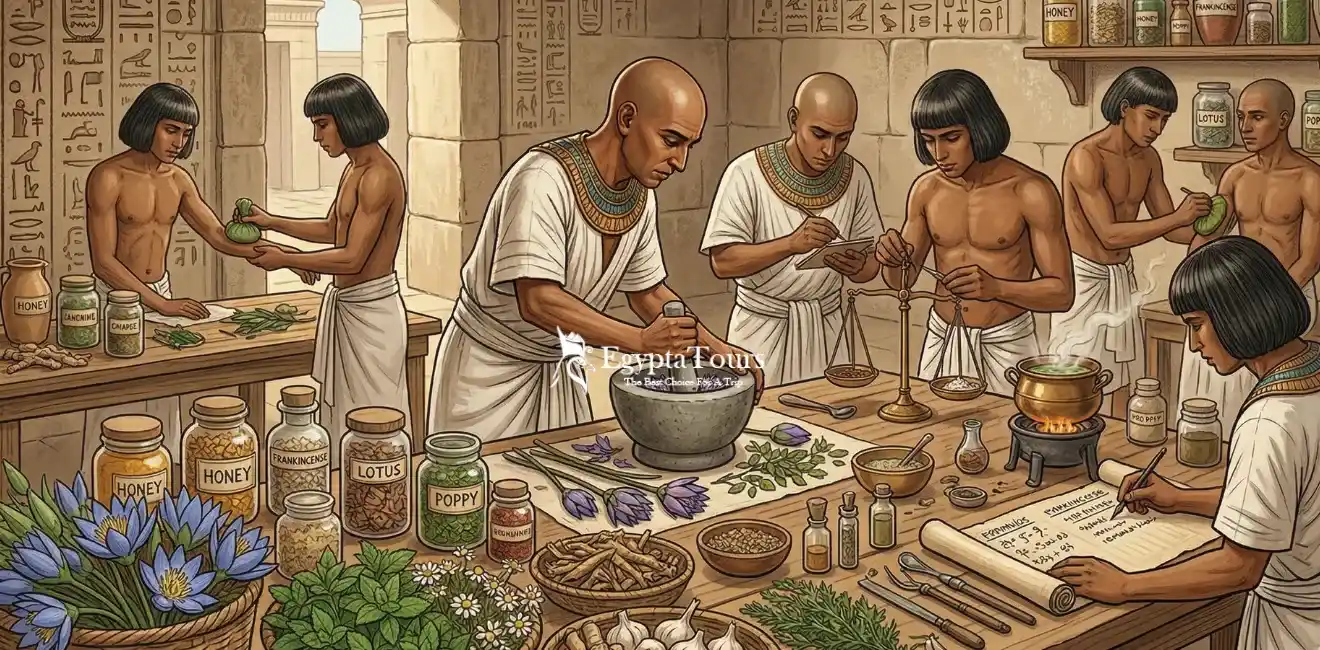
Herbal-Medicine-in-Ancient-Egypt-EgyptaTours
Herbs were very important for treating many illnesses and infections in ancient times. Treatments for skin problems are described in old medical texts. For skin issues with sores, the Egyptians often used herbal ointments and honey because honey could stop infections.
Spiritual methods, like saying protective spells or wearing charms, were also common, because people believed these could protect against the evil causing the sickness. They often mixed many different herbs in special ways. Some of the most used herbs were garlic and onions which were believed to give strength and were eaten in large amounts.
Ophthalmology in Ancient Egypt
Eye health was very important in ancient Egypt because of the dusty environment and common eye problems. The Edwin Smith Papyrus describes treatments for eye injuries and infections.
Doctors used medicines like kohl eyeliner made with galena which could kill bacteria, protect against infections, and shield the eyes from the sun. Other common ingredients for eye care included castor oil, which was soothing, and acacia, which helped reduce inflammation.
The Egyptians also focused on preventing eye problems. They applied kohl daily and used special remedies, showing that they had a good understanding of how to care for the eyes.
FAQs
What kind of drugs did ancient Egyptians use?
The ancient Egyptians used a variety of medicines that were largely based on herbs and medicinal plants called Herbal medicine in ancient Egypt. Among these medicines, there were plant drugs such as aloe vera, garlic, flax, and colocynth, which were used to treat a wide range of diseases. In addition, there were recipes based on such as honey and wax to treat various diseases such as infections, wounds, and digestive system diseases.
What plants were used in ancient Egyptian medicine?
In ancient Egyptian medicine, the ancient Egyptians used a variety of medicinal plants such as aloe vera to treat skin diseases, garlic as a natural antibiotic, flax to treat wounds, colocynth for digestive system problems, licorice for respiratory problems, chamomile to calm the nerves, thyme to treat respiratory problems, mint to improve digestion, and cumin to relieve gas symptoms.
Did ancient Egypt invent surgery?
Surgery was widely used in ancient Egyptian medicine as they performed complex surgeries using advanced tools made of flint and metal. The Edwin Smith Papyrus, dating back to around 1550 BC, contains detailed medical prescriptions and surgical procedures, reflecting their progress in this field.
Who is the Egyptian god of medicine?
Imhotep is the god of medicine and healing in ancient Egypt, as he was the vizier of King Djoser in the Third Dynasty and was famous for his medical skills. After his death, Imhotep was deified and considered the god of healing, and was worshipped in temples and asked to heal diseases.
When did ancient Egyptians practice medicine?
Medicine was practiced from early dynastic periods (before 3000 BCE) and flourished through the New Kingdom, with advances recorded in medical papyri.
What were the main sources of Egyptian medical knowledge?
Medical knowledge came from temple physicians, scribes, and texts like the Ebers Papyrus, Edwin Smith Papyrus, and the Hearst Papyrus.
Were doctors in ancient Egypt only priests?
No. While many physicians had priestly roles, there were dedicated lay physicians and specialists who treated injuries and illnesses.
What were common diagnostic methods?
Diagnosis relied on symptom observation, nasal or throat discharge, pulse reading (later), and sometimes dream or omen interpretation.
Did magic play a role in healing?
Yes. Spells, amulets, and invocations to gods complemented practical remedies in many cases.
What were typical treatments?
Treatments included herbal remedies (garlic, onions, fennel), honey and molds (antibiotic-like properties), minerals, sutures, and poultices.
What medical texts exist from ancient Egypt?
Key works are the Ebers Papyrus (comprehensive pharmacopoeia), the Edwin Smith Papyrus (trauma surgery analysis), and the Hearst Papyrus (cosmetics and medical recipes).
Did Egyptians perform surgeries?
Yes, especially for trauma and wounds—simple suturing, dressings, and amputation-like procedures described in the Edwin Smith Papyrus.
What tools did they use in medicine?
Basic knives, forceps, suction devices, cauteries, and splints. Many tools were crafted from bronze or copper.
Which substances were used as medicines?
Honey, moldy bread (for antiseptic properties), garlic, onions, pomegranates, cannabis (in some contexts), and various herbs and minerals.
How did Egyptians handle surgery aftercare?
Wounds were cleaned, soothed with poultices, dressed, and left to heal, often with ritual invocations for protection.
What was the role of women in ancient Egyptian medicine?
Women served as healers and midwives, especially in childbirth and gynecological care, and some texts reference female practitioners.
Were there specialists for eye, dental, or internal medicine?
Yes. The Edwin Smith Papyrus emphasizes trauma care; later sources and papyri mention eye, dental, and other ailments, often with practical remedies.
How did religion intersect with medicine?
Healing was intertwined with gods and cults (e.g., Thoth, Sekhmet, Ptah). Temples functioned as centers of medical care and science.
What is the historical significance of ancient Egyptian medicine?
It shows a blend of empirical treatment, surgical practice, herbal pharmacology, and ritual healing, influencing later Greek and Roman medical
About EgyptaTours

EgyptaTours is a name synonymous with trust, excellence, and unforgettable travel experiences, proudly standing as one of the leading travel agencies in Egypt. Renowned for its deep expertise, personalized service, and carefully crafted itineraries, EgyptaTours serves as the ultimate gateway to discovering Egypt in its most authentic and inspiring form.