





Tutankhamun
When your eyes look into Egyptian civilization, you see wonders that are hard to believe, and you doubt the truth of what you see. The ancient Egyptians accomplished miracles in sculpture and architecture, and they built a civilization that has lasted for over 7,000 years.
One of the greatest legacies left to us by the ancients is the treasures of King Tutankhamun, which will now be exhibited at the Grand Egyptian Museum. Can you imagine that there are over 5,000 artifacts belonging to one king? Was Tutankhamun truly this great? What did this pharaoh do to be immortalized in this way, and for his symbols to remain intact to this day? Is he really connected to the curse of the pharaohs that people talk about, or is this just a work of fiction?
There are many riddles about the death of him, The truth about Tutankhamun’s death remains a topic of debate.Many theories surround the circumstances of his death.Is the claim about his murder true, or is it just a baseless tale?

Tutankhamun
Tutankhamun was one of the most important and famous ancient Egyptian pharaohs.
He was born in “Tell el-Amarna”, Amarna is an archaeological site in Egypt.
Tutankhamun was one of the pharaohs of the Eighteenth Dynasty in ancient Egyptian history.
He became the king ,after the death of his brother “Smenkh”, when he was 9 in 1334 BC but unfortunately he died in 1325 BC at the age of 19.
It said that he was the son of “The Young Lady” and “Akhenaten” who was a pharaoh of the 18th Dynasty and introduced a new form of monotheistic worship.
The DNA proved that he really was the son of Akhenaten when they did it after the discovery of his tomb.
His name was tutankhatun but he changed it reflecting the shift back to traditional Egyptian worship.
Tutankhamun married Ankhesenamun , she was one of his siblings.
He had 4 siblings “ Ankhesenamun, Neferneferuaten, Tasherit, Smenkhkare Meritaten”.
Meaning Of The Name.
Tutankhamun means “the living image of Amun”as he was worshiping the god amun.
The 18th Dynasty.

The -18-Th -Dynasty
The 18th dynasty is considered the first and greatest empire in history and the greatest pharaonic dynasty, founded by King Thutmose III, the sixth ruler of the dynasty. During this period, the Egyptian empire expanded to reach the southern part of the African continent. This dynasty was built on responding to aggression rather than conquest, having learned an important lesson from previous dynasties. They defeated the Hyksos after they killed King Seqenenre and his son Kamose, and Ahmose later expelled them from Egypt.
This dynasty saw massive construction and building projects, as well as large-scale restoration projects carried out by Queen Hatshepsut to rebuild the country after its deterioration. The construction movement continued into the 19th dynasty, especially during the reign of Ramses II.
Tutankhamun took power after two turbulent reigns, including that of his brother Smenkhkare, who ruled for a very short time. Tutankhamun moved the administrative center of Egypt from Akhetaten to Memphis and attempted to improve relations with foreigners due to the deterioration of relations during Akhenaten’s reign. However, his reign ended with him engaging in war in the Near East and facing numerous rebellions from the Nubians.
The Discovery Of Tutankhamun’s Tomb.

The- Discovery -Of -Tutankhamun’s -Tomb
The tomb of Tutankhamun is a significant archaeological find that has shed light on ancient Egyptian culture
Most of the archaeological collections and tombs were found in the Valley of the Kings, which is considered a tomb for pharaohs during the New Kingdom period. This vast valley contains 27 royal tombs belonging to the 18th, 19th, and 20th dynasties. There are also an estimated 30 other tombs that have not been discovered yet, but are likely to be located in this area.
In 1922, while Howard Carter, a British archaeologist and Egyptologist, was excavating near the entrance to the tomb of Tutankhamun in the Valley of the Kings, a young boy named Hussein Abdel-Rassul, who worked with his father on the excavation site, stumbled upon a stone step that led to the discovery of the tomb.
The Tale Of Hussein And His Donkey Discovering Tutankhamun’s Tomb.
When Hussein Abdel-Rassul was carrying water jars on his donkey, one of the jars fell and hit a stone, revealing the entrance to the tomb. He immediately called Carter to see that, and the excavation process began.
When Carter finally entered the chamber containing the sarcophagus of Tutankhamun, he was amazed by the beautiful paintings on the walls depicting the story of Tutankhamun’s journey to the afterlife. Carter’s assistant asked him, “Can you see anything?” and Carter replied, “Yes, I see wonderful things.”
Carter’s Role In Discovery.
When Carter entered the chamber, he saw a wooden chest with gold-inlaid carvings in the center of the room. As he lifted the chest, he noticed two more chests underneath, and beneath them was the stone sarcophagus covered with a thick layer of carved stone shaped like a statue of Tutankhamun. When he lifted the stone lid, Carter reached the main golden coffin, which was shaped like a statue of Tutankhamun. Underneath the golden coffin were two more golden coffins, also shaped like statues of the young pharaoh.
Carter had difficulty removing the third golden coffin, which was covering Tutankhamun’s mummy. He considered using the heat of the Egyptian sun to loosen the coffin, but it didn’t work. Eventually, he had to cut the golden coffin in half to reach the mummy, which was wrapped in layers of linen. After removing the linen wrappings, they found Tutankhamun’s mummy adorned with gold jewelry, including necklaces, rings, a crown, and staff. To remove these treasures, the excavation team had to separate the skull and main bones from the joints. After removing the jewelry, the team reassembled the skeleton and placed it in a wooden coffin.
The curse legend.

The -Curse -Legend
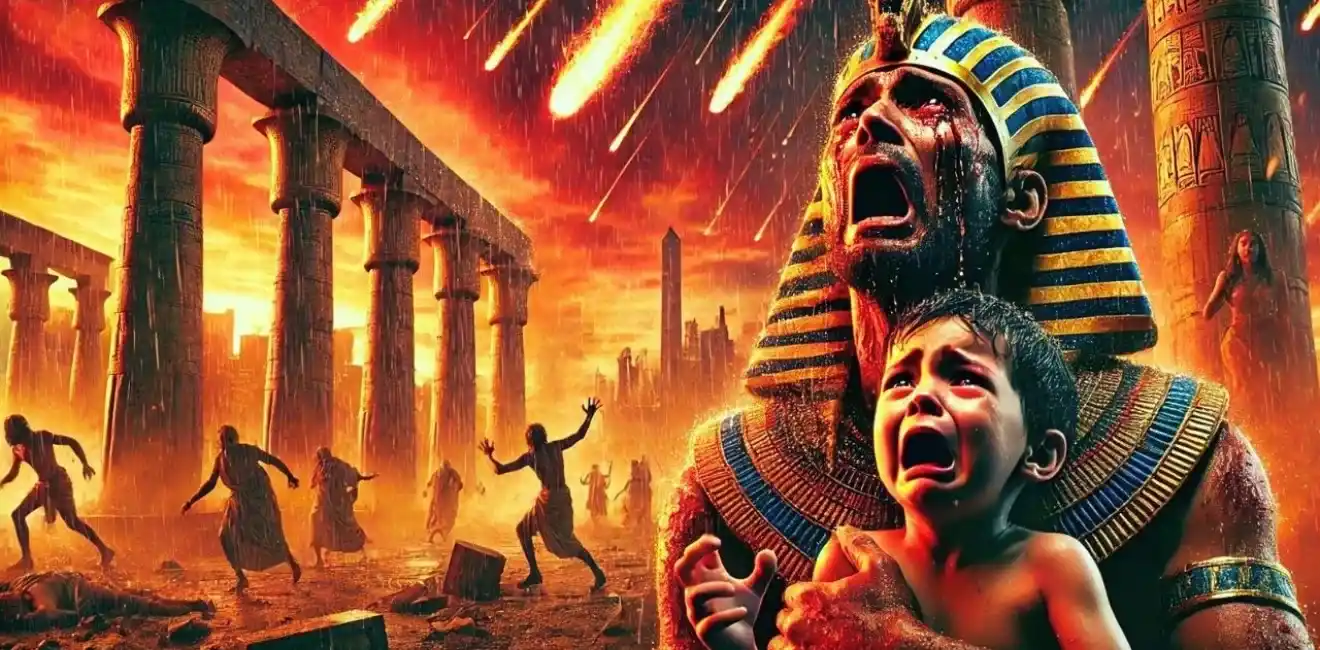
The legend says that there is an ancient curse associated with the mummies and tombs of the Egyptian pharaohs.
The tomb of Tutankhamun contained over 5,000 pieces, many of them were in a very fragile state, so preserving the funerary objects for removal from the tomb required unprecedented effort.
The grandeur of the funerary objects inspired media frenzy, and designs inspired by Ancient Egypt became popular among the Western public.The artifacts from the tomb were not divided between the government and the excavation sponsors, as was the practice in previous Egyptian excavations.
The Tomb Treasures.

The- Tomb- Treasures
Tutankhamun’s tomb is divided into more than one room and more than one entrance, starting with an entrance consisting of 16 steps, followed by a sloping corridor, and then a rectangular antechamber that branches off into two rooms to the north (“the Burial Chamber and the Treasury”) and a small room to the west.
The Burial Chamber.
The Burial Chamber is the only room decorated with inscriptions from the Book of the Dead and many images depicting Tutankhamun’s encounters with the gods in the afterlife.
als, incense, furniture, chairs, oil lamps, food and beds, and under one of the beds, they found Tutankhamun’s throne chair, which features scenes from his life and depicts his wife, Ankhesenamun, placing a necklace on his chest.
The Burial Chamber contains a quartzite sarcophagus with four winged goddesses at its corners, and three coffins nested within each other, the innermost of which is made drink storage, golden vessels, pottery, chariots, and military equipment. Carter also found three of solid gold and contains the king’s mummy. The walls of the Burial Chamber are adorned with scenes from the Book of the Dead and depictions of the king’s encounters with the gods.
The Treasury.
The Treasury contains four canopic jars used to preserve the king’s internal organs, with the upper part adorned with gilded cobra heads and four gilded goddesses.
The tomb contains a vast array of artifacts, including golden jewelry, clothes, scarabs, statues, vessels, decorative material (Isis, Nephthys, Selket, and Neith) protecting the contents. Carter also found a black-painted and gold-leafed statue of Anubis sitting on a shrine in the form of a jackal
Tutankhamun’s mask.
Tutankhamun’s mask is a golden piece that showcases the excellence of sculpture. The mask is 54 cm tall, 39.3 cm wide, and 49 cm deep. It is made of two layers of 23-karat gold with copper to facilitate shaping. The surface of the mask is covered with a layer of gold alloy.
This face represents the standard image of King Tut, and researchers found the same image in another location in the tomb. The mask wears a nemes headdress adorned with royal insignia, and the ears are pierced for earrings. The mask is inlaid with colored glass and precious stones. The mask bears the features of King Tut in the form of the god Osiris, “the god of the afterlife,” and is decorated with stones and a spell from the Book of the Dead written in hieroglyphics on its shoulders.
The mask was restored after the plaited beard fell off and was hastily glued back on by museum workers. The mask is one of the most famous artifacts of ancient Egypt. The inscription on the back of the mask is a spell of ten vertical lines and two horizontal lines, which first appeared in the Middle Kingdom and was used in Chapter 151 of the Book of the Dead.
Sacred Text of Tutankhamun.
It says, “Your right eye is the night bark (of the sun god), your left eye is the day bark, your eyebrows are the Ennead of Gods, your forehead is Anubis, the nape of your neck is Horus, your locks of hair are Ptah-Sokar.. You stand before Osiris (Tutankhamun). He sees thanks to you, he is guided to the good ways, you smite for him the confederates of Seth so that he may overthrow your enemies before the Ennead of Gods in the great Castle of the Prince, which is in Heliopolis… Osiris, the King of Upper Egypt Nebkheperure [Tutankhamun’s throne name], deceased, given life by Re.”
Tutankhamun’s Throne.
The Throne of Tutankhamun is one of the unique treasures of King Tut, made of wood, gold, glass, and agate, found in the antechamber of the tomb. The chair is full of decorations and craftsmanship. It’s believed that this piece was remade, originally made for King Akhenaten. The back of the chair has the name of Tutankhamun at birth, “Tutankhaton,” along with his wife, Ankhesenaton.
The chair’s decorations show the artistic influences of the Amarna period, with the sun disk dominating the main scene. Below, King Tut is depicted sitting on the throne, and his wife is applying perfume to his left shoulder from a vessel held by a winged cobra. The cobra’s body forms the chair’s rear parts, symbolizing the king’s protection. There are also Sema-Tawi symbols, represented by intertwined lotus and papyrus flowers between the throne’s legs, symbolizing the unification of Upper and Lower Egypt.
Tutankhamun’s Reign.
Tutankhamun and Ankhesenamun were both tutored by teachers and scribes in the principles of the new Aten religion, which Akhenaten had introduced in ancient Egypt, abolishing the old beliefs in the pharaonic gods like Amun. he lived during a tumultuous transitional period in ancient Egyptian history, ascending to the throne in the final years of the religious revolution initiated by Akhenaten, who attempted to unify the gods of ancient Egypt under the single deity Atun.
The royal couple left the city of Akhetaten, located inTell el-Amarna. He did not do many projects, most notably the restoration of the statues and columns of the Karnak temple, and also built sacred boats and constructed the “Horizon of Eternity” palace on the west bank.
Tutankhamun’s Achievements.
The greatest achievement of King Tutankhamun, according to the same studies, is his restoration of the worship of the pharaonic god Amun in the country, after the “religious revolution” led by his father Akhenaten, who had promoted the worship of the god Atun and attempted to unify the gods of the pharaohs under one deity.
The Placement Of Tutankhamun Treasures.

The -Placement -Of -Tutankhamun -Treasures
Imagine a complete treasure gathered in one place, over 5,000 pieces that were scattered among several museums in Egypt, including some that were never exhibited before, of King Tutankhamun’s belongings are now available for display together at the Grand Egyptian Museum, more than 100 years after the tomb’s discovery, and this is the museum’s greatest treasure.
After some of the artifacts were restored and the possibility of moving the mummy was studied, but it was decided not to move the mummy from its place, as archaeology experts advised that it is best to remain as it is in the Valley of the Kings in its own tomb, making this area a tourist destination.”
The Tomb Discovery Importance.
The discovery of the tomb did not reveal as much about the history of Tutankhamun’s reign as Egyptologists had hoped, but it did confirm the length of his reign and provided evidence about the end of the Amarna period that preceded his rule. The discovery was more informative about the material culture of Tutankhamun’s time, it shows how the complete royal tomb was.
It is said that disturbing these mummified remains brings bad luck, illness, and death. Shortly after the discovery of King Tut’s tomb, Lord Carnarvon, the sponsor of the excavation, was found dead.
The Death Of Tutankhamun.

The- Death -Of -Tutankhamun.
There is no definitive account of Tutankhamun’s death, with theories ranging from murder by his former advisor, who then ascended to the throne and married Tutankhamun’s widow, to death from injuries suggested by fractures found on the mummy. However, a significant revelation came from Zahi Hawass, the then Secretary-General of the Supreme Council of Antiquities, who announced that DNA testing and analysis indicated that Tutankhamun likely died from complications related to malaria.
The ancient depictions show Tutankhamun shooting arrows while seated in a chariot, not standing, which is unusual. In his tomb, we found 100 walking sticks, which initially seemed to represent authority and power, but it turned out they were actually old crutches that he used, as he could barely walk.
The results also revealed that genetic and hereditary diseases played a role in Tutankhamun’s death. He suffered from a hereditary genetic disorder that was prevalent in the royal family, which led to various health issues, including problems with his heart and blood vessels. When researchers conducted a CT scan of Tutankhamun’s mummy, they discovered that he had several health issues, including a curvature of the spine and a deformity in his big toe, which led to atrophy in his left foot.
FAQS
1-Who was Tutankhamun?
King Tut was one of the most important and famous ancient Egyptian pharaohs.
was one of the pharaohs of the Eighteenth Dynasty in ancient Egyptian history.
He became the king ,after the death of his brother “Smenkh”, when he was 9 in 1334 BC but unfortunately he died in 1325 BC at the age of 19.
2-How was life in the 18th dynasty?
This dynasty saw massive construction and building projects, as well as large-scale restoration projects carried out By <strong>Queen Hatshepsut</strong> to rebuild the country after its deterioration. The construction movement continued into the 19th dynasty, especially during the reign of Ramses II.
3-Who discovered the tomb of Tutankhamun and how?
Howard Carter, a British archaeologist and Egyptologist, by a young boy named Hussein Abdel-Rassul, who worked with his father on the excavation site, stumbled upon a stone step that led to the discovery of the tomb.
4-What did Carter find in the tomb of Tutankhamun?
He found more than one room and more than one entrance, starting with an entrance consisting of 16 steps, followed by a sloping corridor, and then a rectangular antechamber that branches off into two rooms to the north (“the Burial Chamber and the Treasury”) and a small room to the west. The Burial Chamber is the only room decorated with inscriptions from the Book of the Dead and many images depicting Tutankhamun’s encounters with the gods in the afterlife.
als, incense, furniture, chairs, oil lamps, food and beds, and under one of the beds, they found Tutankhamun’s throne chair, which features scenes from his life and depicts his wife, Ankhesenamun, placing a necklace on his chest.
The Burial Chamber contains a quartzite sarcophagus with four winged goddesses at its corners, and three coffins nested within each other, the innermost of which is made drink storage, golden vessels, pottery, chariots, and military equipment. Carter also found three of solid gold and contains the king’s mummy. The walls of the Burial Chamber are adorned with scenes from the Book of the Dead and depictions of the king’s encounters with the gods.
The Treasury contains four canopic jars used to preserve the king’s internal organs, with the upper part adorned with gilded cobra heads and four gilded goddesses
The tomb contains a vast array of artifacts, including golden jewelry, clothes, scarabs, statues, vessels, decorative material (Isis, Nephthys, Selket, and Neith) protecting the contents. Carter also found a black-painted and gold-leafed statue of Anubis sitting on a shrine in the form of a jackal
5-What is the importance of the tomb discovery?
The discovery of the tomb did not reveal as much about the history of Tutankhamun’s reign as Egyptologists had hoped, but it did confirm the length of his reign and provided evidence about the end of the Amarna period that preceded his rule. The discovery was more informative about the material culture of Tutankhamun’s timeو it shows how the complete royal tomb was.
It is said that disturbing these mummified remains brings bad luck, illness, and death. Shortly after the discovery of King Tut’s tomb, Lord Carnarvon, the sponsor of the excavation, was found dead.
6-How old was Tutankhamun when he took power?
Tut was 9 in 1334 BC but unfortunately he died in 1325 BC at the age of 19.
He ruled Egypt for only ten years.
7-What is the description of Tutankhamun’s mask?
Tutankhamun’s mask is 54 cm tall, 39.3 cm wide, and 49 cm deep. It is made of two layers of 23-karat gold with copper to facilitate shaping. The surface of the mask is covered with a layer of gold alloy. This face represents the standard image of King Tut, and researchers found the same image in another location in the tomb.
The mask wears a nemesis headdress adorned with royal insignia, and the ears are pierced for earrings. The mask is inlaid with colored glass and precious stones. The mask bears the features of King Tut in the form of the god Osiris, “the god of the afterlife,” and is decorated with stones and a spell from the Book of the Dead written in hieroglyphics on its shoulders. The mask was restored after the plaited beard fell off and was hastily glued back on by museum workers. The mask is one of the most famous artifacts of ancient Egypt.
8-Where is Tutankhamun’s treasure now?
More than 5000 pieces are at the Grand Egyptian Museum, but the mummy is in the Valley of the Kings in its own tomb, making this area a tourist destination.
9-How did king Tutankhamun die?
There is no definitive account of Tutankhamun’s death, , with theories ranging from murder by his former advisor, who then ascended to the throne and married Tutankhamun’s widow, The DNA testing and analysis indicated that Tutankhamun likely died from complications related to malaria.
10-Why is King Tut so famous despite his short reign?
This is due to the abundance of archaeological artifacts found in his tomb, which is considered the only tomb that contains such a large number of them, and because of the mystery surrounding his death.