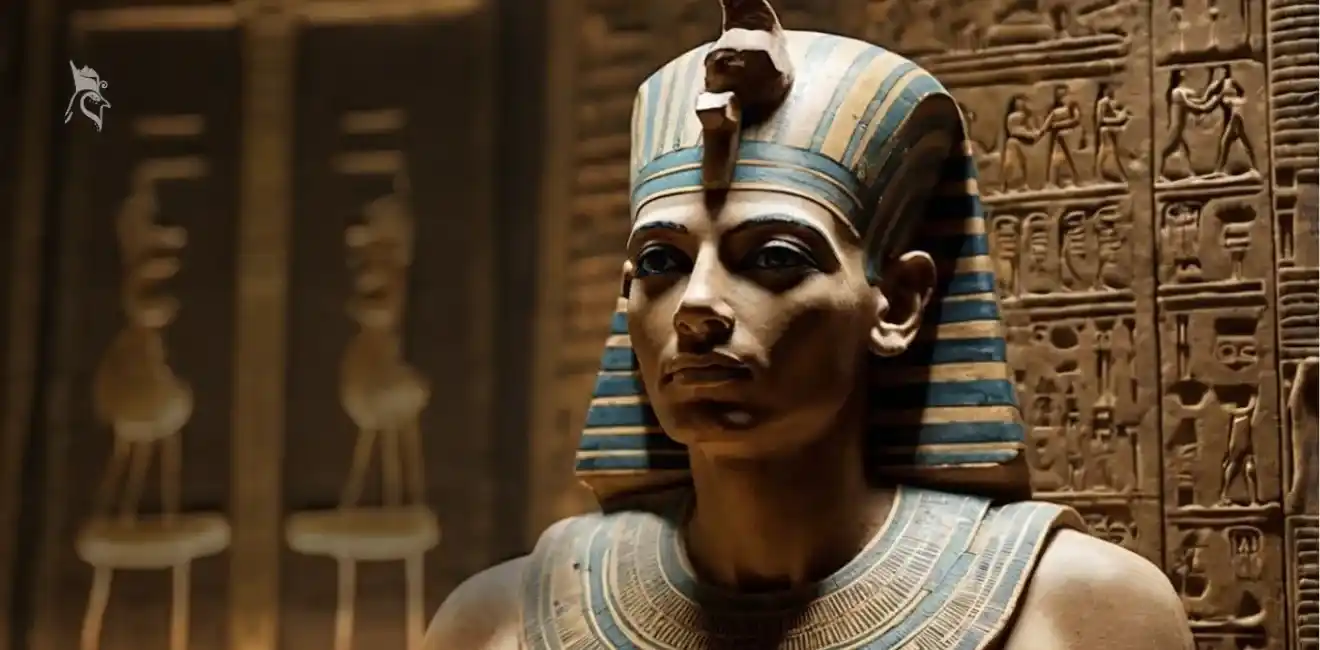
Amenhotep I
📋 Summary & Quick Facts
Amenhotep I was the second pharaoh of Egypt’s illustrious Eighteenth Dynasty, ruling for a prosperous 21 years and firmly establishing the foundations of the New Kingdom. Inheriting a newly unified empire from his father, Ahmose I, the young pharaoh focused on domestic growth, cultural renaissance, and maintaining peaceful borders rather than aggressive expansion.
His reign witnessed incredible architectural and cultural milestones, including the founding of the famous artisans’ village at Deir el-Medina and a revolutionary shift in royal burials—he was the first pharaoh to hide his tomb away from his funerary temple to thwart grave robbers. So beloved was this ruler that, after his death, he and his mother were deified and worshipped as protective gods by the Egyptian people for over seven centuries.
Key Takeaways
-
-
A Peaceful Prosperity: Ruling for over two decades (circa 1526–1506 BCE), he largely avoided massive wars. Aside from securing borders in Nubia and the Western Desert, his reign was famously peaceful, allowing the Egyptian economy and agriculture to flourish.
-
Revolutionary Tomb Design: He dramatically changed the future of Egyptian royal burials by being the first pharaoh to separate his highly visible funerary temple from his actual tomb, a brilliant strategy designed to protect his mummy from tomb robbers.
-
Patron of the Arts: Alongside his mother, Ahmose-Nefertari, he heavily supported the skilled workers at Deir el-Medina. The villagers revered them so much that they were worshipped as the official patron deities of the settlement long after their deaths.
-
Cultural and Scientific Leaps: His reign saw the finalization of the “Book of What is in the Afterworld” (a precursor to the Book of the Dead), vital medical advancements like the Ebers Papyrus, and the invention of the first Egyptian water clock.
-
A Perfectly Preserved Legacy: His mummy, discovered in the Deir el-Bahari royal cache, remains wrapped to this day because it is so beautifully preserved. In 2021, his mummy was proudly transported to the National Museum of Egyptian Civilization during the historic Golden Pharaohs’ Parade.
-
Amenhotep I (/ˌæmɛnˈhoʊtɛp/) or Amenophis I (/əˈmɛnoʊfɪs/ in Ancient Greek Ἀμένωφις) was the second pharaoh of Egypt’s Eighteenth Dynasty. His reign is generally dated from 1526 to 1506 BCE according to the chronology.
He was the son of Ahmose I and his mother Ahmose-Nefertari. He had an older brother named Ahmose-Ankh, so it was not expected that he would become pharaoh. However, after his older brother died during the last years of their father’s reign, Amenhotep became crown prince and later ascended the throne ruling for about 21 years.
Although information about his reign is limited, we can understand some important aspects of his rule.
He inherited the kingdom that his father had built through military campaigns. During his reign, he maintained control over Nubia and the Nile Delta but he probably did not try to expand Egyptian influence into the Levant.
He also continued building and restoring temples in Upper Egypt and introduced major changes in the design of funerary complexes by separating his tomb from the mortuary temple. This was a new style that became a tradition throughout the New Kingdom. After his death, he was deified and worshiped as a protective god of Deir el-Medina and his name was recorded among the gods.
The- Family -of- Amenhotep I
The young prince was the son of Ahmose I and his mother Ahmose Nefertari and his older brother and crown prince Ahmose Ankh died before him which opened the way for him to ascend the throne and become pharaoh. It is likely that the new ruler was still young when he came to power and it seems that his mother Ahmose Nefertari acted as his guardian for at least a short period. Evidence for this guardianship is that both of them are credited with establishing a workers’ settlement in the Theban necropolis at Deir el Medina.
Amenhotep took his elder sister Ahmose Merit Amun as Great Royal Wife while another wife named Sit Kamose is mentioned on a stela from the Nineteenth Dynasty. Aside from this, the relationships between Amenhotep I and other possible members of his family are unclear. Ahmose Hetep II is often mentioned as his wife and sister, although an alternative theory suggests that she may have been his grandmother.
It is believed that Amenhotep had only one child with her, named Amenemhat who died at a very young age, and this view remains the most widely accepted despite some objections. Since he had no living heirs, he was succeeded by Thutmose I who married “his sister” Ahmose. However, Ahmose was never given the title “King’s Daughter” in any inscription which has led some scholars to doubt that she was actually Amenhotep I’s sister.
History and Duration of Reign
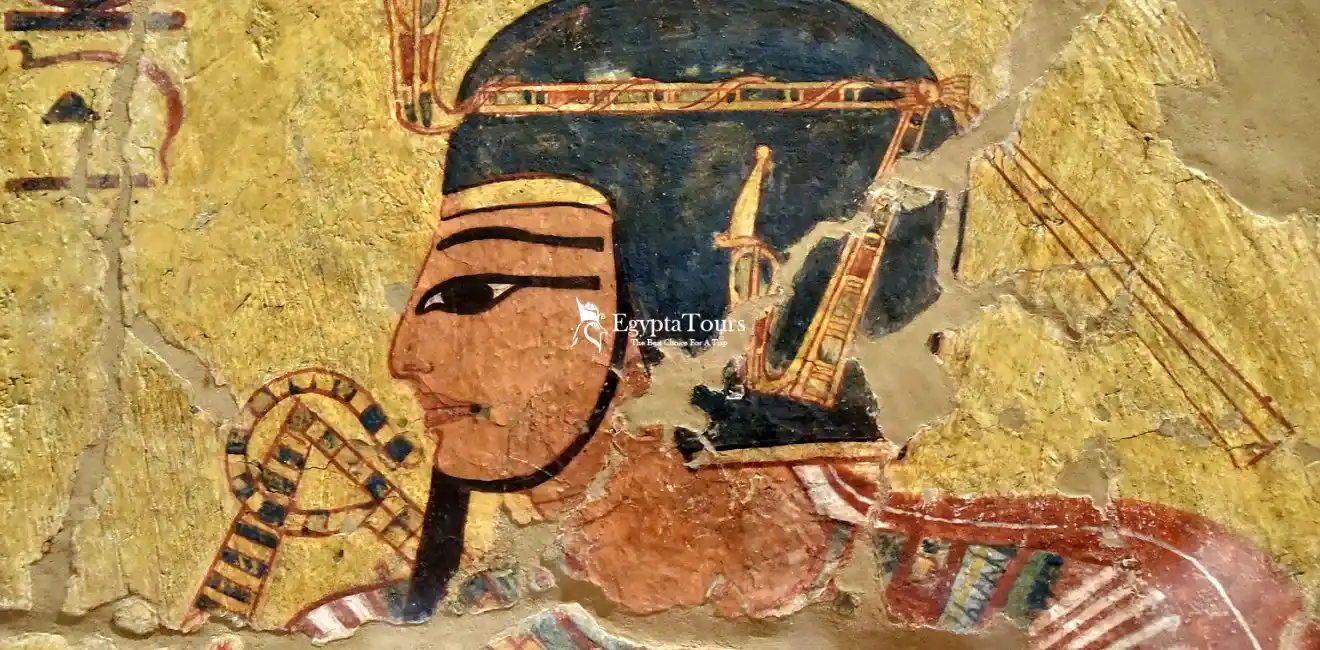
The- History -and- Duration -of -Reign -of- Amenhotep I
High and Low Chronology of the New Kingdom
In the ninth year of Amenhotep I’s reign, the heliacal rising of the star Sothis (Sirius) was observed on the ninth day of the third month of the summer season. Modern astronomers calculated that if this observation was made from Memphis or Heliopolis, the date would be 1537 BCE,
called the high chronology of the New Kingdom. If it was observed from Thebes, the event would have taken place in 1517 BCE, called the low chronology. Based on this, the rising of Sothis shows that Amenhotep I became king either in 1546 BCE (year one 1545) or in 1526 BCE (year one 1525). Since Thebes was the capital at the beginning of the Eighteenth Dynasty, Egyptologists usually assign 1526 BCE as the start of his reign.
Duration of Reign
According to Manetho’s summary, Amenhotep I ruled Egypt for twenty years and seven months or twenty-one years, depending on the source. Although the highest recorded year for him is only the tenth, Manetho’s account is confirmed by the funerary autobiography of a magician named Amenemhet who clearly says he served under Amenhotep I for twenty one years. Therefore, in the high chronology, Amenhotep I’s reign is from about 1546 to 1526 BCE and in the low chronology, from about 1526 to 1506 BCE or 1525 to 1504 BCE with small differences among scholars.
Foreign Policy
The Horus titles and “Lord of the Two Lands” names of Amenhotep I, like “The Bull who Overpowers the Lands” and “He Who Casts Great Terror,” show his aim to control the surrounding nations. Texts from two tombs indicate he led campaigns into Nubia. According to the tomb of Ahmose, son of Ibana, Amenhotep tried to expand Egypt’s southern borders in Nubia and led an army that defeated the Nubians.
The funerary autobiography of Ahmose, son of Nekhbet, also mentions a campaign in Kush, probably the same campaign. Amenhotep built a temple at Sai showing that he established Egyptian settlements almost to the Third Cataract.
One reference in the tomb of Ahmose, son of Nekhbet, mentions another campaign in Yamu in the land of Kekh. The location of Kekh is unknown. It was once thought Kekh referred to a Libyan tribe called Qehq and that Libyan raiders moved into the western Delta after Ahmose’s death.
But the Qehq appear later so Kekh’s location is still unclear. It may have been in Nubia or in the Western Desert or oases which seem to have returned to Egyptian control at this time.
Egypt had lost the Western Desert and oases during the Second Intermediate Period.
During the revolt against the Hyksos, Kamose saw the need to protect them. It is not certain when full control returned, but one inscription mentions the title “Prince Governor of the Oases” showing that Amenhotep’s reign marks the last time Egyptian rule was restored there.
No campaigns are recorded in Canaan or Palestine during Amenhotep I’s reign. However, according to the Tombos stela of Thutmose I when he led a campaign to Asia reaching the Euphrates, he found no one to fight. If Thutmose did not lead an earlier unrecorded campaign, this suggests Amenhotep I had already controlled Syria.
Two possible references from his reign may indicate such a campaign but neither proves it and the few sources do not allow a definite conclusion.
Military Campaigns
His first campaign seems to have been against Kush, as mentioned in the texts of Ahmose, son of Ibana. The pharaoh sailed up the Nile on Ahmose’s ship, and the naval officer wrote that he defeated the enemy and returned victorious.
There is no evidence of campaigns in Asia but it is possible that Amenhotep continued his father’s expansion policy. An inscription from the second year of Thutmose I shows that the kingdom stretched from Tembos in Upper Nubia to the Euphrates. It is unlikely that Egyptians reached this area in Thutmose’s first year so this expansion probably started in Amenhotep I’s reign which was relatively long.
The campaign against the Libyans is mentioned in the autobiography of Ahmose, son of Nekhbet. It says that Amenhotep I, called Zeser Ka Re, received three prisoners from the northern region of Yamu in the fields of Kekh.
Scholars do not know exactly where Kekh was; it could have been northwest Egypt or Yamu fields could be one of the oases in the Libyan Desert. Another source says that after campaigning in Ethiopia, the pharaoh went to Libya because the Kha Ka tribe attacked the western Delta. Amenhotep I led a campaign and made a small wooden panel showing his victory with the king holding a sword over the enemy lying at his feet.
It seems the pharaoh’s military actions stopped here as no other victories are recorded. However, his contemporaries celebrated him as a victorious pharaoh. A small wooden panel in the Louvre shows him striking foreign princes and another scene shows him in his chariot capturing two enemies.
Scenes from his reign also show him as a skilled hunter, including lifting a lion by its tail before killing it. These images were traditional in Egyptian depictions of war and hunting, sometimes based on real events.
Egypt needed peace. Amenhotep’s avoidance of wars allowed the country to recover from long conflicts of his father and predecessors with the Hyksos. Whether he avoided wars for personal reasons or politics, his generation benefited from peace as the previous generation benefited from his father Ahmose’s campaigns. Cities returned to normal life, agriculture grew, trade increased and Egypt’s wealth rose, preparing the country for future campaigns by brave pharaohs.
Cultural and Intellectual Developments
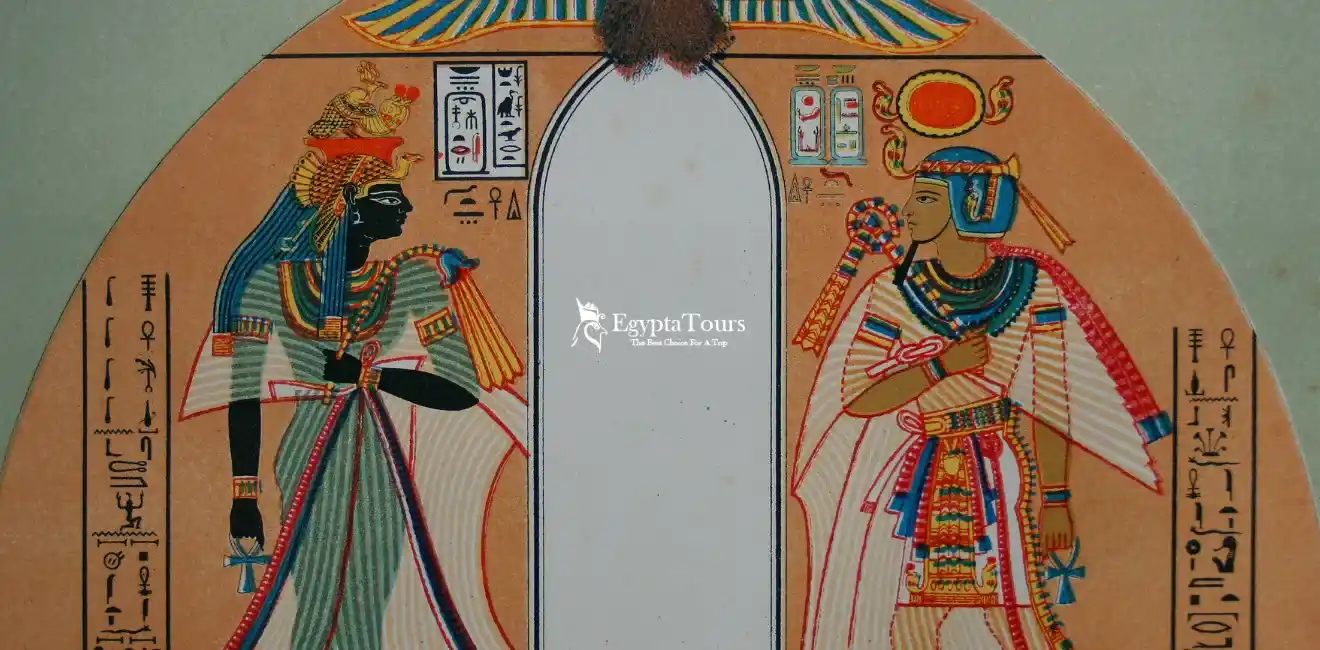
The -Cultural -and- Intellectual -Developments- of -Amenhotep I
A modern illustration of the entrance to tomb TT359 shows Amenhotep I together with his mother, Ahmose Nefertari.
Many statues of this monarch have been discovered, but the majority of them date to the Ramesside period, long after his death, when he continued to be worshiped as a divine figure. This widespread posthumous worship makes it difficult for historians and Egyptologists to study the artistic style and works produced during his actual reign.
However, from the few statues believed to be original from his time, it appears that Amenhotep continued the artistic traditions of the Middle Kingdom.
The art style of the early Eighteenth Dynasty was very similar to that of the early Middle Kingdom. Amenhotep’s statues clearly imitated the forms and styles of statues from kings such as Mentuhotep II and Senusret I. This similarity is so striking that scholars in modern times have sometimes found it difficult to distinguish between the statues of Amenhotep I and those of earlier kings.
Amenhotep I is also believed to have founded the village of artisans at Deir el-Medina. This village became home to the skilled workers and craftsmen who were responsible for creating most of the artwork and decorations in the tombs of Theban pharaohs and nobles for many generations after him.
Although the earliest name recorded at Deir el-Medina is that of Thutmose I, Amenhotep I and his mother Ahmose-Nefertari played an essential role for the workers. They were regarded as protective deities and guardians of the village, receiving offerings and respect from the residents.
During Amenhotep I’s reign, there were important developments in literature. The “Book of What is in the Afterworld,” which later became known as the Egyptian Book of the Dead, reached its final form during this period. The book first appears in decorated tombs during the reign of his successor, Thutmose I.
Another important text from his time is the Ebers Papyrus, which provides extensive information on medicine in ancient Egypt. These texts show that Amenhotep’s reign was a time of intellectual and cultural growth.
It was also during Amenhotep I’s reign that the first water clock is said to have been invented. The court astronomer Amenemhet claimed in his funerary autobiography that he had invented this device. Although the oldest surviving water clock comes from the reign of Amenhotep III, this invention was highly significant because it allowed the Egyptians to measure time more accurately.
Egyptian hours were not fixed, and the night was divided into twelve parts. The water clocks could be adjusted according to the length of the night during different seasons, especially in summer when the nights were shorter.
Major Architectural Projects
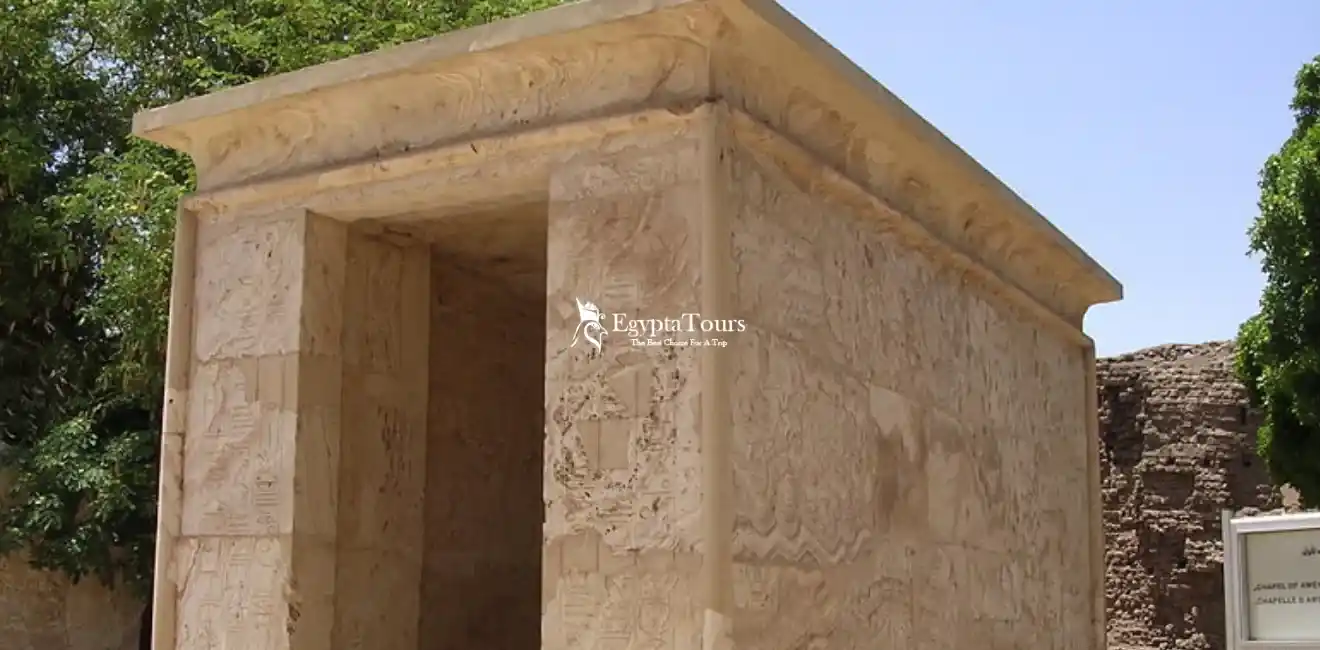
Architectural -Projects- of -Amenhotep I
General Overview of Construction
During the reign of Amenhotep I, building extremely large and expensive monuments had not yet become common because the economic situation of Egypt was not at a very high level of wealth. Despite this, he left several lasting monuments across the country. In Ibrim, for example, there is a record showing that he carved a cave in the Ibrim mountains in Nubia and dedicated it to the goddess Satet, who was one of the gods associated with the Nile cataracts.
Monuments at Karnak
At Karnak, Amenhotep I constructed a gate on the southern side of the temple. The inscriptions on the gate state that the king built a great memorial gate for his father Amun, the god of Thebes. The gate measured twenty-two cubits in height and was made of fine limestone from the Tura quarries.
The inscriptions also mention the construction of Amun’s temple and the building of the southern gate, which was twenty cubits high and made of beautiful white limestone.
Another inscription, engraved in the tomb of a man named Ineni, who was the director of works at Karnak, indicates that Amenhotep I built several structures, possibly within Karnak itself. The inscription explains that he brought marble from the Hatnub quarries near Asyut. The doors of these buildings were covered with copper made from a single sheet,
and some were made from a metal called “sam,” a mixture of gold and silver. Ineni supervised all the work and materials, including amethyst, Asian copper, jewelry, and vessels, ensuring that all artisans worked under his direction.
Temple at Deir el-Bahari
Amenhotep I also built a small temple at Deir el-Bahari. Later, Senmut, the architect of Queen Hatshepsut, removed it to build Hatshepsut’s temple, but bricks from Amenhotep’s temple, bearing his and his mother Ahmose-Nefertari’s names, were found there. Hatshepsut’s builders used these bricks in ramps to lift heavy stones. This shows that the site was a preferred location for temples and that the kings of this dynasty respected the temples of their ancestors, even when they were from their own family.
Sed Festival Temple
Additionally, Amenhotep I built a small temple at the northern end of the Western Theban necropolis to celebrate the Sed festival, the festival that marked thirty years of the king’s rule. In this temple, the gods Horus (the falcon) and the Nubian god Set are shown presenting him as the symbol of eternal years.
The Funerary Temple
He also constructed a funerary temple for himself to serve his ka, located at the southern end of the Western Theban necropolis. This temple is now part of the ruins known as the Mortuary Temple of Medinet Habu, but when it was built,
it stood alone. There was likely a garden with an artificial lake next to the temple, parts of which still remain today. A beautiful statue of Amenhotep I was found in this temple, now in the Egyptian Museum, with his mother Ahmose-Nefertari depicted on its base.
Other Temples and Monuments
Beyond his major complexes, the pharaoh commissioned several other structures and artifacts across the country:
-
El-Araba al-Madfuna & El-Kab: He built a temple honoring his father, Ahmose I, and added multiple buildings in El-Kab.
-
Kom Ombo & Silsila: He constructed a sanctuary from Tura limestone at Kom Ombo. Nearby rock inscriptions show extensive quarrying activities to supply these vast projects.
-
Museum Artifacts: Several surviving items from his reign are housed globally, including a finely carved head of Pafunamon (Giza Museum), a black granite offering table (Berlin), and a scarab depicting the king striking an enemy alongside a hunting cheetah (Louvre).
The Kares Stela
A stela was found honoring his grandmother Ahhotep, who lived a long life during his reign. This commemorative stela was for her estate manager, Kares, and is dated to the tenth year of Amenhotep I’s rule. It was discovered in Dra Abu el-Naga and is now in the Egyptian Museum. The stela illustrates the queen’s respect for her loyal official and the qualities he possessed.
It records the first year of the first month of summer, the first day of the reign of the king of Upper and Lower Egypt, Userkare, son of the sun, Amenhotep I, beloved of Osiris, giver of life. It states that the queen ordered a tomb and funerary rites for Kares, acknowledging his service as the heir prince, the seal-bearer of the king of Lower Egypt, the sole gold and silver overseer, and the director of her estates.
The stela praises Kares as a man of truth and loyalty, who understands the queen’s intentions, solves difficult problems, keeps secrets, and acts with fairness. It instructs all officials, soldiers, and scribes to recognize his devotion. The text emphasizes that his service ensured rewards and offerings from the pharaoh and the gods, showing how highly the queen valued his loyalty.
The meaning of this stela shows that Queen Ahhotep deeply trusted and appreciated Kares, her estate manager. By ordering a tomb for him in the sacred necropolis of Osiris in El-Araba, she gave him a gift that any Egyptian would desire: a luxurious tomb next to the great god of the dead.
If Kares was as remarkable as the stela suggests, he truly deserved such a tomb. This example demonstrates how the queen treated her loyal servants, setting a model for dedication and reward in the royal household.
The Death of Amenhotep I
King Amenhotep I passed away after ruling Egypt for over twenty years. The architect Ineni recorded the event of his death in inscriptions, stating: “When His Majesty completed his life in happiness and years of peace, he was raised to the sky, joined the Sun God and went with him.” This text reflects the respect and honor given to the Pharaoh by those in his court and portrays the end of his life as a transition to the realm of the gods.
Innovation in Burial
His funerary temple was discovered in 1896 at the edge of the Western Desert in the Dra Abu el-Naga necropolis, but the exact location of his tomb has not been conclusively identified. Despite strong evidence presented by Mr. Carter suggesting it might be the tomb uncovered by Lord Carnarvon in 1914, 800 meters from the funerary temple, Mr. Weigall proposed that his tomb is Tomb 39 at the southern end of the Valley of the Kings, leaving the burial site uncertain to this day.
Although it is claimed that Thutmose I, his successor, was the first to establish burial traditions in the Valley of the Kings, Amenhotep I was the first to separate the funerary temple from the tomb itself. This design allowed the secrecy of his tomb and reduced the risk of looting.
During the reign of Ramesses IX, a royal inspection committee visited his tomb to assess its condition, and the report stated:
“The eternal horizon of the king ‘Userkare son of the Sun’ Amenhotep, which is 120 cubits deep in its great hall and its long corridor, located north of the temple ‘Amenhotep of the Garden,’ has been reported by the mayor Pezer to King Ramesses IX and to the royal officers, saying: ‘It has been robbed’ but today it was inspected, and the builders found it intact.”
His tomb was unusual compared to others, especially its depth of 120 cubits, a depth not found in other tombs cut into this rock face. Other deep tombs were located on the opposite side of the Valley of the Kings. Amenhotep I’s tomb is considered the first of the deep, long tombs whose style became common from the Eighteenth to the Twentieth Dynasties.
The Tomb, Sarcophagus, and Mummy
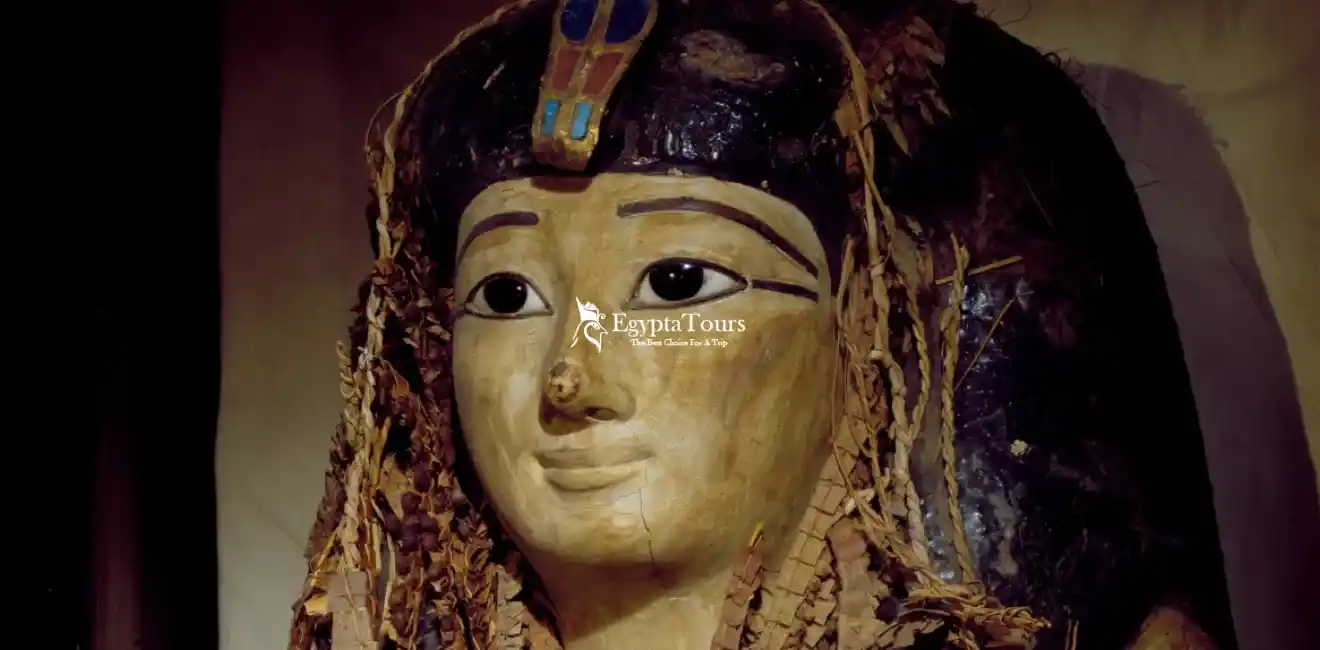
The -Tomb -Sarcophagus -and- Mummy -of -Amenhotep I
The sarcophagus of Amenhotep I was crafted in the shape of a human body, painted white with a face resembling that of his statue. His eyes were decorated and lined with kohl giving the figure remarkable liveliness.
The body was wrapped in orange linen, secured with brown straps, and his face was covered with a wooden and reinforced textile mask, painted the same as the exterior of the sarcophagus. The mummy was adorned with garlands from head to toe and a wasp trapped during the burial remained perfectly preserved for centuries.
Amenhotep I’s mummy is still wrapped and has not been directly examined keeping the power and mystery of its preservation intact over the millennia. His name remained known in Egypt and is commemorated in the Coptic calendar as “Pharmenoth” meaning the Festival of Amenhotep.
His second wife, Ahhotep, did not play a significant role in his life compared to his mother, Ahmose Nefertari. Her name appears on some artifacts and she was likely his full sister, holding the title of “Hereditary Princess,” later given to their daughter Ahmose. Her sarcophagus was found in the Deir el-Bahari cache and is now in the Egyptian Museum, although her body was not recovered. Amenhotep I had no surviving children, complicating the succession to the throne.
During the Twentieth or Twenty-first Dynasties, his mummy was moved several times due to tomb robbery or insecurity. It was found in the Deir el-Bahari cache with the mummies of other New Kingdom kings and nobles, above Hatshepsut’s funerary temple,
and later preserved in the Egyptian Museum in Cairo. The “rishi” style sarcophagus remained in good condition and the mummy was never unwrapped. X-rays taken in 1932 and 1967 estimated his age at death between 25 and 50 years.
In April 2021, Amenhotep I’s mummy was transferred to the National Museum of Egyptian Civilization as part of the “Golden Pharaohs’ Parade,” alongside 17 other kings and 4 queens.
Computed Tomography (CT)
On May 4, 2019, the mummy underwent a non-invasive CT scan to study his physical appearance, health, cause of death and mummification process. Organs were removed via a vertical incision, body cavities stuffed with linen, the heart remained in the chest and the brain was not removed.
The linen was treated with resin and amulets and jewelry, including a beaded belt possibly of gold, were found inside the wrappings. Post-mortem damage from tomb robbers included the separation of the head, left arm, right hand and right foot as well as a large hole in the front of the torso all of which were later restored.
Succession and Legacy
Amenhotep I is believed to have had a single child who died in infancy or perhaps no children at all. He was succeeded by Thutmose I, a prominent military figure, though their blood relation is uncertain. Some texts suggest Thutmose was made co-regent before Amenhotep’s death, while others imply a co-regency with a surviving infant son who died earlier. Evidence is insufficient to confirm any official co-regency.
Funerary Cult of Amenhotep I and His Mother Nefertari
His tomb was magnificent because he was considered a god after his death, worshipped by the Egyptians. His mother, Nefertari, was regarded as representing Isis, while he represented Osiris, the protector of the necropolis. He was depicted in black, followed by his son Saba-iri and his image appeared alongside other deities to decorate coffins and protect the mummies of his servants.
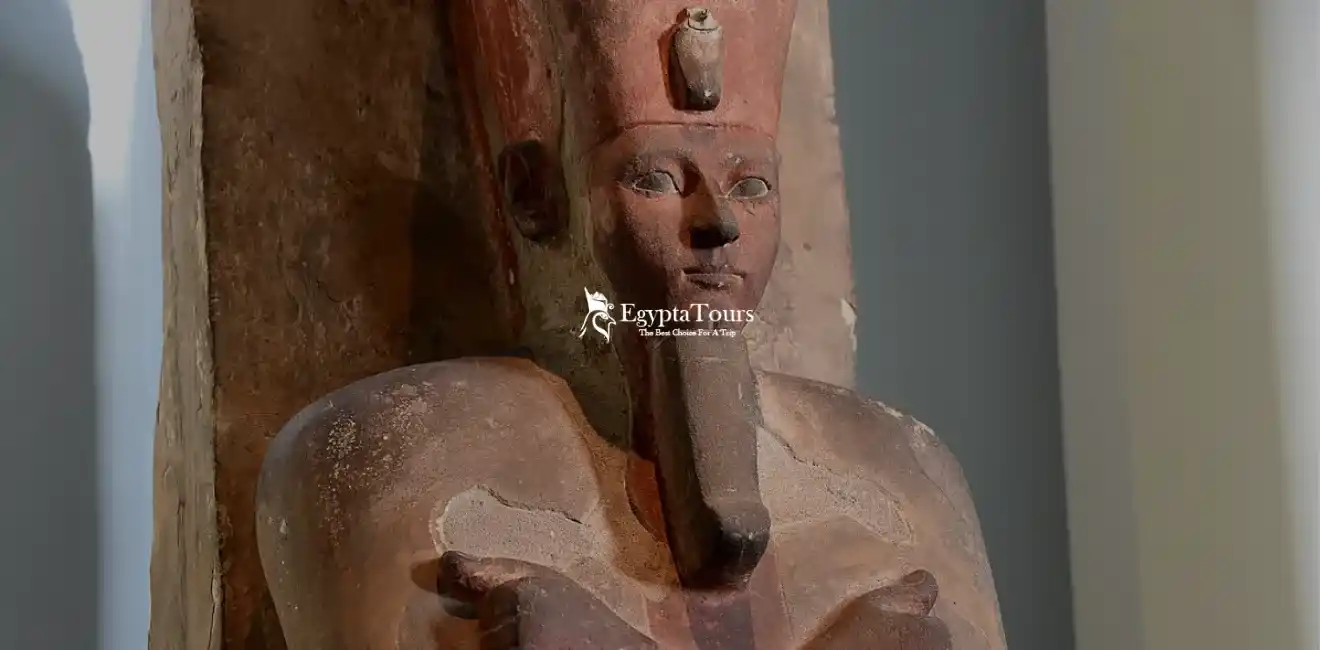
A statue of him exists in the Turin Museum, showing him seated on his throne in a royal pose addressing his subjects or as a god receiving the submission of his followers. The statue highlights the sculptor’s skill in portraying his features with precision and softness, especially the head reflecting natural grace and elegance.
It is evident that the artist took pleasure in capturing the serene and composed expression of the Pharaoh.
His worship continued for over seven centuries. His sarcophagus was moved multiple times, eventually being hidden with the coffins of his family members to protect it from robbers until its modern discovery. His body was moved several times after tomb robberies:
reburied during the reign of King Pasbkhanu I, about 65 years later: moved again under King Petram I after 30 years, about a century later placed in Queen Anhapi’s tomb during King Si-Amun’s reign, then transferred to Deir el-Bahari, then to the Egyptian Museum in Cairo then to Saad’s shrine then to the house of the Director of Antiquities on the lower floor, later to the upper floor and finally returned to the museum.
Funerary Cult in Deir el-Medina
Amenhotep I’s cult was one of the most important and longest-lasting among deified pharaohs. Most artifacts of his worship come from Thebes, near his temple and tomb. Most of these objects are linked to the necropolis of Deir el-Medina, formerly known as the necropolis of the “Servants of the Mansion of Truth,” the royal artisans who carved the pharaohs’ tombs.
These workers, although royal employees, did not perform funerary rituals themselves, as these were managed by temple priests but they worshiped the kings they served and Amenhotep I was especially venerated. He even became a reference for resolving their minor disputes.
Several festivals were dedicated to him throughout the year:
- In the first month, a festival commemorated the appearance of his statue to the workers, possibly linked to transferring his statue to Deir el-Medina.
- On the thirtieth day of the fourth month, the festival “Laying of the King’s Funerary Bed” was celebrated, likely marking his death anniversary.
- In the seventh month, two festivals were held: “Laying of the Funerary Bed” and “The Great Festival of Amenhotep, Lord of the City,” with the month later named “Phamenoth” in his honor.
- On the twenty-seventh day of the ninth month, another festival occurred.
- In the eleventh month, a festival lasted from the eleventh to the thirteenth day, probably marking his accession anniversary.
Ancient documents provide further details of his rituals, including preparing daily offerings of food and drink, reciting formulas such as “Hotep-di-nesu,” purifying and sealing the shrine at the end of the day and conducting festivals throughout the year. During these rites, a statue of Amenhotep or a priest representing him performed the worship of Amun, rather than the king himself being the object of worship which was unusual in ancient Egyptian religious practices.
Workers and Amenhotep I
Amenhotep I was the first Pharaoh to have his tomb carved into the cliffs of Thebes and he was the first to provide well-organized employment for the workers in the royal necropolis known as the “Servants of the Mansion of Truth.” It is likely that he founded the first guild of artisans responsible for carving royal tombs.
This is not surprising, as all surviving documents regarding this topic date back to the beginning of the Eighteenth Dynasty. Professor Sherni also studied this matter in detail highlighting the following points:
- The cult of Amenhotep I was particularly popular among the workers of the Theban royal necropolis. Their funerary and civil artifacts reflect their close relationship with the Pharaoh who had established their community.
- In Western Thebes, multiple representations of Amenhotep I were worshipped in shrines corresponding to his statues. Two especially important examples come from the artisans: Amenhotep “Lord of the City” (the city of the workers) and Amenhotep “Beloved of Amun.” These could be distinguished by the crowns worn by each image of the Pharaoh.
- One of the Pharaoh’s shrines was located in the workers’ village and his statue was carried in processions during festivals at Deir el-Medina and sometimes extended even to the Valley of the Kings.
Amenhotep I’s statue served as a mediator in disputes among the workers, delivering judgments through the oracles pronounced at the shrine or during the processions. - The workers themselves performed the duties of priests for the cult of the Pharaoh, particularly in carrying his statue during ceremonial processions.
Officials and Social Life
Kares
One of the most important inscriptions from Amenhotep I’s reign is the stela of the official Kares, dated to the tenth year of the Pharaoh’s rule. Kares held multiple titles including Hereditary Prince, Governor, Ring-Bearer of the King of the North, Sole Cupbearer, Overseer of the Gold Houses, Overseer of the Silver Houses, Director of the House, Chamberlain to the Pharaoh, Director of the Great House of the Royal Mother and Chief of the Household of Queen Ahhotep.
Hormeni
In the Florence Museum, there is a stela depicting a senior official named Hormeni whose tomb has not yet been discovered. His titles included Scribe and Governor of Nekhen. The inscriptions indicate he was highly respected, stating that he collected taxes for the king, was praised without reproach and faithfully delivered tribute northward to the Pharaoh each year.
Hormeni’s role as mayor of Nekhen, the frontier town between Egypt and Nubia, involved oversight of southern Egypt’s tribute and administration. It is unclear whether he officially became governor of Wawat (Lower Nubia) or if Wawat was administratively under Nekhen, though later Eighteenth Dynasty records show the viceroy of Nubia’s jurisdiction extended from Nekhen to Karai.
Renni son of Sebeknekh
A statue in the Turin Museum represents an official named Renni, titled Hereditary Prince and Overseer of Nekheb Priests. The inscription records a royal offering to the White Nekheb for all that is pure and beautiful for the prince and skilled scribe Renni.
It emphasizes Renni’s long service to the Pharaoh, his loyalty and his well-regarded reputation across the country. He knew the Pharaoh as both a child and an adult reflecting a close and lifelong connection with the king.
Renni son of Sobekhotep
Another official, also named Renni, emerged from El-Kab under Amenhotep I. He held the titles Hereditary Prince, Governor, Overseer of Priests and Scribe. His tomb at El-Kab includes decorated scenes depicting daily social life, agriculture and administrative activities.
These include overseeing transportation of animals such as donkeys, goats, pigs and cattle as well as monitoring field work. He is depicted riding a chariot or sedan chair, unlike earlier periods where estate owners were carried by servants. The tomb also shows banquets with family members including a grandson named Sebekhotep.
Daily Life and Funerary Scenes in the Tomb of Ineni
One of the most prominent figures of the Eighteenth Dynasty was the official Ineni, who served multiple Pharaohs starting with Amenhotep I and continuing through Thutmose III. Ineni held titles such as Overseer of Amun’s Granaries, Prince, Governor, Chief Scribe, Director of All Works in Karnak, Supervisor of All Seals in Karnak, Overseer of the Royal Necropolis and Judge.
The tomb of Ineni contains three types of scenes:
- Daily life: showing the deceased receiving domestic animals, fishing, and engaging in hunting in the desert.
- Funerary scenes: depicting the funeral procession, obelisks, gardens and dancers with the deceased seated alongside his wife before tables of offerings.
- Administrative scenes: illustrating the management of harvests, reporting by scribes and supervision of Amun’s granaries.
These scenes demonstrate a growing interest in realistic landscape representation and detailed depictions of both cultivated and desert areas, a stylistic development that would continue throughout the Eighteenth Dynasty.
Ben Ati
Inscriptions on the rocks of Wadi Shat al-Rijal commemorate Ben Ati who served under three Pharaohs starting with Amenhotep I. He oversaw the works of Amenhotep I, Thutmose I and Thutmose II, as well as later during the reigns of Hatshepsut and Thutmose III. Inscriptions depict him supervising the construction of Amun’s temple and receiving divine favor from the kings and the goddess Ma’at-Kare.
Other Officials
- Amenemhat: A scribe in the Temple of Amenhotep. His title is equivalent to an Old Kingdom title, scribe of the table.
- Amu: Found in the Serayet Temple in Sinai, holding the title Ring-Bearer of the King of the North and other prestigious titles.
- Atf-nefer: Governor of the Oasis with a stela recording his proximity to and favor from the Pharaoh.
- Bazu: Donated a stela showing him worshipping Montu alongside the Pharaoh.
- Huy: Left a stela depicting worship of both Amenhotep I and Queen Ahmose-Nefertari.
- Thutmose: Possessed a writing tool with the cartouche of Amenhotep I indicating his role as scribe and royal administrator.
FAQs
Who was this ruler, and when did he reign?
He was the second pharaoh of Egypt’s Eighteenth Dynasty, generally ruling from 1526 to 1506 BCE (or 1546 to 1526 BCE according to the high chronology) for approximately 21 years.
Who were his family members?
He was the son of Ahmose I and Ahmose-Nefertari. After the death of his older brother Ahmose-Ankh, he became the crown prince. He later married his elder sister, Ahmose Merit Amun. His only known child, Amenemhat, died very young.
How did he come to power, and who acted as his guardian?
He ascended the throne at a young age after his older brother passed away. His mother, Ahmose-Nefertari, acted as his guardian early in his rule, and together they established the famous workers’ settlement at Deir el-Medina.
What were his major architectural achievements?
His massive building projects included:
-
A rock-cut cave in Ibrim dedicated to the goddess Satet.
-
A massive 22-cubit Tura limestone gate at Karnak.
-
A small temple at Deir el-Bahari.
-
His own uniquely separated funerary temple at the Western Theban necropolis.
What is known about his succession?
Because he had no surviving heirs, he was succeeded by Thutmose I, a prominent military figure. While their exact blood relationship remains uncertain, his successor successfully continued the dynasty’s massive territorial expansion.
Similar Posts
About EgyptaTours

EgyptaTours is a name synonymous with trust, excellence, and unforgettable travel experiences, proudly standing as one of the leading travel agencies in Egypt. Renowned for its deep expertise, personalized service, and carefully crafted itineraries, EgyptaTours serves as the ultimate gateway to discovering Egypt in its most authentic and inspiring form.