How to Enjoy Stargazing in Egypt: Egypt light pollution
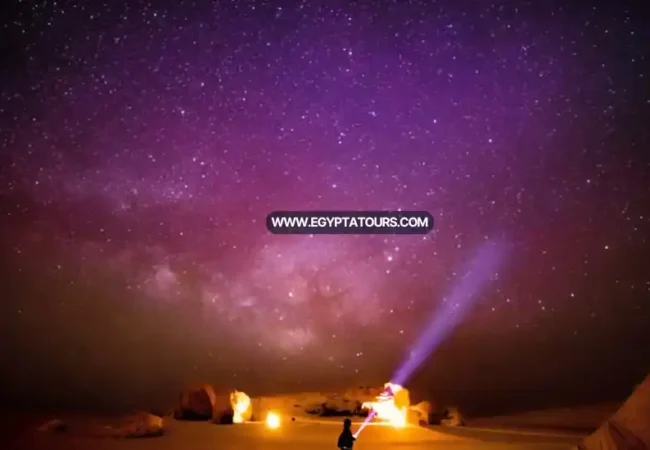
When you look up at the night sky away from the city...



Egypt is a land full of mystery, where ancient history and modern life come together to create a unique and exciting place to visit. From the grand pyramids to the lively streets of Cairo, Egypt has fascinated people from all over the world for centuries. With so many things to see and do, it can be hard to know where to begin.
Whether you’re interested in ancient history, art, architecture or just want to experience local culture, Egypt has something for everyone. From the Valley of the Kings to the Great Sphinx, each landmark on this list has its own unique story and an important place in Egypt’s history and culture.
The -Most- Famous- Landmarks- in -Egypt
Cairo and Giza are two of the most visited places in Egypt, home to some of the country’s most famous landmarks. From the famous pyramids to the lively streets of Cairo, these cities offer visitors a unique and unforgettable experience. Here are some of the top landmarks to see when you visit Cairo and Giza.
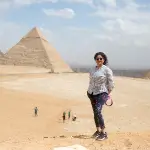
The Great Pyramid of Giza is the oldest of the Seven Wonders of the Ancient World and the only one still standing. It is not only the most famous monument in Egypt but also the most impressive ancient structure in the world.
It is believed to have been built between 2550 and 2490 B.C. during the reign of the Fourth Dynasty pharaoh Khufu. The Great Pyramid was the tallest man-made structure in the world until the Eiffel Tower was built in 1887.
The Ancient Egyptians built the Great Pyramid using 2.3 million stone blocks, each weighing around 2,000 pounds (1 tonne).
However, some of the bigger blocks, especially the huge granite slabs above the King’s Chamber, weigh between 65 and 70 tonnes each!
These blocks were cut with incredible precision to make perfect 90 degree angles and were transported all the way from Aswan, over 800 km (500 miles) away.
The architects of the Ancient Pharaohs carefully aligned the four corners of the Great Pyramid with the four main directions north, east, south and west accurately to within one fifteenth of a degree.
Additionally, the Great Pyramid along with the other Great Pyramids of Giza Menkaure and Khafre, is a perfect reflection of the belt of three stars we now call Orion’s Belt.
Of course, I can’t talk about Egypt’s famous landmarks without mentioning the other two Great Pyramids of Giza.
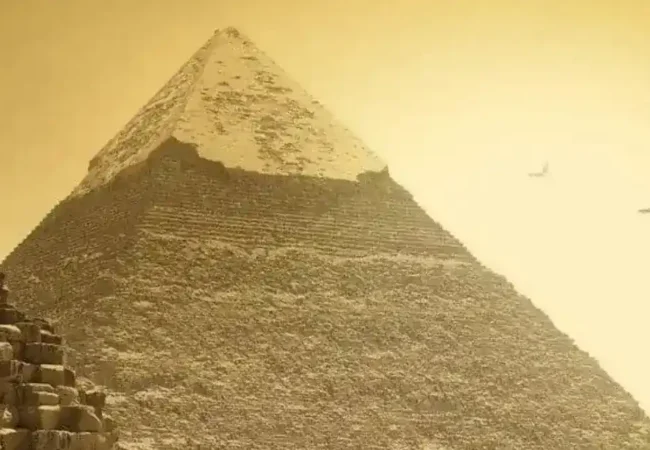
The first and easiest to recognize is the Pyramid of Khafre (or Chephren). It is the second tallest pyramid standing at 136 meters (448 feet) high.
However, this pyramid is built on a 10 meter high base of solid rock. Because of this, Khafre’s Pyramid looks taller than the Great Pyramid from some angles.
Also, unlike the other pyramids on the plateau, the Pyramid of Khafre still has some of its original cladding on the capstone at the top point which was once covered in gold in ancient times.
The third and smallest pyramid in the Giza Pyramid Complex is the Pyramid of Menkaure which stands at 65 meters (213 feet) tall.
Though it’s much smaller than the other two pyramids and often overlooked by visitors, Menkaure’s pyramid is still an important site to visit in Egypt.
While you can’t go inside this pyramid, be sure to visit the other three smaller pyramids in the complex. These are believed to be dedicated to the queens of the ancient pharaohs and are called the Queen’s Pyramids.
Of the three, only the largest one was fully finished and contained a statue of an ancient queen.
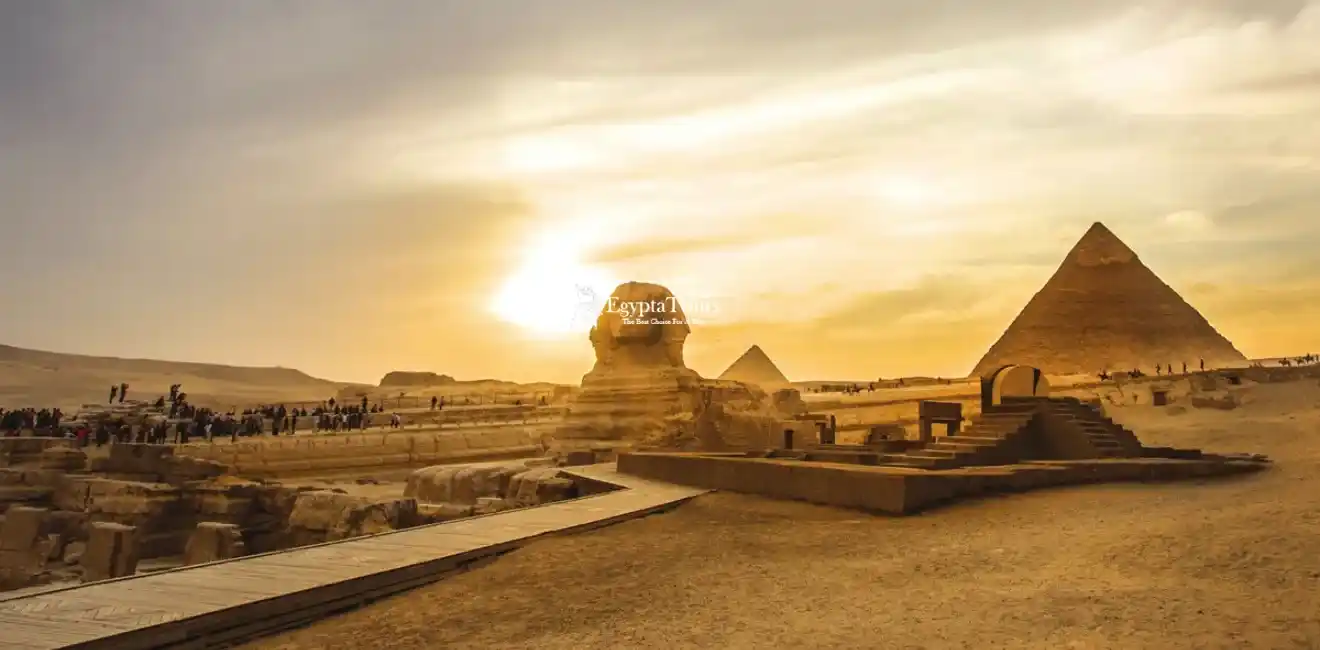
When it comes to famous landmarks in Egypt, nothing is more iconic than the Great Sphinx of Giza. Visitors can find this incredible site right next to the Great Pyramids.
This massive limestone statue is the largest remaining statue from the ancient world. It is carved from a single block of limestone found in a man made quarry and shows a reclining sphinx with a lion’s body and a pharaoh’s head.
The Great Sphinx is one of the most interesting and mysterious historical sites in Egypt. Most Egyptologists believe it is about 4,500 years old. However, the truth is that no one really knows when it was built who built it or why it was built.
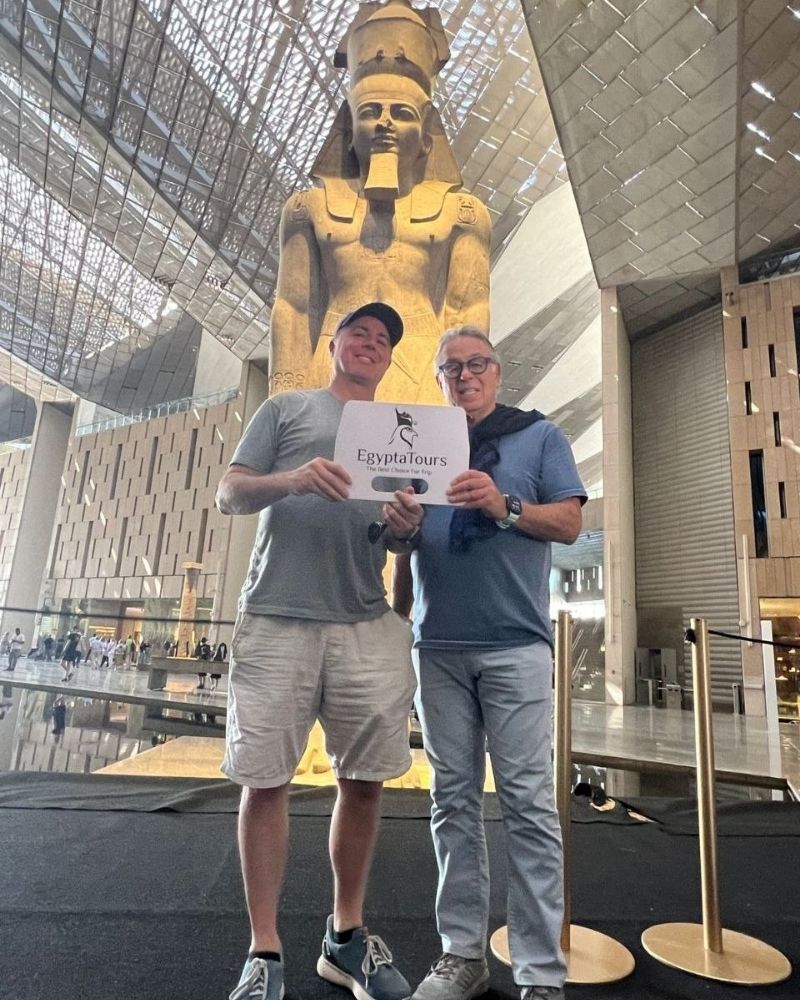
The Grand Egyptian Museum located on the Giza Plateau in Egypt, is a huge museum and one of the largest in the world. It’s expected to welcome over 10 million visitors each year. Construction started on October 6, 2014 after an official ceremony with Prime Minister Ibrahim Mahlab.
However, legal issues about its funding and purpose stopped construction until 2017 when President Abdel Fattah el Sisi gave approval to restart the work. When finished, the museum will house 100,000 artifacts from all periods of Ancient Egyptian history, from prehistory to Roman times. Visitors will feel like they are traveling through time as they explore the exhibits, admire the amazing artifacts and learn about Egypt’s rich cultural history.
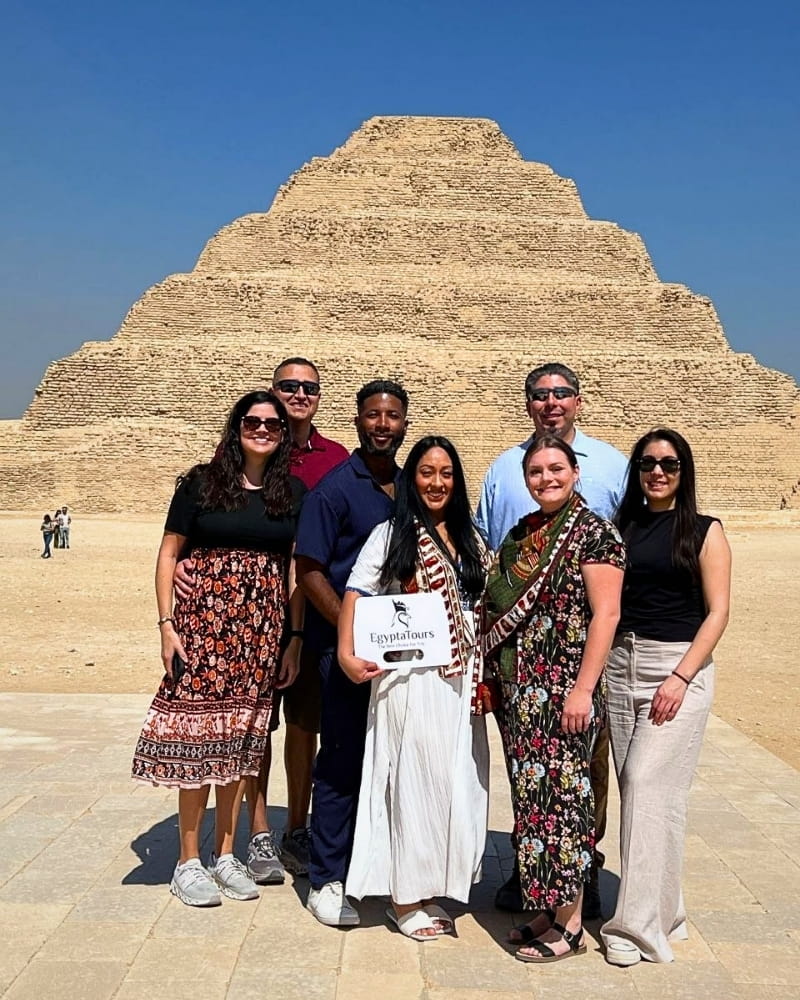
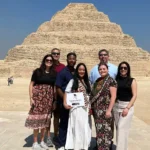
Travel 12 miles (20 kilometers) south from the Giza Plateau along the West Bank of the Nile and you’ll find the Step Pyramid of Djoser.
The Step Pyramid of Djoser is an amazing example of ancient Egyptian architecture and one of the oldest pyramids in Egypt. It was built during the rule of King Djoser, the second king of the Third Dynasty, in the Saqqara burial site south of Cairo.
The Pyramid is famous for its unique design, made up of six stepped layers that reach a height of 62 meters (203 feet). It is surrounded by a complex of buildings, including courtyards, temples and chapels, all within a large wall. Inside the Pyramid, there are several rooms and passages, some with offerings and artifacts from Djoser’s time.
The Step Pyramid of Djoser is seen as a major breakthrough in Egyptian architecture marking a big change from earlier mastaba tombs to the large pyramids that came after.
The Step Pyramid of Djoser isn’t the only famous Egyptian site in this sandy area on the edge of Cairo. In fact, the Step Pyramid is just one of many important tombs, pyramids, temples and stone monuments in the ancient Saqqara Necropolis.
Saqqara was the burial site for the ancient city of Memphis for over 3,000 years with 16 other pharaohs building pyramids here.
There are also hundreds of underground tombs in the area, many of which are still waiting to be found. Just a few weeks before I visited, archaeologists discovered five new and perfectly preserved underground tombs.

The- Old -Cairo
Most Nile River cruises have different types of cabins, from basic to high end. Pick a cabin that fits your budget and preferences. You may also want to think about where your cabin is located on the ship, cabins on the upper deck usually have better views but they might cost more.
Located in Cairo’s Sayyidah Zaynab area, Ibn Tulun Mosque is a famous landmark in Egypt. Built in the 9th century by Ahmed Ibn Tulun, the founder of the Tulunid dynasty, it is one of the city’s oldest and best mosques.
The mosque’s impressive architecture and beautiful design make it a top attraction for visitors. People can explore its many interesting features and learn about its cultural importance and rich history. Because it is so popular with both tourists and locals, the mosque is often used for cultural events and celebrations.
Anyone interested in Cairo and Egypt’s cultural history should visit Ibn Tulun Mosque. The mosque reflects the city’s rich cultural heritage through its impressive architecture, beautiful design and fascinating history.
Al Azhar Mosque is a historic mosque located in the center of Cairo, Egypt. It was founded in 970 AD as a place for Islamic education and is known as one of the oldest and most respected Islamic universities in the world. The name Al Azhar means the shining or the brilliant in Arabic and it is seen as a symbol of learning and intellect in the Muslim world.
Al Azhar Mosque is both a place of worship and an educational center where scholars from around the world come to study Islamic theology, law and other subjects. Visitors can experience the mosque’s deep cultural and religious history by attending prayers or exploring its library which holds a large collection of old manuscripts and books on various topics related to Islam.
It’s also a popular spot for tourists drawing people from all around the world who come to admire its beautiful architecture and learn about its fascinating history and culture.
The Muhammad Ali Mosque is a famous landmark located on top of the Cairo Citadel, a historic fortress overlooking the city. This stunning mosque was ordered by Muhammad Ali Pasha, the ruler of Egypt and built by the Greek architect Youssef Bushnaq between 1805 and 1848.
The mosque’s distinctive design combines Ottoman and Egyptian styles with a striking white alabaster exterior, a large central dome, two smaller domes and four tall minarets. Visitors can also enjoy breathtaking views of Cairo by climbing to the top of one of its minarets.
The Salah El-Din Citadel is another well known fortress located on Mokattam Hill, on the west bank of the Nile River. Built by Saladin during his reign in the late 12th century, it is one of the best-preserved Islamic fortresses in Egypt. Over the years, it has been used for many purposes, including as a military stronghold, royal residence and museum.
In the center of Cairo’s Muslim Quarter is the Khan El Khalili Bazaar, one of Egypt’s oldest markets dating back to the 13th century. Visitors can wander through its numerous shops and stalls selling everything from antiques and spices to jewelry, souvenirs and street food. It’s also a perfect spot to experience local culture and sip tea at one of the many cafes. The market is especially lively during Ramadan with late night festivities drawing large crowds.
This is the oldest archaeological museum in the Middle East and holds some of the most important treasures in the world. The most famous exhibit in the Egyptian Museum is the Tutankhamun Exhibition which displays the famous gold mask along with all the boy king’s treasures found in his tomb.
During our TravelTalk tour, we visited the Egyptian Museum at the end of the trip. This gave us a chance to fully appreciate the artifacts after learning so much about the ancient pharaohs during our time in Egypt.
One thing you should know is that it’s best to have a guide when visiting the museum. It helped me a lot, because without it, I wouldn’t have known what I was looking at. Many displays don’t have any information signs.
The Hanging Church is one of the oldest churches in Egypt, it is located in Old Cairo near the Mosque of Amr Ibn Al Aas and the Ben Ezra Synagogue. It was built on the site where the Holy Family is said to have sheltered during their flight to Egypt. The church is of the basilica style consisting of a main nave and two smaller aisles, with three altars dedicated to the Virgin Mary, St. John the Baptist and St. George.
The Hanging Church holds great significance in Coptic history having served as the seat of several patriarchs and hosting important events such as the election and burial of patriarchs, the consecration of holy oil and trials for heresy. It is a major pilgrimage site for Copts, due to its historical importance and association with the Holy Family.
The church has been renovated several times throughout Islamic history, and in the 11th century, the patriarchal seat was transferred to Cairo from Alexandria, further increasing its importance. The Hanging Church is also the site of numerous reported Marian apparitions including a vision seen by Pope Abraham in the 970s.
The church’s unique architecture features a fountain in front and a small courtyard adorned with modern biblical designs. The Hanging Church is a major tourist attraction in Cairo drawing visitors from around the world.
Ben Ezra Synagogue is considered one of the most important and famous Jewish temples in Egypt and it is located in Old Cairo. The synagogue contains many important documents including the ancient Tanakh manuscript known as the Aleppo Codex.
The synagogue has great religious significance as it is said to be the place where Moses prayed after the plague struck the land. It is also believed to be the site of several appearances by the prophet Elijah.
The synagogue consists of two floors with the first floor for men and the second for women. It features two rows of marble columns with beautiful capitals and a central platform for sermons surrounded by seats for worshippers. The sanctuary in the eastern part contains the Ark of the Covenant and Torah scrolls.
The National Museum of Egyptian Civilization is one of the most important museums in Egypt and it is located in the city of Fustat in Cairo covering an area of 33.5 acres. The museum houses around 50,000 artifacts that showcase the development of Egyptian civilization from the Stone Age to the modern era. It is situated on the shores of Lake Ain Al Sira offering a unique setting for visitors.
The museum was designed by the Japanese architect Arata Isozaki and features 9 main exhibition halls including the Royal Mummies Hall.
The museum aims to highlight Egypt’s tangible and intangible heritage with state of the art storage facilities and temporary exhibition spaces. It also includes a learning and research center as well as an exhibition on the development of modern Cairo.
The National Museum of Egyptian Civilization is a major tourist attraction in Egypt drawing visitors from around the world to explore the country’s rich history and civilization.

The- Most -Famous -Landmarks- At -Luxor
Luxor is a city in southern Egypt and it is also often referred to as the world’s largest open air museum. It has many of the most famous sites in Egypt including some of the most stunning ancient temples and tombs. Here are some of the top landmarks you should visit when exploring Luxor:
The Valley of the Kings is considered a desert valley in Egypt where many pharaohs’ tombs were carved into the cliffs. These tombs are decorated well with hieroglyphs and paintings that show how ancient life was and the reigns of the pharaohs. The most famous tomb in the valley is that of King Tutankhamun or King Tut who was called “the golden king” and his tomb was discovered in 1922 in perfect condition untouched by time.
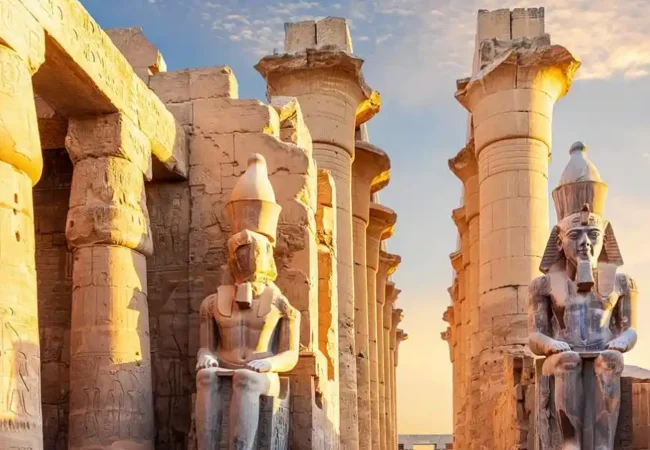
The amazing Luxor Temple which is located on the east bank of the Nile River in Luxor formerly Thebes was constructed in the 14th century BC by pharaohs Amenhotep III, Ramesses II and Seti I. The temple is dedicated to the gods Amun Ra, Mut and Khonsu who were worshipped in Thebes during the New Kingdom. It has an entrance hall that leads to an inner courtyard with columns on both sides.
It then leads to another courtyard which is surrounded by columns and statues including one of Ramses II seated on his throne and a pair of statues showing Amenhotep III and Queen Tiye with their three children. The temple also contains a shrine dedicated to the Hathor goddesses who represent love and beauty.
The Karnak Temple Complex is one of the largest temple sites in the world featuring over 1,000 temples and shrines. The complex is divided into three main sections, the Amun Ra area which is the most famous and the lesser known Mut and Khonsu precincts. The best time to visit the Karnak temple is in winter when it’s less crowded and more peaceful.
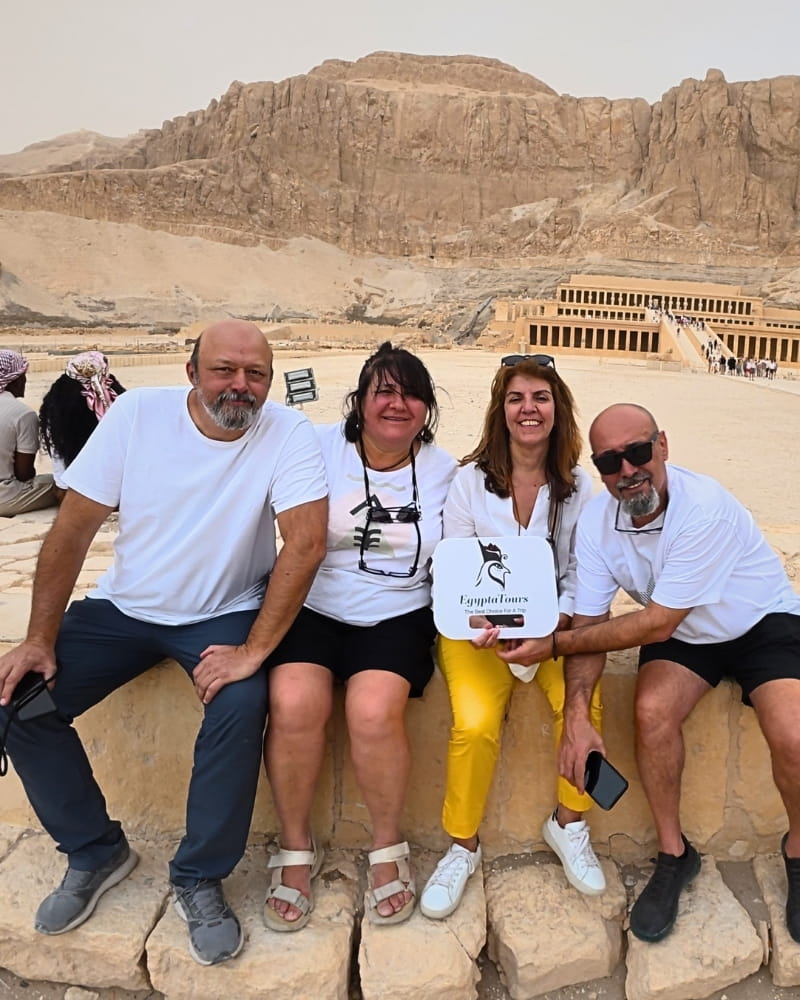
The Temple of Hatshepsut was founded in Deir el Bahari in southern Egypt and was built by Queen Hatshepsut. The temple is dedicated to the gods Isis and Osiris and is one of the best kept ancient temples in Egypt. It is made of limestone blocks decorated with writings that tell us about daily life at that time and it also includes records of the taxes people paid.
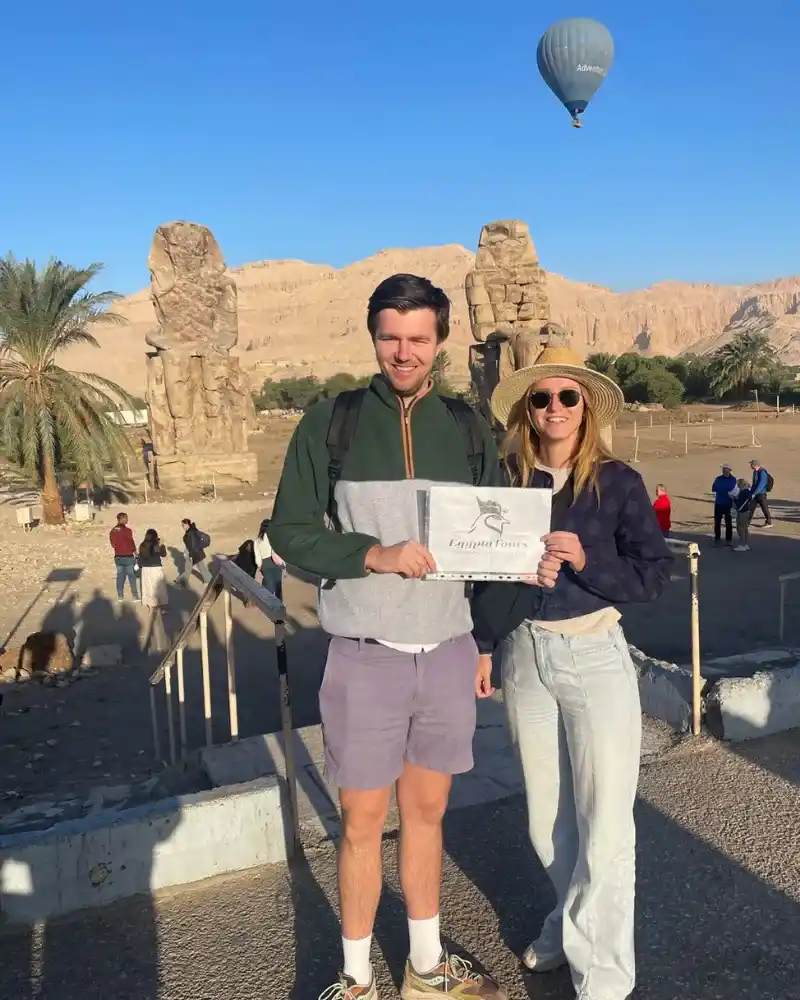
The Colossi of Memnon are two huge stone statues of Amenhotep III. They show the pharaoh walking forward with his hands resting on his knees.
They stand at the entrance of Amenhotep III’s temple on the west bank of the Nile in Luxor. Unlike most pharaohs whose statues were made after their death, these statues were built while Amenhotep III was still alive as part of an expansion of his funerary temple at Deir el Bahri.
The- Most -Famous -Landmarks- At -Aswan
Aswan is a city in southern Egypt famous for its beautiful nature, ancient sites, special culture and amazing views that attract visitors from all over the world. Here are some of the main places you should see when you visit Aswan:
The Aswan High Dam is a significant modern landmark in Egypt completed in 1970. This monumental project has become a vital source of revenue for Egypt’s economy, generating hydroelectric power and controlling the flooding of the Nile for the first time in history. However, the construction of the dam posed a significant threat to numerous historical sites, prompting UNESCO to launch a multi year international rescue effort in 1963 to dismantle and relocate the temples to safer locations.
Located in Aswan, the Nubian Village is one of Egypt’s largest Nubian settlements established in the 1800s by Nubians seeking to revive their traditional way of life. The village is home to approximately 1,000 residents, primarily farmers who cultivate crops such as cotton and corn on rented land. The village is also inhabited by shopkeepers and artists who sell their wares in nearby markets.
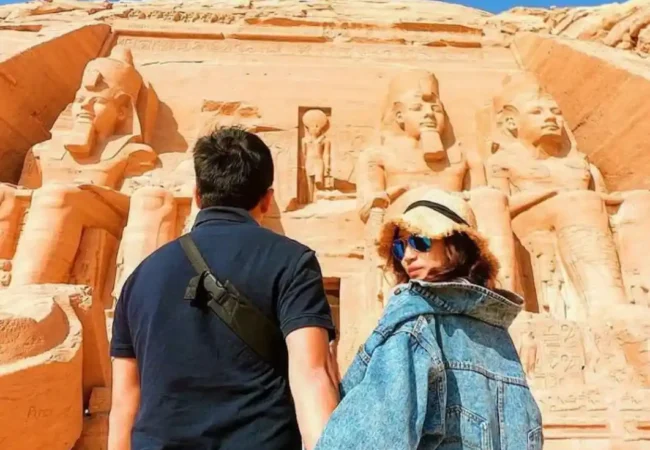
The Abu Simbel Temples are situated in southern Egypt near the Sudanese border. These temples are part of the UNESCO World Heritage Site known as the Nubian Monuments which includes Abu Simbel and Nuri. In 1966, the temples were relocated 100 km south from their original site on Jebel Barkal Mountain to protect them from the flooding caused by the creation of Lake Nasser.
The Temple of Edfu is located on the west bank of the Nile in Upper Egypt is an ancient Egyptian temple built on the site of an older temple from the Middle Kingdom dedicated to Horus and Seti I. The temple was constructed during the reign of Ptolemy XII Neos Dionysos between 80 and 51 BCE.
The Kom Ombo Temple is a notable example of Egyptian temples from the Ptolemaic period, distinguished by its unique double or split design, with rooms, courts and halls built in pairs, each dedicated to two gods, the crocodile god which name was Sobek and the falcon god who was Haroeris Horus the Elder. The temple features a unique calendar showcasing three seasons based on the River Nile, the flood, the planting season and the harvest.
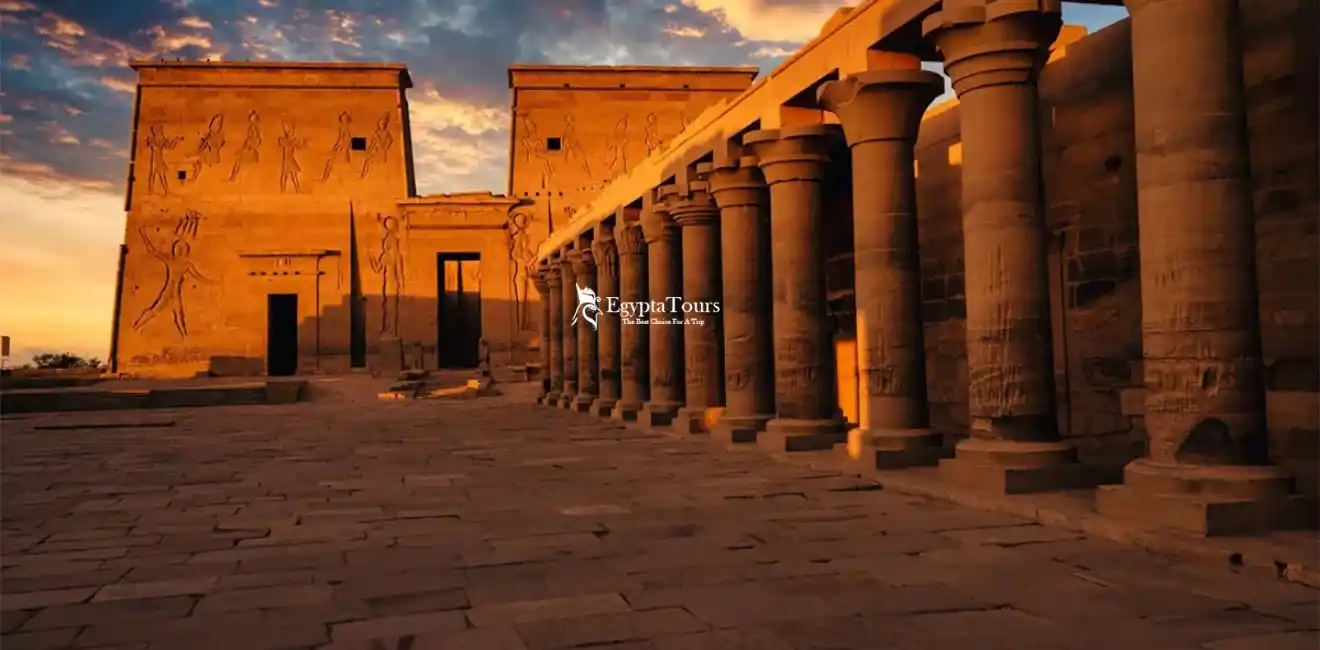
The Philae Temple was built during the Ptolemaic period between 237 and 57 BCE and is located in Aswan, Egypt and was originally situated on an island. The temple was rediscovered by Giovanni Battista Belzoni and relocated to its current site on Agilkia Island.

The- Most- Famous- Landmarks- At -Alexandria
Alexandria, a city on Egypt’s Mediterranean coast, boasts a rich history, culture and stunning landmarks.
The Alexandria Library, a modern library built on the site of the ancient Library of Alexandria, is a popular cultural hub and tourist destination.
Pompey’s Pillar, a 24.3 meter tall Roman column, is a well known landmark in Alexandria, built in 297 CE to honor the Roman general Pompey the Great.
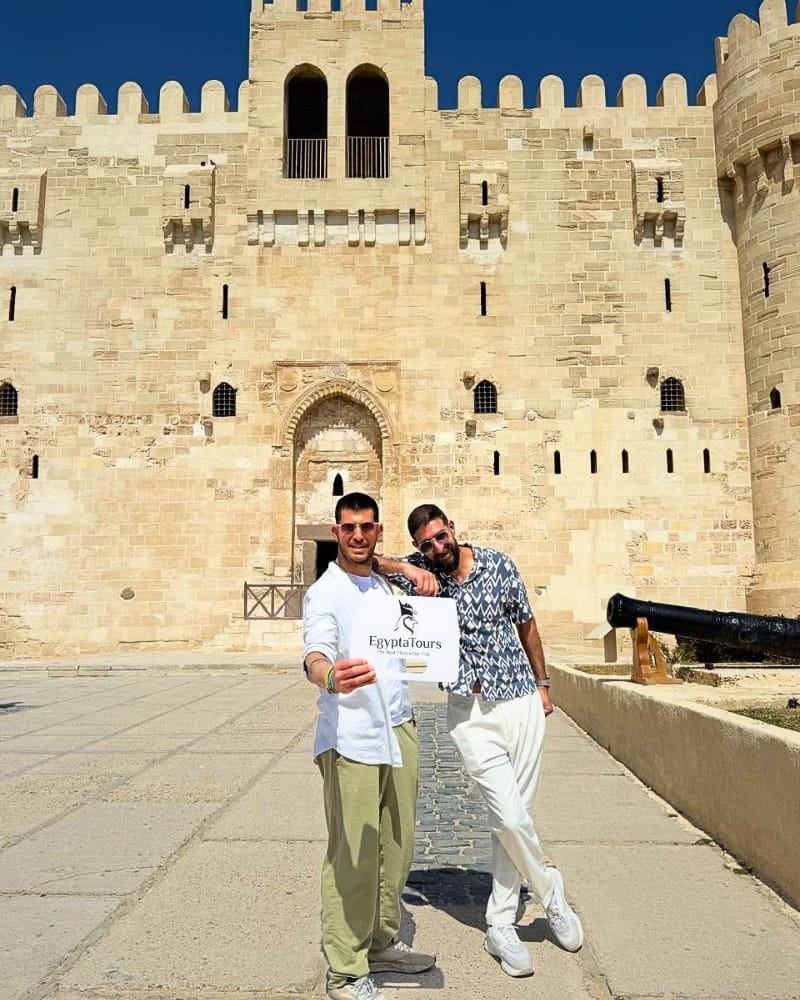
The Qaitbay Citadel, a historic fortress and palace, was built in 1472 CE by Sultan Qaitbay to strengthen the city’s defenses and has served as a military base and royal residence.
The Catacombs of Kom El Shoqafa, an ancient burial site, feature a unique blend of Egyptian, Greek and Roman architectural styles.
I suggest visiting the Pyramids of Giza, the Sphinx, the Karnak Temple and the Valley of the Kings as the top must see landmarks.
The Grand Egyptian Museum, located on the Giza Plateau in Egypt, is a huge museum and one of the largest in the world. The museum will house 100,000 artifacts from all periods of Ancient Egyptian history, from prehistory to Roman times. Visitors will feel like they are traveling through time as they explore the exhibits, admire the amazing artifacts, and learn about Egypt’s rich cultural history.
The Karnak Temple Complex in Luxor is the biggest religious building ever built, covering more than 250,000 square meters.
Nubian Village, located in Aswan, is one of the largest Nubian villages in Egypt. It was founded in the 1800s by a group of Nubians who wanted to return to their traditional way of living. Today, around 1,000 people live there, mostly farmers who rent land to grow crops like cotton and corn.
The Alexandria Library is a new library in Alexandria, Egypt. It was built on the location of the ancient Library of Alexandria, which was one of the largest and most important libraries of the ancient world. The modern library opened in 2002 and has since become a popular cultural spot and tourist attraction in Egypt.


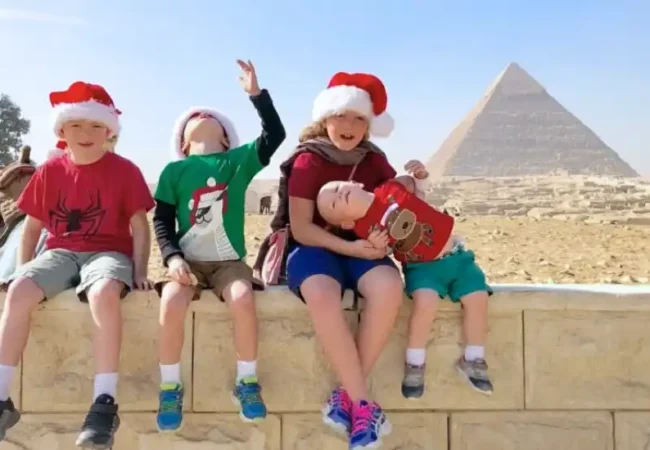

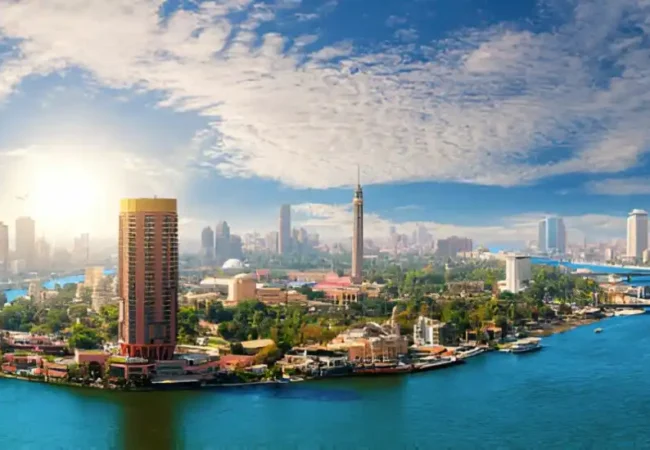

Explore our top-rated Egypt travel packages and embark on an unforgettable journey. From the Pyramids of Cairo to the magical temples of Luxor, Aswan, and Abu Simbel, discover expertly curated tours designed for your perfect Egyptian adventure